


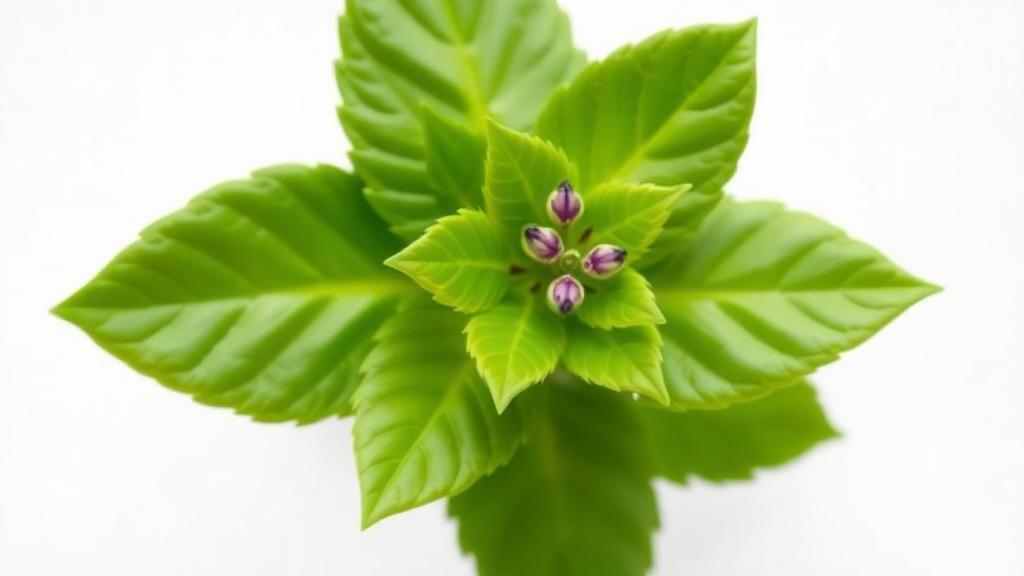
The Madagascar periwinkle, Catharanthus roseus, is one of the most pharmacologically important plants on Earth. Its leaves churn out more than 130 terpenoid indole alkaloids, a chemical arsenal that includes vinblastine and vincristine, two compounds that remain cornerstones of chemotherapy, alongside vindoline, catharanthine, ajmalicine and serpentine. Yet the plant pays a price for this chemistry: many of these alkaloids are cytotoxic, meaning the periwinkle must manufacture them without accumulating enough to damage its own cells. How a plant runs such a dangerous production line at full speed while simultaneously keeping it from overheating has been one of the central puzzles in plant specialized metabolism. A new study published in the Journal of Advanced Research by Yaojie Zhang, Qi Liu, Kexuan Tang and colleagues now provides a strikingly elegant answer, identifying a self-limiting genetic circuit that functions simultaneously as an accelerator and a brake on the entire alkaloid pathway.
The research team set out to find a transcription factor capable of coordinating the roughly thirty enzymatic steps that convert primary metabolites into terpenoid indole alkaloids, a feat no previously characterized regulator had achieved. Known players such as the ORCA family, MYC transcription factors, GRF proteins, EIN3/EIL factors and MPK3 kinases each control portions of the pathway, but a global coordinator had remained elusive. Screening RNA-sequencing data across tissues and under methyl jasmonate treatment, the hormone that triggers alkaloid defenses, the researchers identified a Group I WRKY transcription factor they named CrWRKY4. The protein carries two conserved WRKYGQK domains, localizes to the nucleus, is abundant in leaves and flowers, and is switched on within a single hour of jasmonate exposure, all hallmarks of a master regulator poised for rapid deployment.
The evidence for CrWRKY4’s breadth came from a battery of complementary techniques. DNA affinity purification sequencing, or DAP-seq, using purified CrWRKY4 protein against fragmented periwinkle genomic DNA yielded 46,179 high-confidence binding peaks distributed across all eight chromosomes. Motif analysis confirmed the canonical W-box sequence, TTGACC/T, as the most enriched binding motif, and the protein was found parked at the promoters of at least thirteen alkaloid pathway genes, including Cr8HGO, Cr7DLGT, CrISY, CrLAMT, CrSLS, CrGS, CrGO, CrRedox1/2, CrSAT, CrDPAS, CrT16H1, CrT3R and CrPRX1. Dual-luciferase assays in tobacco leaves showed that CrWRKY4 markedly activated the promoters of CrG10H, Cr7DLGT, CrISY, CrLAMT, CrGS, CrTS, CrT16H1, CrD4H and CrT3R, while yeast one-hybrid and electrophoretic mobility shift assays independently confirmed direct, sequence-specific binding to W-box elements.
But the story took an unexpected turn when the team moved from transient assays into stable plant material. Using an optimized Agrobacterium rhizogenes system, they generated hairy root cultures that either overexpressed CrWRKY4 or carried CRISPR/Cas9 knockouts of the gene, with off-target risks assessed by Sanger sequencing of nine predicted sites. Counterintuitively, overexpression did not unleash the pathway: several target genes were actually reduced, and only tryptamine and catharanthine rose while loganin fell. Knockout lines told the opposite side of the story, with expression of Cr8HGO, CrG10H, CrIO, CrISY, CrLAMT, CrSGD, CrGS and CrTS dropping by roughly 30 to 50 percent, and mass spectrometry revealing that loganic acid, loganin, ajmalicine and tabersonine fell by 50 to 60 percent. The conclusion was inescapable: CrWRKY4 is essential and broadly positive, yet something inside the plant was holding it back.
That something turned out to be a pair of previously uncharacterized VQ motif proteins. A yeast two-hybrid screen using CrWRKY4 as bait against a periwinkle cDNA library pulled out CrVQ4 and CrVQ9, small proteins that bind directly to the WRKY domains at the C-terminus and N-terminus of CrWRKY4 respectively. Notably, none of the famous alkaloid regulators, including ORCA1 through ORCA6, BIS1 through BIS3, MYC2, the JAM proteins or the well-studied CrWRKY1, interacted with CrWRKY4 in yeast. Bimolecular fluorescence complementation, luciferase complementation and co-immunoprecipitation all confirmed the physical interactions in plant cells, where the VQ proteins, like their target, reside exclusively in the nucleus.
Functionally, CrVQ4 and CrVQ9 act as co-repressors. When co-expressed with CrWRKY4 in dual-luciferase assays, they significantly dampened activation of the Cr8HGO, CrLAMT and CrTS promoters. Electrophoretic mobility shift assays revealed the mechanism: the VQ proteins cannot bind DNA themselves, but as their concentration relative to CrWRKY4 increases, the shifted protein-DNA bands progressively weaken, indicating that the VQ proteins blunt CrWRKY4’s ability to grip its W-box targets. Overexpressing CrVQ4 or CrVQ9 in hairy roots produced the predicted metabolic outcome, with loganic acid, loganin, ajmalicine and tabersonine all dropping substantially, while a handful of downstream products such as catharanthine shifted in the opposite direction, likely reflecting competition for shared precursors between the tabersonine and catharanthine branches of the pathway.
The final piece of the circuit connects it to the jasmonate signal itself. Yeast two-hybrid, BiFC, luciferase complementation and co-immunoprecipitation assays showed that the JAZ repressor CrJAZ1 interacts with CrVQ4 and CrVQ9 but not with CrWRKY4 directly, effectively tethering the brakes to the jasmonate machinery. Under resting conditions, CrJAZ1 sequesters the VQ proteins and reinforces their inhibition of CrWRKY4. When methyl jasmonate arrives, the picture changes: JAZ proteins are classically degraded through the COI1-26S proteasome pathway, and the team observed that CrVQ4 and CrVQ9 protein levels also decline after jasmonate treatment, a degradation that the proteasome inhibitor MG132 largely blocked in cell-free assays. Jasmonate thus appears to strip away the inhibitory layer from two directions at once, freeing CrWRKY4 to activate the alkaloid genes.
What elevates the finding from a regulatory curiosity to a design principle is the feedback architecture. DAP-seq peaks revealed that CrWRKY4 binds the promoters of CrVQ4, CrVQ9 and CrJAZ1, and overexpressing CrWRKY4 in hairy roots increased the expression of all three repressors. In other words, every time the accelerator is pressed, the plant simultaneously manufactures more brake. This self-limiting loop means that CrWRKY4’s own activity summons the very proteins that will throttle it, creating a homeostatic buffer against runaway alkaloid accumulation and the autotoxicity it would cause. The authors caution that some elements of the dynamic model, particularly the upstream mechanism by which jasmonate promotes VQ degradation and the precise in vivo changes in CrWRKY4 DNA occupancy, still await direct confirmation through approaches such as ChIP-qPCR, and that promoter binding does not always translate into transcriptional output because chromatin and co-factors add layers invisible to in vitro assays.
The implications reach well beyond basic biology. Decades of metabolic engineering in medicinal plants have repeatedly hit a ceiling: overexpressing a single transcription factor rarely delivers proportional increases in product, and this study finally offers a mechanistic explanation, namely that endogenous feedback brakes engage whenever activators are pushed too hard. The CrJAZ1-CrVQ4/9-CrWRKY4 circuit now provides concrete engineering targets. Designer CrWRKY4 variants with mutations that disrupt VQ binding, simultaneous knockdown of CrVQ4 and CrVQ9, or structure-guided tuning of the inhibitory interface could all, in principle, release the brake and boost yields of vinblastine precursors in hairy root cultures, which currently fall far short of global demand. Similar VQ-WRKY modules governing defense chemistry have now been documented in rice, tea, cotton and yew, suggesting the accelerator-brake logic may be a general feature of how plants manage cytotoxic metabolism. If so, the humble periwinkle has just handed synthetic biologists a blueprint for taming some of nature’s most valuable and most dangerous molecules.
Subject of Research: Transcriptional feedback regulation of terpenoid indole alkaloid biosynthesis in Catharanthus roseus
Article Title: A JAZ-VQ-WRKY transcriptional feedback loop enforces homeostasis in cytotoxic alkaloid biosynthesis
Article References: Zhang, Y., Liu, Q., Liu, P., Ni, X., Liu, H., Qian, S., Wen, H., Li, L., Zhao, J., Wang, Y., Pan, Q., Fu, X., & Tang, K. (2026). A JAZ-VQ-WRKY transcriptional feedback loop enforces homeostasis in cytotoxic alkaloid biosynthesis. Journal of Advanced Research. https://doi.org/10.1016/j.jare.2026.10.018
Image Credits: AI Generated
DOI: Not provided
Keywords: Catharanthus roseus, terpenoid indole alkaloids, CrWRKY4, VQ proteins, JAZ repressors, jasmonate signaling, transcriptional feedback, metabolic homeostasis, vinblastine, plant specialized metabolism, CRISPR hairy roots, molecular brake
Cite Scienmag News
Nathaniel Bowman. (October 11, 2026). Scientists Discover the Built-In Brake That Keeps a Cancer-Drug Plant From Poisoning Itself. Scienmag. https://scienmag.com/scientists-discover-the-built-in-brake-that-keeps-a-cancer-drug-plant-from-poisoning-itself/
Nathaniel Bowman. "Scientists Discover the Built-In Brake That Keeps a Cancer-Drug Plant From Poisoning Itself." Scienmag, 11 October 2026, https://scienmag.com/scientists-discover-the-built-in-brake-that-keeps-a-cancer-drug-plant-from-poisoning-itself/. Accessed 11 October 2026.
Nathaniel Bowman. "Scientists Discover the Built-In Brake That Keeps a Cancer-Drug Plant From Poisoning Itself." Scienmag. October 11, 2026. https://scienmag.com/scientists-discover-the-built-in-brake-that-keeps-a-cancer-drug-plant-from-poisoning-itself/


