

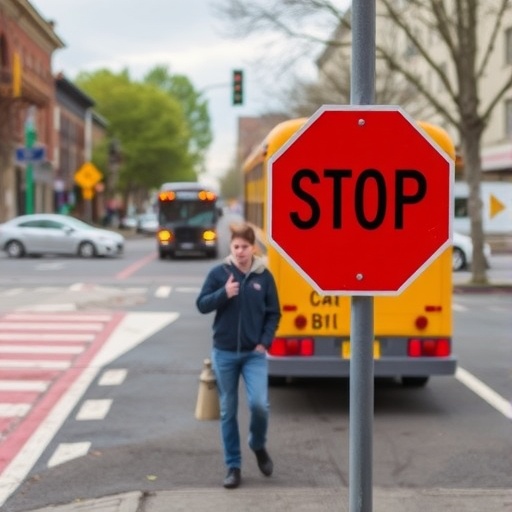
Understanding the complexities of driving behavior in school zones has become a pressing issue in urban planning, public safety, and educational policy. An in-depth investigation into this subject has been undertaken by researchers Ullah Khan, Shabbir, and Hussain, focusing on how various factors influence drivers’ behaviors when navigating through areas where children are present. Their research utilizes structural equation modeling, guided by the extended theory of planned behavior, to gain insights into the motivations and challenges that drivers face in school zones.
The scholars highlight that school zones are unique environments where traditional driving patterns often collide with the need for heightened caution. Factors such as the presence of children, parental involvement, and traffic regulations play a significant role in how drivers make decisions. The extended theory of planned behavior posits that behavioral intentions are influenced by attitudes, subjective norms, and perceived behavioral control. This theoretical framework provides a comprehensive lens through which to examine the myriad factors influencing driving behavior in these critical areas.
A particularly compelling aspect of the research is its focus on the emotional and psychological elements that affect how drivers act in school zones. For instance, fear of accidents, the desire to comply with regulations, and the perceived responsibility toward child safety can significantly impact a driver’s decision-making process. The researchers employed rigorous statistical techniques to uncover the interrelationships among these variables, highlighting the inherent complexities of driving behavior that goes beyond mere compliance with traffic laws.
Furthermore, the study sheds light on external factors that can inadvertently affect driving behavior in school zones. Environmental elements, such as road signage and the physical layout of school zones, can either enhance or undermine safety. The researchers found that well-placed traffic signals and clear signage significantly reduce the likelihood of risky behaviors among drivers. This revelation reinforces the notion that urban design plays a crucial role in promoting safety.
The implications of this research extend beyond academic interest; they are relevant to policymakers, educators, and community leaders. The findings advocate for a multi-faceted approach to improving safety in school zones, suggesting that interventions should not solely focus on changing driver behavior but also consider the broader context in which driving occurs. For example, pilot programs that involve community engagement and education can raise awareness about safe driving practices, further enhancing the protective measures already in place.
Data collected during the study revealed serious gaps in drivers’ understanding of school zone regulations. Many participants were unfamiliar with specific speed limits and rules regarding stopping for pedestrians. This lack of awareness highlights the necessity of ongoing education efforts aimed at drivers, particularly in areas with a high density of schools. The study encourages local governments and educational institutions to collaborate on effective outreach campaigns that can help bridge this knowledge gap.
The role of parental behavior is another key component of the research findings. Notably, parents’ driving habits can significantly influence their children’s perceptions of safety around schools. When parents exhibit irresponsible behaviors, such as speeding or failing to stop for pedestrians, children may internalize these practices, perpetuating a cycle of dangerous driving behavior. Addressing this intergenerational transfer of habits should be a focal point for any initiatives aimed at improving safety in school zones.
Moreover, the research places a strong emphasis on the need for ongoing evaluations of current safety measures in school zones. As traffic conditions evolve and community demographics change, it is essential to continually assess the effectiveness of existing regulations and make necessary adjustments. By leveraging data-driven approaches, cities can ensure that they are responsive to the dynamic nature of driving behaviors and the unique challenges presented by school environments.
Another crucial aspect of the study is its recommendation for incorporating technology into safety measures. Innovations such as automated speed cameras and real-time monitoring systems can provide additional layers of protection in school zones, deterring unsafe driving practices. The integration of technology not only serves as a preventive measure but can also provide valuable data for future research, creating a feedback loop that can inform ongoing safety efforts.
Through their meticulous research, Ullah Khan and his colleagues have underscored the importance of understanding the multifaceted nature of driving behavior in school zones. Their findings have broad implications, urging various stakeholders to reconsider outdated assumptions and embrace a more holistic understanding of how to create safer environments for children. By recognizing the array of influences on driving behavior, we can take meaningful steps toward enhancing safety and fostering a culture of responsibility among drivers.
The need for collaboration across sectors emerges as a pivotal element of the study’s recommendations. Engaging educational institutions, local government, and community organizations can lead to the development of comprehensive strategies that prioritize safety. Involving parents, teachers, and students in conversations about safe driving practices can cultivate a shared understanding of the importance of responsible behavior in school zones, ultimately leading to positive changes.
As the research continues to generate discussions amongst policymakers and community leaders, it is clear that fostering safer school zones requires a concerted and informed effort from all parties involved. The findings from Ullah Khan, Shabbir, and Hussain’s work empower us to reevaluate our current practices and invest in evidence-based interventions that not only enhance safety but also foster a culture of awareness and accountability among drivers.
In conclusion, the study contributes invaluable insights into the dynamics surrounding school zone driving behavior, advocating for an integrated approach that addresses both the psychological and contextual factors influencing how drivers operate in these sensitive environments. As communities strive to protect their youngest members, it is essential to prioritize research that informs effective strategies and mobilizes collective action to enhance safety measures in school zones.
By embracing the complexity of driving behavior and addressing the multifaceted influences at play, we can make significant strides in ensuring the safety of children and fostering responsible driving practices in school zones across the nation.
Subject of Research: Understanding school zone driving behavior
Article Title: Correction: Understanding school zone driving behavior using structural equation modeling based on the extended theory of planned behavior
Article References: Ullah Khan, M.S., Shabbir, M., Hussain, A. et al. Correction: Understanding school zone driving behavior using structural equation modeling based on the extended theory of planned behavior. Discov Cities 3, 3 (2026). https://doi.org/10.1007/s44327-025-00177-w
Image Credits: AI Generated
DOI: 10.1007/s44327-025-00177-w
Keywords: school zone safety, driving behavior, theory of planned behavior, structural equation modeling, urban planning.


