

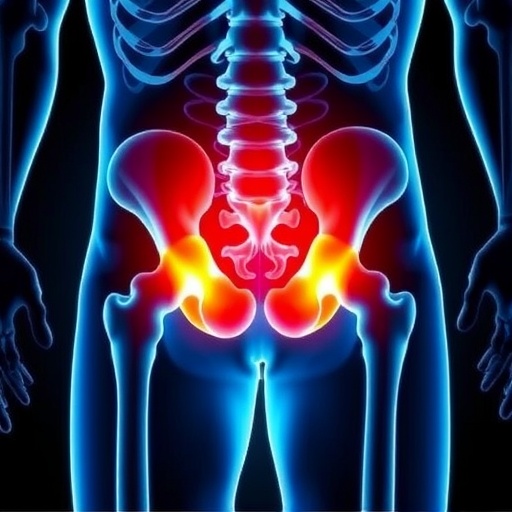
In a groundbreaking study published in 2025, researchers Jiang, T., Wang, P., and Wu, J., among others, have unveiled critical findings linking sarcopenia to early postoperative cognitive decline in older adults who have undergone hip fracture surgery. This prospective cohort study highlights an increasingly pressing issue within geriatric medicine, where the intersection of physical degradation and cognitive health becomes paramount. Understanding this relationship not only sheds light on the complexities of aging but also opens new avenues for innovative intervention strategies aimed at improving postoperative outcomes for a vulnerable population.
Sarcopenia, characterized by the progressive loss of muscle mass and strength, is often seen as a natural part of aging. However, its implications extend far beyond physical limitations. The study’s authors meticulously demonstrate that individuals suffering from sarcopenia exhibit a higher propensity for experiencing cognitive decline shortly after undergoing surgical procedures. This phenomenon is particularly alarming in the context of hip fractures, which frequently afflict older adults and frequently lead to significant morbidity and mortality.
The researchers employed a prospective cohort design, following the surgical outcomes of numerous older adults who experienced hip fractures. They meticulously collected a range of data points, allowing them to paint a comprehensive picture of the interplay between muscle health and cognitive functioning during the recovery period. This structured approach not only enhances the robustness of their findings but also reinforces the reliability of their conclusions, marking a significant contribution to the existing literature on geriatric care.
Central to the findings is the assertion that early postoperative cognitive decline is not merely a consequence of surgical trauma or anesthesia. Instead, sarcopenia emerges as a formidable risk factor, suggesting a need for preemptive measures addressing muscle health prior to surgery. The study outlines how diminished muscle strength may affect the brain’s vascular health and overall metabolic capacity, potentially leading to temporary or more permanent cognitive impairments in the recovery phase.
In exploring potential mechanisms behind this relationship, the authors delve into neuroinflammation and hormonal imbalances that can arise from sarcopenia. These biological processes can adversely affect cerebral perfusion and neural health, thereby contributing to cognitive decline post-surgery. Such insights underscore the multifaceted nature of both muscle and cognitive health, beckoning a comprehensive approach to care that emphasizes the interconnectedness of physical and mental well-being.
The clinical implications of these findings are profound, considering that hip fracture surgeries are common among the elderly. Hospitals and healthcare providers must reassess their pre and postoperative care protocols, integrating assessments for sarcopenia as part of standard practice. This could include tailored exercise programs and nutritional interventions aimed at preserving muscle mass and function, effectively mitigating the risk of cognitive decline post-surgery.
Moreover, the study raises critical questions about the longevity of cognitive decline associated with sarcopenia. Are these changes reversible following rehabilitation efforts? Can targeted interventions prevent the downturn in cognitive function altogether? These questions merit further research and discussion within the medical community, fostering a paradigm shift in how we approach not only the surgical management of hip fractures but also the overall health management of elderly patients.
As the global population ages, the importance of addressing sarcopenia becomes increasingly clear. With projections indicating a rise in the elderly demographic, chronic conditions such as sarcopenia are anticipated to become ever more prevalent. Understanding and combating its effects will be imperative for improving quality of life and preserving cognitive function in older adults facing surgical challenges. This study thus serves as a wake-up call, urging the healthcare system to prioritize integrative strategies that account for the multifaceted aspects of aging.
In conclusion, Jiang et al.’s findings offer a crucial perspective on the relationship between sarcopenia and cognitive decline in older adults undergoing surgery. The evidence presented in this prospective cohort study not only builds on existing knowledge but also opens pathways for innovative therapeutic interventions. This intersection of physical health and cognitive performance highlights the necessity for ongoing research and adjustments in clinical practices to enhance outcomes for one of society’s most vulnerable populations.
The urgency underscored by this research cannot be overstated, as healthcare providers must now consider sarcopenia not just as an isolated condition but as a critical player in the broader context of postoperative recovery and cognitive health. As such, the ongoing discourse in the scientific community will need to pivot towards addressing this intricate relationship, fostering a deeper understanding that ultimately leads to better care strategies for older adults.
By establishing a clearer understanding of these dynamics, future studies are poised to evaluate not only interventions but also the long-term implications of sarcopenia on cognitive health in geriatric populations. Emphasizing muscle maintenance and rehabilitation after surgeries could prove transformative, reshaping rehabilitation protocols and practices across the board in geriatric medicine.
Moving forward, we stand at a pivotal moment in geriatric healthcare, where integrating muscle health with cognitive monitoring can pave the way for enhanced recovery strategies, improved quality of care, and a higher standard of living for the elderly. This study signifies just the beginning of an essential conversation; the health of our aging population depends on it.
Subject of Research: The association between sarcopenia and early postoperative cognitive decline in older adults following hip fracture surgery.
Article Title: Sarcopenia is associated with early postoperative cognitive decline in older adults following hip fracture surgery: a prospective cohort study.
Article References:
Jiang, T., Wang, P., Wu, J. et al. Sarcopenia is associated with early postoperative cognitive decline in older adults following hip fracture surgery: a prospective cohort study.
BMC Geriatr (2025). https://doi.org/10.1186/s12877-025-06811-x
Image Credits: AI Generated
DOI: 10.1186/s12877-025-06811-x
Keywords: Sarcopenia, postoperative cognitive decline, hip fracture surgery, older adults, geriatric medicine.


