

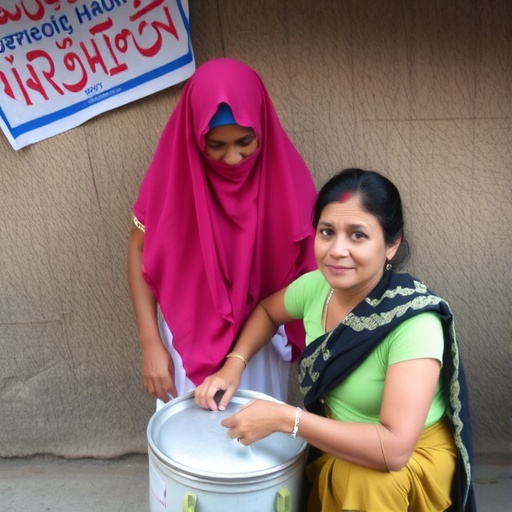
The health care challenges faced by sanitation workers in Bangladesh have long remained a marginalized issue, eluding comprehensive policy intervention and widespread academic scrutiny. A recent in-depth study conducted by Tasnim, Oeishik, Sarkar, and colleagues rigorously investigates these barriers within five municipalities of Bangladesh, shedding new light on the endemic inequities plaguing this essential workforce. By deploying an advanced multinomial logistic regression technique, the research elucidates not only the multifaceted obstacles sanitation workers confront but also evaluates the efficacy of the ongoing Shasthya Nirapotta Scheme designed to mitigate such challenges.
Sanitation workers play a crucial role in ensuring public health by maintaining the cleanliness and hygiene of urban and semi-urban environments. Despite their critical function, they are often exposed to hazardous conditions and face systemic neglect in accessing timely and adequate health care services. This disparity is particularly pronounced in developing countries such as Bangladesh, where socio-economic vulnerabilities and occupational hazards interlace to exacerbate health risks. The research probes deeply into these layers of vulnerability and the structural inhibitors that preclude healthcare accessibility.
The study’s foundation rests on data collected from sanitation workers across five different municipalities within Bangladesh, capturing a diverse cross-section of the workforce. These municipalities vary in size, economic development, and health infrastructure, thereby providing an expansive framework to analyze how localized factors impact the workers’ health care experiences. The sampling methodology ensured representation across gender, age groups, and employment types, offering a granular understanding of differential barriers that certain subgroups may encounter.
Central to the investigation is the Shasthya Nirapotta Scheme, an initiative by the Bangladeshi government aimed at improving health outcomes for sanitation workers through financial and logistical support. The program includes features such as health insurance coverage, subsidized medical care, and occupational safety trainings. By assessing this scheme’s reach and effectiveness, the authors critically evaluate whether policy has translated into practical improvements or remains a nominal gesture with limited impact.
The use of a multinomial logistic regression model provides a robust statistical framework for parsing complex categorical outcome variables related to health care access. Unlike binary models that restrict analysis to yes/no outcomes, the multinomial approach captures multiple nuanced categories—such as frequency of healthcare utilization, type of health facility accessed, and satisfaction with services—allowing for a multifaceted interpretation of healthcare barriers. This methodology enhances the reliability and depth of insights drawn from the dataset, enabling the identification of key predictors influencing sanitation workers’ health care behaviors.
One of the pivotal findings is the identification of socioeconomic determinants as significant predictors of healthcare access. Variables such as income level, education status, and household size were strongly correlated with healthcare utilization patterns. Lower income and education levels, in particular, were linked with reduced likelihood of seeking medical care, highlighting a vicious cycle where impoverishment and occupational hazards reinforce each other. The study brings quantitative precision to what has traditionally been anecdotal knowledge about poverty’s influence on health-seeking behavior.
Moreover, occupational factors including the nature of work contract—formal versus informal employment—also emerged as critical in shaping access to healthcare resources. Informal workers typically lack employer-provided health benefits and are less likely to be registered with health insurance schemes, leaving them vulnerable to out-of-pocket medical expenses. These systemic gaps amplify the risk of untreated injuries and illnesses, further compromising workers’ productivity and well-being.
The research also throws light on psychosocial determinants such as stigma and discrimination associated with sanitation work. These social factors contribute to reluctance in seeking care, with workers often reporting feelings of shame and marginalization in formal healthcare settings. The study underscores that addressing health access barriers requires not only structural reforms but also cultural change initiatives aimed at destigmatizing sanitation work at both community and institutional levels.
Geographic disparities within the five municipalities reveal how infrastructural deficiencies in healthcare facilities impact sanitation workers. Some municipalities exhibited better health infrastructure, including proximity to clinics and availability of specialized services, which correlated positively with healthcare uptake. Conversely, areas with less developed healthcare systems showed increased reliance on informal providers or traditional remedies, pointing to gaps in the health system’s capacity to cater to vulnerable populations.
Intriguingly, the evaluation of the Shasthya Nirapotta Scheme reveals a dichotomy between policy aspirations and on-the-ground realities. While the scheme has increased awareness among sanitation workers regarding available health services, actual enrollment and benefit utilization remain suboptimal. The authors attribute this to bureaucratic hurdles, inadequate outreach, and lack of synchronization with local health providers. This finding calls for a recalibration of policy execution strategies to ensure that health interventions translate into tangible improvements for workers.
The study’s comprehensive approach also addresses occupational safety as an interlinked dimension of health access. Sanitation workers who had received safety training or personal protective equipment were more likely to engage with formal healthcare services after injury or illness. This suggests that occupational health programs can play a pivotal role in fostering a culture of health vigilance and timely medical intervention.
The authors propose a multipronged intervention strategy encompassing policy reform, community engagement, and healthcare system strengthening. Policy reform should prioritize formalizing sanitation work, ensuring employment contracts include health coverage, and simplifying enrollment procedures for health programs like the Shasthya Nirapotta Scheme. Simultaneously, community-level education campaigns can dismantle stigma and empower workers to assert their health rights.
Strengthening healthcare systems to be more inclusive and accessible is equally essential. This involves expanding service availability in underserved municipalities, training healthcare providers in culturally sensitive care practices, and integrating occupational health services into primary healthcare. A close collaboration between public health authorities, municipal bodies, labor organizations, and civil society will be pivotal to these endeavors.
The implications of these findings extend beyond Bangladesh, resonating with numerous low- and middle-income countries where sanitation workers endure parallel challenges. The study’s rigorous methodological approach and rich dataset contribute valuable evidence to the global discourse on occupational health equity. It underscores the urgent need for integrated policies that not only safeguard worker health but also uphold their dignity and socio-economic security.
In conclusion, the groundbreaking work of Tasnim, Oeishik, Sarkar, and their colleagues transcends traditional epidemiological inquiry by intertwining statistical rigor with socio-political analysis. Their research demystifies the barriers to healthcare access faced by a stigmatized occupational group and provides a roadmap for transformative health policy interventions. If implemented effectively, the insights from this study could mark a watershed moment in advancing equity and justice for sanitation workers worldwide.
As the global community intensifies efforts toward universal health coverage and sustainable development goals, addressing the unique vulnerabilities of sanitation workers emerges as a critical priority. This research not only enriches scientific understanding but also offers a clarion call to policymakers, activists, and healthcare practitioners to recognize and act upon the health rights of those who keep our environments clean. The future landscape of occupational health equity depends significantly on such evidence-based, empathetic scholarship.
Subject of Research: Barriers to health care access for sanitation workers in Bangladesh
Article Title: Barriers to health care access for sanitation workers in five municipalities of Bangladesh: an evaluation of Shasthya Nirapotta Scheme using multinomial logistic regression approach
Article References:
Tasnim, F., Oeishik, M.Z., Sarkar, N.U. et al. Barriers to health care access for sanitation workers in five municipalities of Bangladesh: an evaluation of Shasthya Nirapotta Scheme using multinomial logistic regression approach. Int J Equity Health (2025). https://doi.org/10.1186/s12939-025-02739-1
Image Credits: AI Generated


