


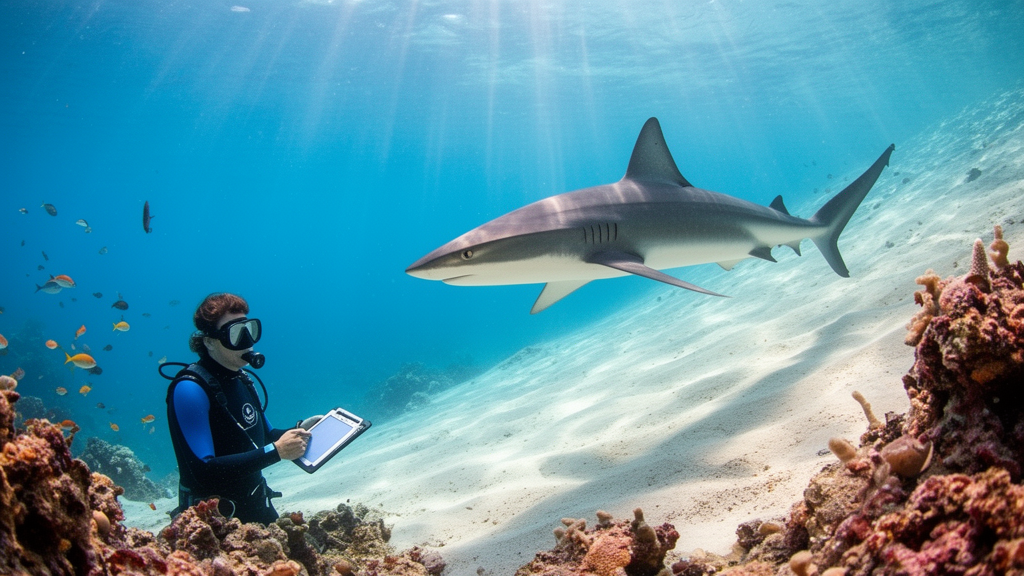
The waters off Panay and Guimaras islands in the central Philippines have just yielded a discovery that has electrified marine biologists: the first verified record of the sandbar shark, Carcharhinus plumbeus, in Philippine waters, alongside two putative species that may be entirely new to science. The findings come from an annotated checklist of cartilaginous fishes published in Acta Ichthyologica et Piscatoria, documenting fourteen species of sharks, batoids, and chimaeras from the Western Visayas region through intensive surveys at fish markets and ports. The research, led by a team from the University of the Philippines Visayas, not only expands the national inventory of cartilaginous fishes from 206 to 209 species but also raises urgent conservation questions in one of the most intensively fished coastal regions of Southeast Asia.
Cartilaginous fishes, members of the class Chondrichthyes, are divided into two subclasses: Holocephali, which includes the chimaeras, and Elasmobranchii, which encompasses sharks, rays, and skates. These fishes are among the most vulnerable marine vertebrates to overexploitation, owing to slow growth, late maturity, and low reproductive rates. In Southeast Asia, 393 cartilaginous species have been reported, and previous reviews estimated that about 206 species occur in Philippine waters. The Western Visayas, a region of highly intensive coastal fisheries, had previously been reported to host seventeen species of cartilaginous fishes. The new study, part of a larger project to re-survey marine fish diversity in the region, aimed to provide a comprehensive inventory while using DNA barcodes to confirm species identifications and enhance the accuracy of taxonomic records.
The researchers purchased specimens directly from local fish markets, landing sites, and fish ports in the provinces of Aklan, Antique, Capiz, Iloilo, and Guimaras between August 2020 and February 2022. Each specimen was wrapped in moist tissue paper, frozen, and transported to the University of the Philippines Visayas in Miagao, Iloilo. Curatorial protocols were followed, and detailed morphological measurements were taken using digital calipers, expressed as a percentage of disc width for most batoids and of total length for sharks and chimaeras. All specimens were deposited at the University of the Philippines Visayas-Museum of Natural Sciences, creating a permanent voucher collection accessible for future research.
Molecular laboratory work was performed at the Philippine Genome Center Visayas Satellite Facility and the Marine Biodiversity and Evolution Lab at UPV. Muscle tissue samples were collected from the ventral area of each fish and preserved in absolute ethanol. DNA was extracted and the mitochondrial cytochrome c oxidase subunit I gene, widely used as a DNA barcode, was amplified using established primers. The PCR mixture of 25 microliters was composed of nuclease-free water, PCR buffer, magnesium chloride, dNTP mix, Taq DNA polymerase, forward and reverse primers, and DNA template. Thermocycler conditions included an initial denaturation at 95 degrees Celsius, followed by 35 cycles of denaturation, annealing, and extension, and a final extension step. PCR products were visualized on agarose gel, purified, quantified, and sent for sequencing. The generated sequences were deposited in GenBank under accession numbers OR614465 to OR614481.
Phylogenetic trees were constructed using the maximum likelihood method based on the Kimura 2-parameter model with 1000 bootstrap replications. Priority was given to sequences from vouchered specimens available in GenBank and BOLD, sequences from closely related species, and sequences referenced in published studies. The resulting trees served as critical verification tools, clustering the Philippine sequences with those of confirmed species and separating them from closely related congeners. This integration of molecular and morphological techniques proved decisive in confirming the sandbar shark record and in revealing the two putative unidentified species.
The sandbar shark confirmation is arguably the most striking result. Three male specimens, measuring 363, 370, and 391 millimeters in total length, were collected at the Iloilo Fish Port Complex in July 2020. Previous studies had only reported a possible set of jaws that could not be confirmed from Philippine waters. The specimens were identified based on the presence of an interdorsal ridge, triangular upper jaw teeth, and a tall first dorsal fin originating above the pectoral fin, with its height exceeding half of the predorsal length. COI barcoding confirmed the identification, as the sequences clustered with other sandbar shark sequences. Globally, sandbar shark populations have declined by more than 50 percent due to fisheries overexploitation and coastal habitat degradation, and the species is classified as Endangered on the IUCN Red List. The presence of small individuals, smaller than published size-at-birth estimates, in Iloilo’s largest fish market indicates an urgent need for monitoring and management policies.
Among the fourteen species documented, the researchers also identified two putative unidentified species that may represent undescribed taxa. A specimen initially identified as Urolophus aurantiacus, collected at the Iloilo Fish Port Complex, showed significant COI divergence from available sequences of that species, clustering instead more closely with Urolophus expansus. However, U. expansus is characterized by blotches on the tail area and faint colored bars in front of and behind the eyes, features absent in the Panay specimens. Moreover, U. expansus has only been reported from western and southern Australia. Despite the observed genetic similarity, morphological and biogeographical evidence suggests that the Panay specimens represent a putative unidentified species requiring further investigation.
The second putative new species belongs to the genus Himantura, the whiptail stingrays. A specimen collected from a fish market in Carles, Iloilo Province, in February 2022, was compared against seven distinct species within the genus identified by Borsa and colleagues in 2021. Phylogenetic analysis indicated that the collected specimen clusters within the clade corresponding to Himantura sp. 1 sensu Borsa et al., a species that remains provisionally identified pending formal description. The identification remains provisional, but the finding underscores how DNA barcoding can detect cryptic and undescribed diversity even in heavily sampled regions.
The twelve nominal taxa documented in the study include three species classified as Least Concern, five as Near Threatened, two as Vulnerable, one as Endangered, and one as Critically Endangered according to IUCN Red List assessments. The Critically Endangered species is the Philippine guitarfish, Rhinobatos whitei, an endemic described only in 2014 and known from a highly restricted geographic range. The study reports the first collection of a juvenile specimen, and knowledge on juveniles may be important in protecting the species. Two other Philippine endemics, Lana’s sawshark Pristiophorus lanae and the Philippine guitarfish, were previously categorized as confirmed but lacking species accounts, and the new voucher specimens and COI barcodes provide valuable confirmation of their presence in Panay Island waters. The spotted eagle ray, Aetobatus ocellatus, previously categorized as uncertain in the Philippines, was also confirmed through a specimen collected in Guimaras Province.
The study also documented the silver chimaera Chimaera phantasma, a Vulnerable deepwater species, along with the whitespotted bambooshark, grey carpetshark, coral catshark, spottail shark, giant stingaree, oriental bluespotted maskray, and bluespotted lagoon ray. Each species profile includes a morphological description, distribution details, GenBank accession number, standard name, and conservation status. The researchers emphasize that the provision of newly vouchered specimens, along with morphological descriptions, COI data, and color photographs, lays a strong foundation for future research. Given the impact of climate change and destructive human activities such as overfishing and coastal restructuring, the authors argue that taxonomic studies must receive greater attention from the scientific community to prevent the extinction of species before they are even known, as exemplified by the critically endangered Philippine guitarfish, which was only described in 2014.
Subject of Research: Cartilaginous fish diversity in the Western Visayas, Philippines, including two putative unidentified species and the first record of Carcharhinus plumbeus
Article Title: Cartilaginous fish diversity in the Western Visayas, Philippines, including two putative unidentified species and the first record of Carcharhinus plumbeus ( Elasmobranchii : Carcharhiniformes : Carcharhinidae )
Article References: Cabebe-Barnuevo, R., Penuela, D. F., Delloro Jr., E. S., Babaran, R. P., Motomura, H., & Malay, M. C. D. (2025). Cartilaginous fish diversity in the Western Visayas, Philippines, including two putative unidentified species and the first record of Carcharhinus plumbeus (Elasmobranchii: Carcharhiniformes: Carcharhinidae). Acta Ichthyologica et Piscatoria, 55, 51-75. https://doi.org/10.3897/aiep.55.139721
Image Credits: AI Generated
Keywords: sharks, rays, chimaeras, Philippines, DNA barcoding, conservation, marine biodiversity, Western Visayas, Cartilaginous, fish, diversity, Western
Cite Scienmag News
Margaret Porter. (October 19, 2026). Sandbar shark confirmed in Philippine waters as surveys reveal hidden shark and ray diversity. Scienmag. https://scienmag.com/sandbar-shark-confirmed-in-philippine-waters-as-surveys-reveal-hidden-shark-and-ray-diversity/
Margaret Porter. "Sandbar shark confirmed in Philippine waters as surveys reveal hidden shark and ray diversity." Scienmag, 19 October 2026, https://scienmag.com/sandbar-shark-confirmed-in-philippine-waters-as-surveys-reveal-hidden-shark-and-ray-diversity/. Accessed 19 October 2026.
Margaret Porter. "Sandbar shark confirmed in Philippine waters as surveys reveal hidden shark and ray diversity." Scienmag. October 19, 2026. https://scienmag.com/sandbar-shark-confirmed-in-philippine-waters-as-surveys-reveal-hidden-shark-and-ray-diversity/


