

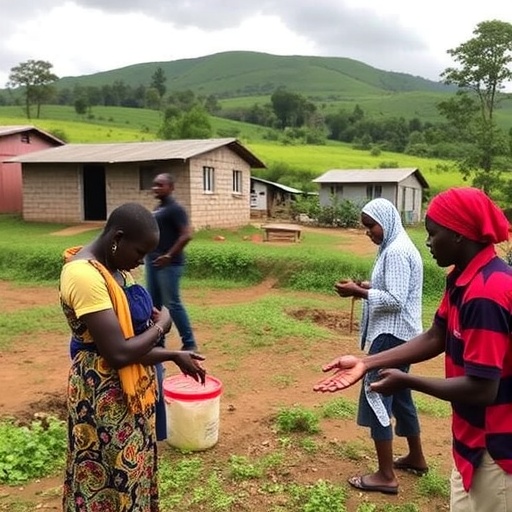
In a groundbreaking study that delves into the profound impacts of trauma and resilience, researchers have embarked on a longitudinal randomized comparison to evaluate the efficacy of the community resiliency model (CRM) in addressing mental health challenges among survivors and perpetrators of genocide in Rwanda. This pivotal research is timely, addressing a critical intersection of psycho-social healing, community engagement, and public health in a region still grappling with the aftereffects of its tumultuous past.
The community resiliency model is designed to empower individuals through a framework that emphasizes personal strengths, communal ties, and adaptive coping strategies. By equipping participants with tools that enhance their resilience, the CRM aims to foster a supportive environment that mitigates the long-lasting psychological effects of trauma. This approach is particularly crucial in a post-genocide context where societal structures are often fragmented, and trust among community members is severely tested.
The study, scheduled for publication in 2026 in the journal “Discover Mental Health,” employs rigorous scientific methodologies to gauge the model’s impact on mental health outcomes. Researchers have carefully selected a demographically diverse group of participants, ensuring that the findings can be generalized to the broader community. By randomly assigning participants to either the intervention group, which receives CRM training, or the control group, the researchers aim to establish a clear causal relationship between the CRM and improved mental health outcomes.
A significant aspect of this research involves the dual focus on both survivors and perpetrators of genocide. Traditionally, mental health studies have tended to treat these groups in isolation, overlooking the complex interplay between victimization and perpetration in the context of inter-community relations. By including both populations in their analysis, the researchers seek to illuminate how shared experiences of trauma can lead to pathways of healing and reconciliation. This approach underscores the importance of collective healing, where shared narratives facilitate empathy and understanding across divides.
Preliminary qualitative assessments conducted prior to the randomized trial have yielded promising insights. Many participants reported that engaging with the CRM enriched their sense of community and provided a renewed sense of purpose. They expressed feeling more equipped to handle emotional distress and better able to access support systems within their neighborhoods. These findings suggest that psychological resilience can be nurtured even in the wake of profound societal trauma, paving the way for future research on scalable interventions in similar contexts.
A major challenge in this field of research lies in the stigma associated with mental health in many communities, particularly within Rwanda. Prior to the implementation of the CRM, researchers conducted extensive outreach to educate potential participants about the importance of mental health and seek to normalize conversations around psychological struggles. These efforts are crucial in reducing defensive barriers and encouraging openness about acute and chronic mental health issues.
As the study progresses, it will also examine the long-term sustainability of the CRM’s benefits. Researchers are aware that short-term interventions may not lead to enduring changes in mental health outcomes. As such, a follow-up component will track participants over several years, providing insights into whether gains in resilience and psychological well-being persist in the face of ongoing societal challenges.
Moreover, the implications of this research extend beyond individual mental health. The success of the CRM model could inspire policy changes and interventions at a national level, potentially shaping mental health strategies that focus on community-driven solutions. This could represent a paradigm shift in how post-conflict societies address psychological healing, moving away from top-down approaches towards more inclusive community engagement models.
As the 2026 publication date approaches, there is a palpable sense of anticipation surrounding the potential findings. The integration of quantitative measures alongside qualitative narratives offers a rich tapestry of data that could transform our understanding of resilience in post-genocide contexts.
Encouraged by initial data and participant feedback, the researchers are optimistic not only about the outcomes of the trial but also about the broader discourse it could inspire. The validity and reliability of their approach serve to bolster calls for increased investment in mental health services across the region, particularly in settings where historical trauma continues to plague populations.
In the refinement of the community resiliency model, researchers will also focus on the necessity of flexibility. A one-size-fits-all approach to mental health interventions can often lead to disillusionment and disengagement. By emphasizing adaptability, the CRM aims to be responsive to the unique needs of various communities and demographic groups, ensuring that its applications are as effective as possible.
In closing, the upcoming results have the potential to impact not only the trajectory of mental health care in Rwanda but also contribute to global discussions on trauma-informed practices. As awareness of mental health continues to rise worldwide, studies such as this highlight the critical importance of localized solutions to complex human issues. The quest for resilience in the face of unspeakable trauma is not solely a personal journey; it’s a collective endeavor that speaks to the very essence of humanity’s ability to heal and rebuild together.
The researchers hope their findings will foster further discourse around community approaches to mental health in post-conflict societies, paving the way for new methodologies that emphasize inclusion, understanding, and shared stories of recovery.
The journey continues as Rwanda navigates its path towards healing, bolstered by the hope that innovations in mental health interventions can spark broader societal change.
Subject of Research: Community resiliency model effects on mental health in genocide survivors and perpetrators.
Article Title: Longitudinal randomized comparison study on the community resiliency model for addressing mental health challenges in survivors and perpetrators of genocide in Rwanda.
Article References:
Habimana, S., Lister, Z., Biracyaza, E. et al. Longitudinal randomized comparison study on the community resiliency model for addressing mental health challenges in survivors and perpetrators of genocide in Rwanda.
Discov Ment Health (2026). https://doi.org/10.1007/s44192-026-00376-w
Image Credits: AI Generated
DOI:
Keywords: Community Resilience, Mental Health, Genocide Survivors, Trauma, Rwanda, Healing, Public Health, Longitudinal Study.


