


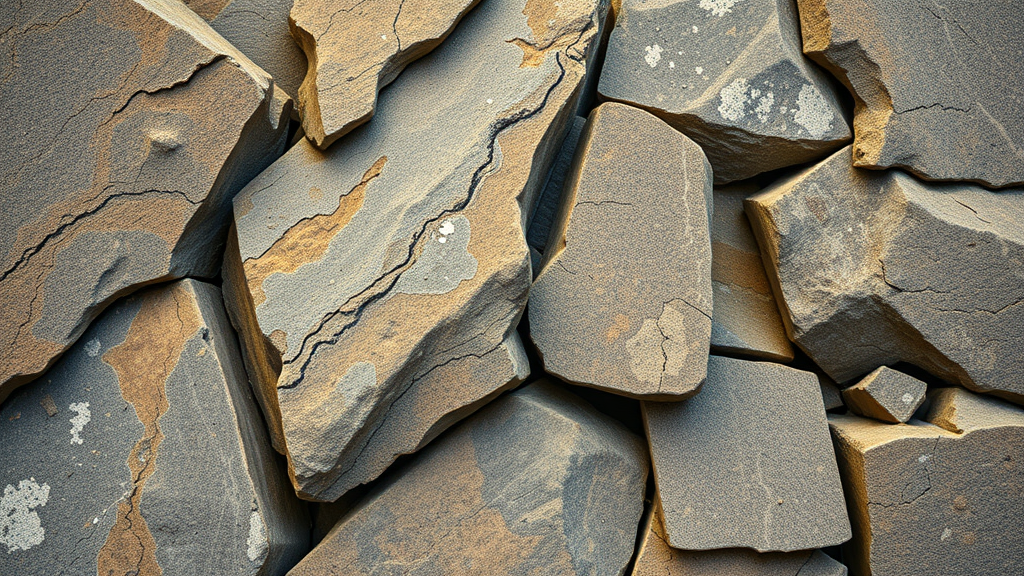
Deep beneath every forest, field and river valley, rocks are quietly engaged in a conversation with the atmosphere that has shaped Earth’s climate for billions of years. When rainwater, charged with carbon dioxide, percolates through soils and bedrock, it dissolves minerals in a process known as chemical weathering. In many settings, that reaction locks atmospheric carbon into dissolved bicarbonate ions that rivers carry to the ocean, where the carbon can be stored for tens of thousands of years or longer. This rock-driven sink has long been celebrated as the planet’s geological thermostat, a feedback that drew down carbon dioxide after volcanic surges and helped keep Earth’s climate within habitable bounds. Yet according to a new World View published in Nature Water by Aaron Bufe of Ludwig-Maximilians-Universität München, the relationship between rock weathering and the global carbon cycle is far more tangled than the popular thermostat narrative suggests, and that complexity carries urgent lessons for the emerging market in carbon credits.
The classic view of weathering as a stabilizing feedback traces back to influential work in the 1980s and 1990s. Robert Berner and colleagues formalized how silicate weathering responds to atmospheric carbon dioxide and temperature, creating a negative feedback loop: more carbon dioxide warms the planet and acidifies rain, which accelerates weathering, which in turn removes carbon dioxide from the atmosphere. Later, Maureen Raymo and William Ruddiman proposed that the uplift of mountain ranges such as the Himalaya may have cooled the Cenozoic Earth by exposing fresh rock to erosion. Francis Macdonald and colleagues later connected arc volcanism and associated weathering to major climatic transitions. These frameworks cemented the idea that mountain building and rock exposure are, in broad strokes, allies of a cool climate.
But as Bufe emphasizes, drawing down carbon dioxide is only one side of the ledger. Weathering and erosion also release carbon. The oxidation of fossil organic carbon buried in sedimentary rocks, and the oxidation of sulfide minerals such as pyrite, both deliver carbon dioxide to the atmosphere, in some landscapes at rates that rival or exceed the silicate weathering sink. Recent work by Bufe, Jeremy Rugenstein and Niels Hovius, published in Science in 2024, compiled global evidence that mountain ranges act not merely as carbon sinks but as carbon sources as well, with the balance between drawdown and release depending on what the rocks are made of, how fast they erode, and how water moves through them. In the Southern Alps of New Zealand, for example, rapid erosion of carbon-rich sedimentary rock can push the net carbon balance toward emission, whereas volcanic arcs dominated by fresh basalt tend to favor drawdown.
The picture grows still more complicated when biology and hydrology enter the equation. Susan Brantley and colleagues showed in 2023 that the depth and structure of the critical zone, the weathered skin of Earth where rock, soil, water and life interact, exert fundamental control on how much mineral surface area is available for reactions. Vegetation, microbial communities and soil organic matter can both accelerate mineral dissolution and shield it from infiltrating water. Meanwhile, organic carbon itself is constantly being eroded from soils, transported by rivers, buried in floodplains and deltas, or oxidized back to carbon dioxide. Studies led by Robert Hilton and A. J. West have mapped this biospheric carbon loop, and work by Guillaume Soulet and colleagues has quantified how efficiently the biosphere exchanges carbon with the atmosphere through erosion, complicating any simple accounting of weathering as a one-way carbon pump. Sue Tank and colleagues have further shown that in high-latitude permafrost landscapes, the fate of weathering-derived carbon in streams and lakes can shift dramatically as climates warm.
Spatial scale matters profoundly. A weathering flux measured on a single hillslope may not scale linearly to a whole catchment, and catchment-scale estimates may not extrapolate to mountain belts or continents. Supply of fresh mineral surface, runoff, temperature and lithology each impose their own dependencies, and these dependencies can switch sign across environments. In hot, wet tropical basaltic terrains, weathering rates can be extraordinarily high and largely supply-limited. In cold, arid or transport-limited settings, the same mineralogy may weather sluggishly. Time introduces its own twists: pulses of tectonic uplift or glacial grinding expose fresh rock that weathers rapidly at first, then slows as easily dissolved minerals are exhausted. Over million-year timescales, these transients mean that today’s weathering fluxes partly reflect climate and tectonics from deep in the past, making it treacherous to read modern weathering rates as a simple response to modern conditions.
Disciplinary boundaries compound the challenge. Geochemists who trace dissolved ions in rivers, geomorphologists who measure erosion and sediment transport, soil scientists who study profile development, ecologists who quantify vegetation dynamics and carbon cycling, and climate modelers who simulate global feedbacks each hold pieces of the puzzle. Bufe argues that only research spanning spatial scales, temporal scales and disciplines can resolve how weathering modulates the carbon cycle in a warming world. As the climate changes, weathering itself will change: rising temperatures and altered hydrology will accelerate some reactions, thawing permafrost will expose new mineral surfaces and release ancient organic carbon, and intensifying storms will mobilize sediment in ways that models are only beginning to capture. Whether the geological thermostat will help blunt anthropogenic warming, and on what timescale, remains an open and consequential question.
It is against this backdrop of genuine scientific uncertainty that Bufe levels his sharpest critique. Enhanced rock weathering, the practice of spreading crushed silicate rock such as basalt on farmland to accelerate carbon dioxide drawdown, has surged in popularity as a carbon removal strategy. A growing industry now sells carbon credits based on the assumption that a quantifiable and permanent fraction of the applied rock dissolves, and that the resulting bicarbonate represents durable carbon sequestration. Commercial rankings of the best enhanced weathering credit projects have proliferated, and the market is expanding faster than the underlying science can constrain it. In a companion review in Nature Reviews Earth & Environment, Maximilian Schiedung and colleagues catalogued the substantial uncertainties in measuring, reporting and verifying enhanced weathering outcomes, from dissolution kinetics in real soils to secondary carbonate formation that can return carbon to the atmosphere.
Bufe contends that issuing carbon credits for enhanced weathering at the present stage is premature. The very complexities that make natural weathering hard to quantify, the competing sources and sinks, the dependence on lithology, hydrology, biology and timescale, apply with full force to engineered deployments. Crushed rock applied to one field may behave very differently from the same material in another, and the net climate benefit must account for the carbon cost of mining, grinding and transporting rock, as well as for nitrous oxide and other greenhouse gas effects that soil amendments can trigger. Without robust, context-specific measurement of how much carbon is actually drawn down and for how long, credits risk monetizing an assumption rather than a verified outcome, potentially undermining confidence in carbon removal as a whole.
None of this argues that enhanced weathering should be abandoned, Bufe stresses. Rock weathering remains one of the most promising and scalable negative-emissions pathways, rooted in a process that has regulated Earth’s climate for eons. But realizing that promise responsibly demands investment in the fundamental science: long-term field experiments across climates and soil types, improved tracers of mineral dissolution and carbon fate in rivers and oceans, and models that honor the tangled interplay of tectonics, erosion, hydrology and life. The geological thermostat is real, but it is not a simple dial. Understanding its gears, and the directions in which some of them spin backward, is a prerequisite for turning rock weathering into a trustworthy tool against climate change rather than a cautionary tale about moving faster than the science.
Subject of Research: The complex role of rock weathering in Earth's carbon cycle and the risks of premature carbon crediting for enhanced weathering
Article Title: Rock weathering’s tangled role in Earth’s carbon cycle
Article References: Bufe, A. (2026). Rock weathering’s tangled role in Earth’s carbon cycle. Nature Water. https://doi.org/10.1038/s44221-026-00707-9
Image Credits: AI Generated
DOI: 10.1038/s44221-026-00707-9
Keywords: rock weathering, carbon cycle, enhanced weathering, carbon credits, chemical weathering, silicate minerals, carbon dioxide removal, geomorphology, biogeochemistry, erosion, climate mitigation, Nature Water
Cite Scienmag News
Violet Maxwell. (September 13, 2026). Rock weathering’s tangled role in Earth’s carbon cycle. Scienmag. https://scienmag.com/rock-weatherings-tangled-role-in-earths-carbon-cycle/
Violet Maxwell. "Rock weathering’s tangled role in Earth’s carbon cycle." Scienmag, 13 September 2026, https://scienmag.com/rock-weatherings-tangled-role-in-earths-carbon-cycle/. Accessed 4 October 2026.
Violet Maxwell. "Rock weathering’s tangled role in Earth’s carbon cycle." Scienmag. September 13, 2026. https://scienmag.com/rock-weatherings-tangled-role-in-earths-carbon-cycle/


