

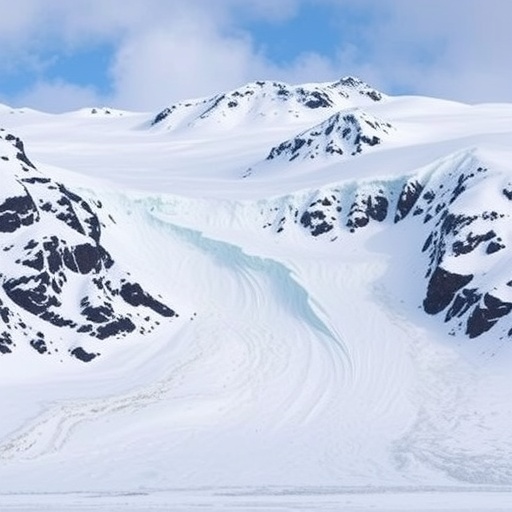
In recent years, two catastrophic mountain disasters—one in the Indian Himalayas and another in the Swiss Alps—highlight the stark difference in outcomes when cutting-edge monitoring and risk management strategies are implemented. The 2021 Chamoli disaster in India’s high-altitude valleys tragically claimed over 200 lives when a massive ice and rock avalanche devastated the region. Contrastingly, a 2025 avalanche event in Blatten, Switzerland, despite being similarly catastrophic in scale and burying most of the village beneath ice and debris, resulted in only a single casualty. This dramatic divergence underscores the pivotal role of proactive risk assessment and early warning systems in mitigating the human toll of natural hazards intensified by climate change.
Detailed scientific investigations reveal that both avalanches shared comparable physical dynamics, involving the rapid detachment and flow of a mixed mass of ice and rock from high mountain slopes. However, the Swiss authorities were able to detect and quantify unusual precursory movements on slopes days before the collapse. Advanced remote sensing technologies, including interferometric radar and ground-based sensors, were employed to track the acceleration of slope deformation in near-real time. This facilitated timely evacuation of approximately 300 residents, exemplifying the life-saving potential of integrated monitoring systems.
In stark contrast, the Chamoli valley’s remoteness and lack of coordinated hazard surveillance precluded early detection of the destabilizing glacier and talus slopes. Though retrospective analysis of satellite imagery revealed signs of slope instability months prior to the disaster, the lack of operational ground monitoring and warning protocols meant warning signals went unnoticed. This highlights a critical gap in disaster readiness in many high-mountain developing regions, where logistical challenges and resource limitations hinder comprehensive risk mitigation.
The nexus between climate change and increasing slope instability is now well documented. Glacial retreat due to rising temperatures diminishes the mechanical support once provided by ice masses, while thawing permafrost reduces ground cohesion within bedrock and sediment layers that form the steep mountain slopes. Coupled with intensified precipitation events induced by shifting climate regimes, these factors collectively enhance the frequency and magnitude of cryospheric hazards such as avalanches and debris flows.
Dr. Lander Van Tricht, a leading cryospheric scientist affiliated with Vrije Universiteit Brussel and ETH Zurich, emphasizes the implication of these changes: “The Chamoli event is a tragic example of how devastating ice and rock avalanches become in the absence of real-time monitoring and effective early warning. But the Blatten case illustrates that with modern risk management infrastructure, even very large hazards need not translate into large-scale disasters or significant loss of life.”
In addition to highlighting these recent events, ongoing research draws attention to other notable alpine disasters exacerbated by climate volatility, such as the 2022 collapse of the Marmolada glacier in northern Italy, which caused 11 fatalities. These occurrences underscore the urgency to rethink traditional disaster preparedness frameworks in high-mountain environments, integrating new scientific insights on slope mechanics and hydrological variability driven by warming trends.
While the physical processes driving slope instability are irreversible natural phenomena that no human intervention can fully prevent, the study advocates a paradigm shift towards minimizing human vulnerability through sophisticated monitoring and community engagement. The Swiss model represents a benchmark, where satellite data is seamlessly combined with targeted ground-based sensors for comprehensive surveillance, enabling dynamic hazard thresholds and automated alerts.
Moreover, efficient communication networks ensure that warnings rapidly reach local populations, who are educated and trained to respond appropriately to imminent threats. This multi-layered approach, involving technological innovation, governance coordination, and social preparedness, drastically enhances resilience and reduces disaster impact.
Researchers propose that Himalayan nations, where the population density around glaciers and unstable slopes is high, could achieve substantial risk reduction by adopting similar integrated risk management strategies. Establishing a regionally customized system that leverages new satellite monitoring capabilities while implementing robust ground-truthing methods could bridge the current information gap.
Implementing such systems requires investment in infrastructure and institutional frameworks capable of interpreting complex geophysical data into actionable early warnings. Equally vital is fostering strong partnerships between scientists, authorities, and communities, ensuring that warning signs are not only detected but effectively communicated and acted upon in time.
Ultimately, this multidimensional approach characterizes the fine line between catastrophe and survival in mountainous regions increasingly exposed to climate change-induced hazards. It is a poignant reminder that while nature’s forces may be immutable, human societies have the capacity to anticipate, prepare, and thereby safeguard lives and livelihoods against formidable natural threats.
The dichotomy between the Chamoli and Blatten avalanches poignantly embodies the critical lesson that effective disaster risk reduction in mountainous environments hinges on preparedness rather than mere hazard occurrence. With continuing advances in remote sensing technology and a deeper scientific understanding of cryospheric processes, the possibility of significantly mitigating future avalanche disasters becomes increasingly achievable.
As global warming relentlessly reshapes alpine terrains, the integration of science-driven early warning systems combined with resilient social structures will be paramount in curbing the human cost of these extreme events. This evolving reality serves as both a challenge and an opportunity for policymakers, scientists, and local communities to forge a safer future amid their majestic but perilous mountain landscapes.
Subject of Research: Cryospheric hazards, avalanche risk management, climate change impacts on mountain slope stability
Article Title: Not provided
News Publication Date: Not provided
Web References: http://dx.doi.org/10.1038/s43247-026-03352-y
References: Van Tricht, L., et al. (2026). Nature Communications.
Image Credits: Not provided
Keywords: Climate change effects, Avalanches, High mountain hazards, Cryospheric disasters, Slope monitoring, Early warning systems


