

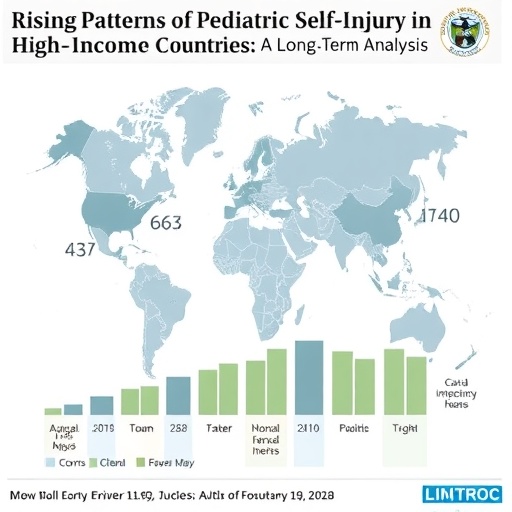
A Comprehensive Review Reveals Rising Trends in Self-Injury Among Youth Across High-Income Nations
In an alarming meta-analysis and systematic review encompassing 42 studies, researchers have identified a notable increase in the rates of self-injury among children and adolescents within high-income countries. This seminal study, which scrutinizes the velocity and variability of self-injury-related healthcare encounters and self-reported behaviors, elucidates troubling patterns that warrant urgent public health interventions focusing especially on female youths.
Self-injury, often clinically referred to as non-suicidal self-injury (NSSI), involves deliberate harm or injury inflicted on one’s body without suicidal intent. This behavior has profound implications for mental health and well-being, acting as a distress signal and sometimes a precursor to suicidal actions. Within the scope of these 42 observational studies, variability in baseline self-injury rates was evident, a heterogeneity attributable to differences in data collection methods, demographics, cultural factors, and healthcare accessibility across 12 wealthier nations.
Methodologically, the review adhered to rigorous systematic procedures, compiling data from longitudinal and cross-sectional observational studies. By employing meta-analytic techniques, the researchers quantified the annual relative increase in self-injury visits to healthcare facilities, correlating these trends with self-reported incidences from population surveys. Such robust methodological triangulation enhances the reliability and generalizability of the findings.
An emergent theme from the review is the disproportionate rise in self-injury incidences among female individuals. This gendered dimension raises critical questions about underlying psychosocial stressors, including societal pressures, gender-related stigmatization, and differential exposure to mental health risk factors. The data compel clinicians, policymakers, and educators to integrate gender-responsive strategies when designing prevention programs.
Contextual and large-scale preventive measures are emphasized as urgent necessities. Unlike individualized clinical approaches, prevention initiatives at a societal level demand an intersectional understanding of socioeconomic determinants, cultural nuances, and healthcare infrastructure disparities. The implications extend beyond clinical management, encompassing educational reforms, community engagement, policy enactments, and digital health innovations aimed at early identification and sustained support for at-risk youth.
The economic ramifications linked to the increasing healthcare burden from self-injury are also non-trivial. Elevated emergency department visits, inpatient admissions, and outpatient follow-ups markedly impact medical economics within high-income countries. This underscores the exigency for healthcare systems to allocate resources effectively, embedding preventative mental health services within primary care and educational settings to mitigate long-term costs.
Further, the variability across countries highlights potential impacts of policy environments, stigma reduction efforts, and mental health literacy levels. Differential funding for mental health services and disparities in access to culturally sensitive care may influence reporting rates and help-seeking behavior, complicating cross-national comparisons.
From a research methods perspective, the integration of observational studies within a meta-analytical framework allows for nuanced statistical synthesis, managing heterogeneity and potential confounders. This analytical rigor affords policymakers a data-driven foundation to justify and design targeted mental health interventions, emphasizing preventive medicine paradigms.
Emerging technologies such as machine learning and artificial intelligence could be leveraged to enhance early detection and intervention strategies by analyzing patterns in electronic health records and social media behaviors indicative of self-injurious tendencies. These innovations could complement traditional epidemiological monitoring, providing real-time insights for healthcare practitioners.
However, the review also highlights knowledge gaps, including insufficient longitudinal data capturing the transition dynamics from self-injury to potential suicidal behavior, and lack of granular data on racial, ethnic, and cultural subgroups. Addressing these gaps is vital for precision public health interventions and equitable resource distribution.
The study’s prominent call-to-action underscores the vital importance of an integrated response combining clinical expertise, mental health policy reform, education sector engagement, and robust community support systems. Such multifaceted strategies are essential to reverse the burgeoning trend of self-injury and safeguard the mental health of future generations.
In conclusion, this comprehensive synthesis brought forth by a leading pediatric research institution not only illuminates the alarming rise of self-injurious behaviors among youth in affluent nations but also crystallizes the imperative for proactive, contextually informed, and gender-sensitive preventive frameworks. The findings resonate beyond the healthcare sector, imploring diverse societal stakeholders to unite in curbing this critical public health challenge.
Subject of Research: Trends and epidemiology of self-injury among children and adolescents in high-income countries.
Article Title: [Not provided]
News Publication Date: [Not provided]
Web References: [Not provided]
References: doi:10.1001/jamapediatrics.2026.0217
Image Credits: [Not provided]
Keywords: self-injury, adolescents, pediatrics, traumatic injury, healthcare costs, medical economics, preventive medicine, emergency medicine, observational studies, meta-analysis, health care, children


