

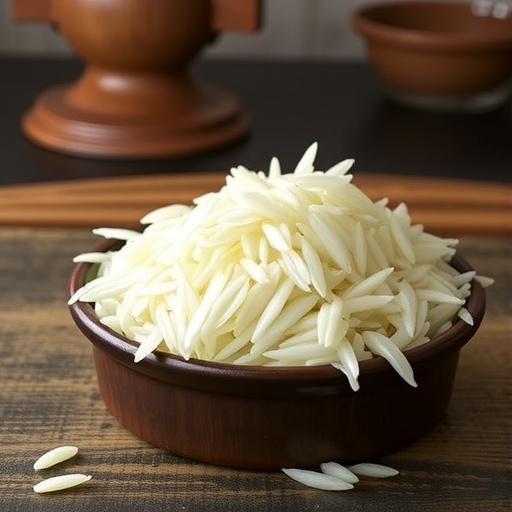
The long and intricate journey of rice, one of the world’s most vital staple foods, has carved its place in the cultural and culinary histories of numerous nations. A fresh examination into how rice made its way into Italy and Japan sheds light on the profound influence this grain has had across continents. In “The long rice story,” researcher C. Pelloli embarks on a comparative analysis that not only highlights the agricultural adoption of rice in these two distinct cultures but also dives into the social and economic ramifications that ensued. It is a narrative rich with historical significance and contemporary relevance.
In Italy, the introduction of rice can be traced back to the Middle Ages. While the exact timeline remains somewhat muddled, it is widely accepted that rice was initially cultivated in northern Italy, especially in the Po Valley, during the late 15th century. The environmental conditions of the region, particularly its marshy areas, were favorable for rice cultivation, allowing it to thrive. Pelloli elucidates how Italian innovation in agricultural techniques transformed this introduction into a robust rice economy. The irrigation systems developed in the Po Valley not only boosted rice production but also laid foundations for future agricultural practices. This adaptation marked a significant shift in Italy’s agrarian landscape, catalyzing a newfound appreciation for rice as a dietary staple.
Meanwhile, Japan’s relationship with rice is almost mythological, wrapped in reverence and traditions that hark back thousands of years. The chronology of rice in Japan can be linked to the Yayoi period, around 300 B.C. It was during this era that wet rice cultivation techniques were imported from the Korean Peninsula, triggering a social transformation that would define Japanese culture. Pelloli draws attention to how rice became entwined with Japan’s identity, serving as a key component in rituals, festivals, and even the nation’s economic foundation. The respect for rice is embedded in the very essence of Japanese society, from the ceremonial aspects of rice planting to its central place in Japanese cuisine.
The contrasting paths that Italy and Japan took to adopt rice provides insights into the contextual factors that influenced their agricultural practices. In Italy, the transition to rice cultivation was driven by economic necessity, as the population grew and diverse agricultural products were required to sustain it. Conversely, in Japan, rice was not merely a food source but also a symbol of wealth and social status. The Japanese adopted rice not for mere sustenance but as an emblem that connected them with spirituality and their ancestral roots. Pelloli emphasizes that understanding these differing motivations reveals how culture influences agricultural practices and food systems.
Furthermore, Pelloli’s study underlines how rice cultivation has been influenced by technology and environmental transformations. In Italy, the introduction of mechanicized farming in the 19th century revolutionized rice production, leading to increased yields and efficiency. Innovations such as tractors and advanced irrigation systems elevated rice from a local staple to an internationally recognized product. In contrast, Japan’s advancements took on a different form. The modernization of rice farming in Japan has often been paired with traditional practices, creating a unique blend that maintains cultural integrity while also improving productivity. The delicate balance of innovation and tradition is a theme that resonates throughout Pelloli’s analysis.
As Pelloli progresses through the historical narrative, he doesn’t shy away from addressing the socio-economic impacts that followed rice’s establishment in Italy and Japan. Both countries have witnessed significant transformations in their agricultural landscapes, which in turn reshaped their economies. The commercialization of rice in Italy has not only transformed farming communities but has also opened up avenues for agricultural tourism. On the other hand, Japan’s devotion to rice cultivation has led to government policies designed to protect rice farmers, amidst globalization and agricultural imports. The resultant landscape illustrates a complex interplay of tradition, economy, and agriculture.
In addition to economic ramifications, the cultural significance of rice in both Italy and Japan cannot be overstated. Pelloli delves into the culinary evolutions that rice has spurred in both nations. In Italy, rice became synonymous with iconic dishes such as risotto, showcasing how the ingredient was weaved into the culinary fabric of the country. Each region developed its variations, evolving risotto into a symbol of Italian culinary creativity. Meanwhile, in Japan, rice is not simply a dish; it’s a central component of nearly every meal. It represents purity and sustenance, often served as an essential pairing with fish or vegetables.
This exploration of rice also raises pertinent questions about food security and sustainability in the modern world. As climate change poses challenges to agricultural practices, the historical context of rice cultivation offers valuable lessons. Pelloli’s comparative analysis illustrates potential pathways for innovation in farming methods that honor both tradition and modernity. As nations grapple with the complexities of food production, the enduring legacy of rice provides a framework for sustainable practices that respect cultural heritage.
In conclusion, C. Pelloli’s “The long rice story” is not merely a historical recounting of rice’s introduction into Italy and Japan; it is an exploration of the intertwining pathways of agriculture, culture, and economy. The distinctive trajectories of these two countries reveal the adaptability and significance of rice, a grain that has transcended borders and evolved within intricate social fabrics. This examination serves as a reminder of the valuable lessons embedded in agricultural histories, urging contemporary society to reflect upon the way forward in a world facing unprecedented challenges.
Through this comparative lens, readers gain insights into the importance of understanding agricultural history as a way to tackle modern challenges related to food security and sustainability. The legacy of rice in both Italy and Japan serves not only as a testament to the past but also as a guiding light for future agricultural practices, ensuring that this ancient grain continues to thrive in the context of an ever-evolving global landscape.
Subject of Research: The introduction and impact of rice in Italy and Japan.
Article Title: The long rice story. A comparison of rice’s introduction into Italy and Japan.
Article References:
Pelloli, C. The long rice story. A comparison of rice’s introduction into Italy and Japan.
asian archaeol 8, 37–58 (2024). https://doi.org/10.1007/s41826-024-00083-x
Image Credits: AI Generated
DOI:
Keywords: Rice, Italy, Japan, Agriculture, Cultural Impact, Economic Transformation, Sustainability, Tradition.


