

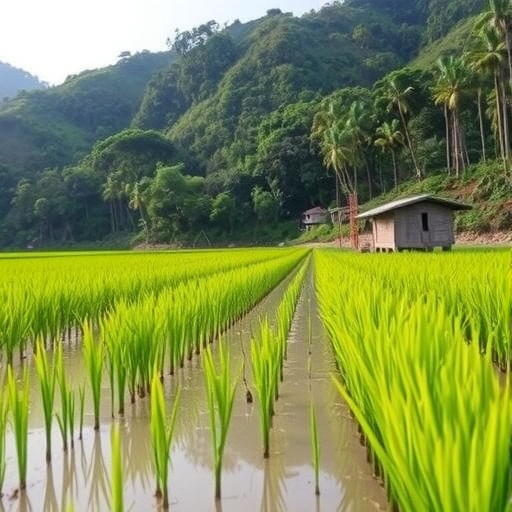
Projected Warming: An Impending Crisis for Rice Cultivation
Recent scientific projections indicate a worrying trend: the impending threat of climate change is poised to fundamentally disrupt rice cultivation worldwide. The research spearheaded by Gauthier et al. has unveiled chilling data that suggests as global temperatures continue to climb, rice plants may soon experience conditions beyond their long-term thermal limits. This insight comes from a collaborative study that aims to shed light on the potential consequences of climate change for one of the most crucial crops that sustains billions of individuals across the globe.
The study comprehensively examines the delicate relationship between rice yield and temperature increases. It is well-documented that rice, a staple food for over half the world’s population, has specific temperature thresholds that support optimal growth. However, this research posits that the gradual rise in global temperatures could push these thresholds beyond what rice plants can withstand, resulting in diminishing yields and potentially catastrophic food shortages. The extensive analysis conducted presents data gathered from diverse climatic varieties, considering factors such as humidity, soil quality, and geographical distribution to develop a thorough understanding of future repercussions.
In a detailed examination of the climatic conditions favorable for rice, it becomes evident that temperature is a pivotal factor influencing the crop’s growth cycle. Optimal rice cultivation typically thrives within a specific range of temperatures, usually between 20°C and 30°C. However, as projections indicate a possible rise in global temperatures by up to 3°C or more by the 2060s, researchers suggest that many regions may witness average temperatures that exceed these critical thresholds. This increase would likely lead to heat stress during pivotal growth stages, adversely affecting yield potential and grain quality.
Furthermore, the repercussions of heat stress extend beyond mere yield reductions. The study highlights the fact that elevated temperatures can affect the physiological processes of rice, including photosynthesis and nutrient uptake, undermining not just the quantity but the very quality of the harvested grains. With rice quality deteriorating under heat stress conditions, there is a tangible risk that not only will food be in short supply, but the nutritional value of what is available will also diminish, exacerbating malnutrition issues in vulnerable populations.
Moreover, the research identifies geographic regions that are particularly vulnerable to these changes. Areas that are currently rice production powerhouses, such as Southeast Asia, will likely become inhospitable for traditional cultivation methods as temperatures rise. The findings reveal that countries heavily reliant on rice exports and imports could face dire economic and social impacts—not just from decreased yields but also from escalating competition for land and water as agricultural demands increase worldwide.
The study also underscores the interplay between climate resilience and agricultural practices. Simple adaptation techniques, such as the introduction of heat-resistant rice varieties and improved farming practices, could mitigate some effects of climate change; however, these innovations must be integrated swiftly and effectively into existing agricultural systems. It challenges policymakers and stakeholders to support research and development initiatives that encourage the cultivation of more resilient crop varieties, which would be essential to develop a sustainable approach to food security in an era of climate uncertainty.
Furthermore, considerations of local and global socio-economic structures reveal how deeply interconnected rice cultivation is with broader systemic issues, such as equity in food distribution and access to technology. As yields dwindle in some regions, disparities may grow worse, particularly for smallholder farmers who lack the resources to adapt to changing climatic conditions. This brings forth a pressing need for international policies focused on equitable support systems that empower farmers at both local and global levels.
As the scientific community continues to dissect these climate forecasts, engagement from a multidisciplinary approach becomes imperative. The interaction between environmental science, agricultural technology, sociology, and economic frameworks must coalesce to formulate comprehensive frameworks aimed at safeguarding rice cultivation. Dialogues about long-term climate strategies must evolve to include diverse stakeholders to cultivate a more nuanced understanding of food systems and global interdependencies.
In conclusion, the findings of Gauthier et al. offer a sobering perspective on the future of rice cultivation amid climate change. The implications of exceeding long-term thermal limits extend far beyond agriculture; they touch upon the foundations of food security and economic stability for millions. With the threat of food shortages looming on the horizon, it is vital that concerted global efforts are made to respond to these challenges. The time for action is now, with urgency in research funding, policy adaptation, and grassroots movements to safeguard the future of this essential crop.
This research not only serves as a wake-up call but also as an invitation for international collaboration toward sustainable food systems. As both policymakers and the public grapple with the profound realities of climate change, the lessons drawn from this study will be essential in shaping resilient agricultural landscapes that can endure the heat of tomorrow’s warming world.
By amplifying awareness and fostering action, we can ensure that rice continues to be a lifeline for billions, securing its place in global food systems for years to come.
Subject of Research: Climate change impacts on rice cultivation
Article Title: Projected warming will exceed the long-term thermal limits of rice cultivation
Article References:
Gauthier, N., Alam, O., Purugganan, M.D. et al. Projected warming will exceed the long-term thermal limits of rice cultivation.
Commun Earth Environ (2026). https://doi.org/10.1038/s43247-025-03108-0
Image Credits: AI Generated
DOI: 10.1038/s43247-025-03108-0
Keywords: Climate change, rice cultivation, heat stress, food security, agricultural resilience, sustainable practices.


