


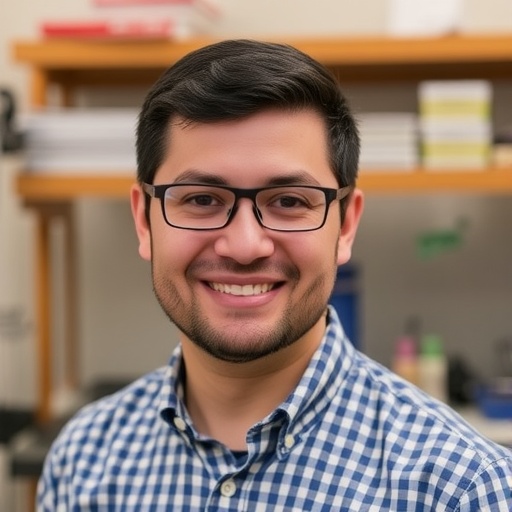
Renowned bioengineer Julea Vlassakis of Rice University has recently secured a federal grant totaling $1.1 million to advance research on Ewing sarcoma, a notably aggressive form of bone and soft tissue cancer primarily targeting children, adolescents, and young adults. This funding comes as part of the prestigious Peer Reviewed Cancer Research Program Career Development Award facilitated by the U.S. Department of War’s Congressionally Directed Medical Research Programs, underscoring the critical importance of this work within the oncological research community.
Vlassakis, holding an assistant professorship in Rice University’s Department of Bioengineering and recognized as a Cancer Prevention and Research Institute of Texas Scholar, is spearheading a multifaceted investigation into the molecular and cellular mechanisms that empower Ewing sarcoma cells with their aggressive proliferation and metastatic capabilities. Her research aims to pinpoint the precise proteins facilitating these malignant behaviors, in hopes of identifying novel therapeutic targets that could shift the clinical approach towards more effective and less toxic treatment modalities.
The underlying driver of Ewing sarcoma is a characteristic chromosomal translocation that fuses two genes, culminating in the production of an aberrant fusion protein. This oncoprotein transforms normal cellular physiology, endowing cancer cells with enhanced growth and invasive properties. Despite its central role in disease progression, the molecular underpinnings that allow this fusion protein to hijack cellular machinery remain an enigma. Vlassakis’s work seeks to unravel these complexities to better understand the permissive environment driving tumor aggressiveness.
Central to her research objectives is the development of a novel assay capable of simultaneously identifying proteins that bind DNA alongside the signature fusion protein of Ewing sarcoma. Such a tool would illuminate how these proteins coordinate to modulate gene expression programs critical for tumor cell survival, division, and migratory capacity. This level of mechanistic insight holds promise for stratifying tumor subtypes based on their molecular profiles and tailoring treatments accordingly.
Another revolutionary aspect of Vlassakis’s approach involves the application of advanced microscopy combined with an innovative sample preparation technique. Human DNA molecules, despite their microscopic width, extend to lengths of roughly two meters when uncoiled—a phenomenon that requires them to fold intricately within the constrained space of the cell nucleus. The three-dimensional conformation of this chromatin folding orchestrates genomic accessibility and gene regulation, but directly visualizing these structures is technically challenging due to the density of bound proteins that mask fine details.
To overcome these obstacles, Vlassakis’s lab plans to utilize an electric field to selectively dislodge proteins obstructing the visualization of DNA folding patterns. This method aims to render the genome’s nanoscale topography visible with unprecedented clarity, enabling direct observation of conformational features that govern gene activity states. This innovation could redefine cellular-level imaging in the study of cancer genomics.
By bridging this cutting-edge imaging with biochemical assays, Vlassakis’s research endeavors to dissect how genetic regulation diverges within heterogeneous populations of cancer cells inhabiting the same tumor. Such heterogeneity underpins differential responses to therapies and disease progression. Insights gleaned here could reshape how oncologists diagnose and treat cancers, moving towards precision medicine paradigms that fine-tune interventions at the cellular microenvironment level.
The implications of this research stretch beyond Ewing sarcoma, holding transformative potential for a broad spectrum of malignancies where epigenetic regulation and chromatin architecture contribute to disease etiology. Vlassakis envisions that the tools and concepts developed through her project could be adapted to decipher the molecular choreography in various pediatric, adolescent, and young adult cancers, ultimately enhancing survival rates and reducing late-stage side effects that diminish quality of life.
Vlassakis articulates a compelling vision of a future where cancer treatments are no longer blunt instruments but are instead highly targeted molecular therapies designed to disrupt specific oncogenic pathways. By personalizing cancer care through precise molecular diagnostics and tailored interventions, the burden of aggressive therapies on young patients could be drastically alleviated, significantly improving long-term outcomes.
The combination of biophysical innovation and molecular biology encapsulated in this research epitomizes the vanguard of contemporary cancer science. It exemplifies the move toward harnessing interdisciplinary methodologies to confront one of medicine’s most challenging foes. Vlassakis’s work demonstrates how integrating electric field-based biochemistry with super-resolution microscopy offers a new frontier in cancer cell biology.
As funding empowers this research, ongoing collaboration between experts in bioengineering, molecular genetics, and clinical oncology will be essential to translate benchside discoveries into bedside advancements. Vlassakis and her team’s commitment to unraveling the intricate gene regulatory networks in Ewing sarcoma paves the way for breakthroughs that are both scientifically profound and critically necessary for improving patient care.
The groundbreaking nature of the project also highlights the need for continued investment in fundamental cancer research, especially for rare but deadly cancers that disproportionately affect younger populations. Supporting innovative approaches like those pioneered by Vlassakis is indispensable for fostering breakthroughs that could ultimately revolutionize pediatric oncology and beyond.
Rice University continues to be a beacon of interdisciplinary research innovation, enabling scholars like Julea Vlassakis to push the boundaries of cancer biology. The fusion of technical expertise, advanced imaging technologies, and molecular insights showcased in this project sets a standard for future research aiming to conquer the elusive challenges posed by aggressive cancers.
News Publication Date: June 23, 2026
Web References:
- https://profiles.rice.edu/faculty/julea-vlassakis
- https://cdmrp.health.mil/prcrp/awards/25cdasoawards
- https://news.rice.edu/
Cite Scienmag News
Nathaniel Bowman. (June 23, 2026). Rice Bioengineer Receives Federal Award for Advancements in Ewing Sarcoma Research. Scienmag. https://scienmag.com/rice-bioengineer-receives-federal-award-for-advancements-in-ewing-sarcoma-research/
Nathaniel Bowman. "Rice Bioengineer Receives Federal Award for Advancements in Ewing Sarcoma Research." Scienmag, 23 June 2026, https://scienmag.com/rice-bioengineer-receives-federal-award-for-advancements-in-ewing-sarcoma-research/. Accessed 4 September 2026.
Nathaniel Bowman. "Rice Bioengineer Receives Federal Award for Advancements in Ewing Sarcoma Research." Scienmag. June 23, 2026. https://scienmag.com/rice-bioengineer-receives-federal-award-for-advancements-in-ewing-sarcoma-research/


