

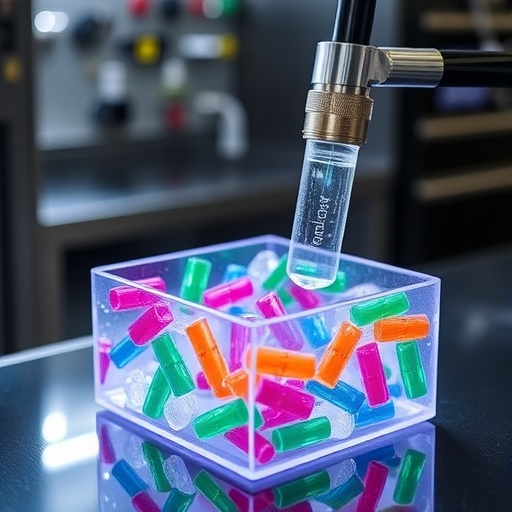
A transformative shift is occurring in the landscape of waste management and recycling technology, particularly concerning the challenging multilayer plastic packaging that has become commonplace in modern consumer products. These innovative materials are often essential for product preservation, yet they pose a significant environmental risk due to their complex structure, which consists of different polymers that are not easily separable during conventional recycling processes. As the global community faces a mounting waste crisis, researchers are exploring cutting-edge solutions to mitigate the environmental impact, with microfibrillation emerging as a promising technique for sustainable recycling.
Microfibrillation refers to the process of reducing materials to micro-scale fibers, which can drastically alter their physical properties and enhance their potential for recycling. Researchers have recognized that this method can be applied to multilayer plastics, effectively breaking them down into finer components that can be more easily processed. The potential for application of microfibrillation extends beyond merely facilitating recycling: it can also lead to the development of new materials that exhibit remarkable properties and can be utilized in various applications, promoting a circular economy within the plastics industry.
The research spearheaded by Guzman and colleagues delves into this innovative approach, presenting evidence that microfibrillation can significantly improve the recyclability of multilayer plastic packaging. The researchers utilized advanced techniques to assess the efficacy of microfibrillation in breaking down these complex structures. High-resolution imaging techniques showcased insights into how multilayer plastic films disintegrate under controlled microfibrillation conditions, revealing morphologies that are more amenable to downstream processing. This exploration opens up avenues for more efficient recycling processes that can leverage existing infrastructure.
One of the key findings from this study emphasizes the role of mechanical treatments in the microfibrillation process. The team utilized tailored mechanical energy inputs to optimize the breakdown of multilayer plastics, balancing efficiency with material integrity. This targeted approach is vital, as excessive energy input could lead to unwanted thermal degradation, compromising the quality of the recycled materials. By fine-tuning the parameters of the microfibrillation process, the researchers demonstrated a pathway to achieving high-quality recycled plastics that can meet industry standards.
Moreover, the implications of this research extend to the design phase of packaging materials. Understanding the behavior of multilayer plastics during microfibrillation could inform manufacturers about optimal material selection and adhesive strategies that facilitate easier recycling. This comprehensive approach aligns with the principles of sustainable design, urging companies to create products with their end-of-life in mind. By embracing a holistic perspective that prioritizes recyclability, manufacturers can significantly reduce their environmental footprint.
The environmental benefits of enhancing the recyclability of multilayer plastics cannot be overstated. Currently, many of these materials end up in landfills or incinerators, leading to a cycle of waste that contributes to pollution and resource depletion. By improving recycling rates through microfibrillation, the research team not only addresses the challenge of sustainable waste management but also contributes to the reduction of virgin material consumption. This connection between recycling technology and resource conservation underscores the potential for systemic change within the industry.
In addition to addressing the environmental implications, the study sheds light on economic factors in recycling processes. Implementing microfibrillation technology could lead to lower operational costs for recycling facilities. By maximizing the yield from the recycled materials, these facilities can achieve greater efficiency, ultimately leading to reduced processing costs and enhanced profitability. This economic incentive for adopting advanced recycling technologies supports the argument for investment in innovative solutions that benefit both the environment and the economy.
Furthermore, this research aligns with global sustainability goals, particularly the commitments set forth in international agreements aimed at reducing plastic waste and enhancing circular economies. The findings contribute to a growing body of evidence that highlights the need for collaborative efforts among policymakers, industry stakeholders, and researchers towards creating an integrated approach to sustainable recycling. Establishing partnerships that leverage academic research and industrial expertise can accelerate the transition to more effective waste management practices worldwide.
Despite the promising findings presented in this research, challenges remain in terms of scaling up microfibrillation technologies from laboratory settings to commercial applications. Industry adoption requires overcoming obstacles related to equipment scalability, product variability, and regulatory considerations. Continuous exploration and innovation will be vital in addressing these challenges, paving the way for smoother transitions in the operationalization of recycling technologies in real-world settings.
In conclusion, the work of Guzman and colleagues marks a significant step forward in the quest for sustainable recycling solutions, particularly for multilayer plastic packaging. By employing microfibrillation techniques, the researchers have opened new possibilities for enhancing the recyclability of these materials, contributing to a broader movement towards sustainable practices in the plastics industry. The implications of this research extend beyond mere technological advancement, touching upon economic viability, environmental stewardship, and policy development. As stakeholders come together to foster solutions in waste management and recycling, initiatives like these could serve as catalysts for a more sustainable future.
To realize the full potential of these findings, it is imperative for continued investment in research and development aimed at refining microfibrillation techniques and to advocate for policies that support innovation in recycling. The journey towards a circular economy may hinge on breakthroughs in technology and collaborative efforts across sectors, but the rewards of such endeavors could lead to a more sustainable and equitable world.
As the discourse surrounding plastics and sustainability continues to evolve, studies like the one conducted by Guzman and his team provide hope and direction


