

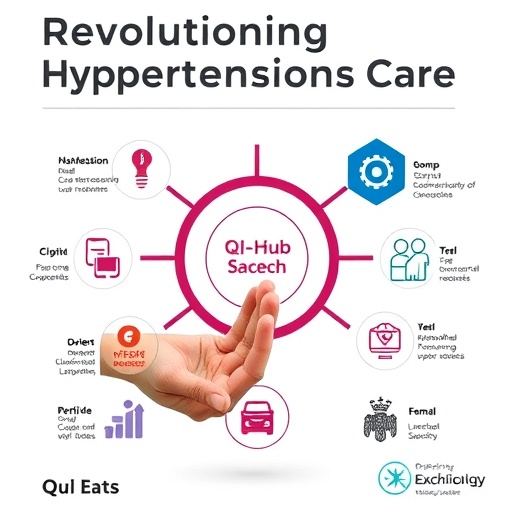
In a groundbreaking advancement in healthcare management, researchers have proposed an innovative approach to hypertension treatment by implementing a Learning Health System (LHS). This model leverages a hub-and-spoke strategy, aimed at enhancing the delivery of care for patients with high blood pressure. The study, helmed by Alain et al., emphasizes the importance of continuous learning and improvement within healthcare settings, particularly in managing chronic conditions such as hypertension. Through robust Quality Improvement (QI) initiatives, this research envisions a future where patient outcomes in hypertension management are significantly improved.
The concept of a Learning Health System revolves around the integration of data and experiences from various healthcare providers to create a dynamic and responsive health care ecosystem. By utilizing real-time data, healthcare professionals can monitor patients’ health more effectively and make informed decisions regarding their treatment plans. The hub-and-spoke framework delineates a clear hierarchical structure, with a central hub facilitating innovation and coordination among various healthcare ‘spokes’ or community resources. This model not only ties into technological advancements but also enriches patient engagement and promotes a patient-centered approach to hypertension management.
One of the key components of this system is the role of the QI Hub, which serves as the central node in the healthcare network. It is responsible for collecting and analyzing patient data, identifying trends, and disseminating best practices across different healthcare facilities. By establishing a robust QI Hub, healthcare institutions can ensure that all sites are equipped with the latest knowledge and tools necessary to optimize hypertension care. This potent combination of technology and knowledge sharing promises to elevate standards of care and improve health outcomes on a larger scale.
Moreover, the hub-and-spoke model allows for tailored interventions suited to individual patients’ needs, optimizing the management of hypertension across diverse populations. It acknowledges that a one-size-fits-all approach is often inadequate for chronic conditions. By employing data analytics and machine learning algorithms, healthcare providers can segment patient populations based on risk factors, comorbidities, and treatment responses. This stratification leads to more personalized medical interventions, which can result in better management of hypertension and, consequently, lower rates of cardiovascular events.
Patient engagement and empowerment lie at the heart of the Learning Health System. The researchers underscore the necessity of involving patients in the decision-making process regarding their care. This model encourages patients to take an active role in monitoring their health, understanding their treatment options, and adhering to prescribed therapies. By integrating patient feedback into the system, healthcare providers can continuously refine and enhance care practices to better meet the needs of those they serve.
The implementation of such a system involves not only technological advancements but also a cultural shift within healthcare organizations. It necessitates training healthcare professionals to leverage data effectively and to embrace a mindset of continuous improvement. The researchers have outlined various strategies for professional development, ensuring that all stakeholders are knowledgeable and proficient in utilizing the hub-and-spoke model. This educational component is crucial for the successful realization of the Learning Health System for hypertension management.
Challenges in deploying this innovative model have been acknowledged as well. Issues such as data interoperability, varying levels of technological readiness among healthcare facilities, and resistance to change among healthcare professionals need to be addressed proactively. The study suggests that fostering partnerships among stakeholders—including patients, healthcare providers, and technology developers—is essential for overcoming these obstacles. By collaborating and sharing resources, these entities can enhance the implementation and sustainability of the hub-and-spoke approach.
Additionally, ethical considerations around data privacy and patient consent have been critically examined in this research. As healthcare organizations move towards more data-driven strategies, ensuring the confidentiality and security of patient information becomes paramount. The study calls for robust frameworks to protect patient data while simultaneously allowing for the effective use of this information to drive improvements in care delivery.
Looking ahead, the implications of adopting a Learning Health System extend beyond hypertension management. The principles illustrated through this innovative model can be adapted to other chronic conditions, fostering a system-wide transformation in healthcare delivery. As the healthcare landscape continues to evolve, the potential for learning systems to facilitate better outcomes and drive meaningful changes cannot be overstated.
The findings presented in this research underscore the vital role of continuous learning and adaptation in managing chronic diseases like hypertension. The hub-and-spoke model not only aligns healthcare practices with the evolving needs of patients but also prepares healthcare teams to respond effectively to emerging health challenges. If successfully implemented, this model could serve as a prototype for future healthcare systems, emphasizing collaboration, data-driven decision-making, and patient-centered care.
Ultimately, the work of Alain et al. shines a light on the path forward for hypertension management, offering practical insights and strategies for both immediate and long-term improvements. As healthcare professionals, policymakers, and patients unite under a common goal—the enhancement of health outcomes for all—the implementation of such innovative systems can usher in a new era of healthcare delivery that prioritizes well-being and sustainability.
By embracing this model, the healthcare community can take significant strides toward not only managing hypertension but also transforming the way chronic conditions are treated globally. With collective effort, a future of heightened health equity and improved patient experiences is within reach.
Subject of Research: Hypertension Management through Learning Health Systems
Article Title: Learning Health System Implementation: Building a Hub-and-Spoke Model for Hypertension Management Through the QI Hub
Article References:
Alain, G., Rush, L.J., Summers, R. et al. Learning Health System Implementation: Building a Hub-and-Spoke Model for Hypertension Management Through the QI Hub.
J GEN INTERN MED (2026). https://doi.org/10.1007/s11606-025-10152-1
Image Credits: AI Generated
DOI: https://doi.org/10.1007/s11606-025-10152-1
Keywords: Learning Health System, Hypertension Management, Quality Improvement, Hub-and-Spoke Model, Patient Engagement.


