

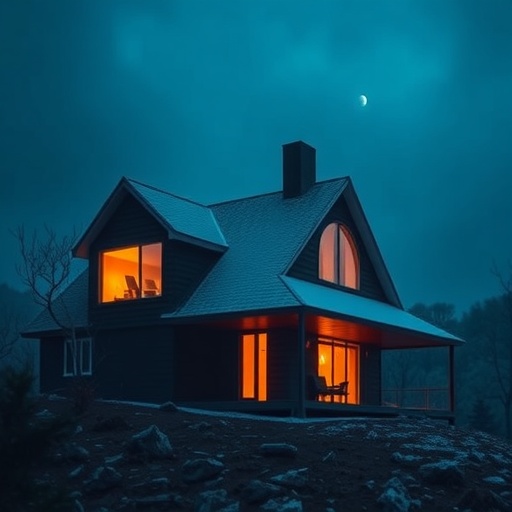
As global climates edge toward unprecedented extremes, the buildings humanity inhabits are increasingly under scrutiny. For the vast majority—who spend approximately 90% of their lives indoors—these structures serve as a protective “third skin,” shielding individuals from shifting environmental hazards. Yet, the legacy designs of many contemporary homes and workplaces are ill-suited for a future marked by severe temperature fluctuations, prompting a compelling need for a radical reimagining of architectural and engineering principles.
Historically, architectural paradigms in the West have heavily leaned on a constricted notion of thermal comfort, often revolving around the widespread adoption of air conditioning and sealed building envelopes. These designs, characterized by lightweight materials, expansive glass facades, and non-operable windows, emerged as standard during the 20th century and found global application. While offering immediate climate control, such buildings are notorious for their prodigious energy consumption and contribution to carbon emissions, thereby exacerbating the very climatic shifts challenging their efficacy.
Crucially, the prevailing approach to thermal comfort overlooks resilience during power outages or extreme weather episodes. Buildings reliant on mechanized climate control risk becoming uninhabitable when energy supplies falter. This systemic vulnerability has profound implications for population health, social equity, and urban planning, as even middle-class residents in developed economies grapple with skyrocketing energy costs to maintain indoor safety and comfort.
In response, a new wave of architects and engineers is charting a transformative course, centered on “adaptive thermal comfort” principles. Unlike traditional Western models, adaptive comfort recognizes the dynamic interaction between occupants and their environment, leveraging local climate conditions and natural processes to regulate indoor temperatures. This paradigm shifts the focus from mechanical reliance to passive and semi-passive systems, marrying contemporary technology with time-tested vernacular wisdom from extreme climates around the world.
Emerging design philosophies advocate for hybrid or mixed-mode buildings that capitalize on natural ventilation, solar gain during winter, and nocturnal cooling during summer. These buildings aim to operate largely independent from centralized electricity grids by harnessing renewable, site-specific energy sources such as solar radiation, wind currents, and geothermal heat exchange. The ambition is to create living and working spaces that maintain thermal comfort throughout the year while drastically reducing energy demand and carbon footprint.
Such strategies entail a nuanced understanding of urban microclimates and building physics. For example, heat accumulation in dense cityscapes, where concrete and asphalt raise ambient temperatures day and night, necessitates designs that mitigate urban heat island effects through shading, vegetation, and reflective materials. Counterintuitively, large open-plan interiors with extensive glazing, ubiquitous in modern homes, can exacerbate thermal volatility by facilitating rapid heat gain or loss, underscoring the need for dynamic shading and insulation.
An enlightening component of this emerging discourse draws on anthropological and sociological insights. Thermal comfort is not merely a physical phenomenon but deeply intertwined with psychological and social well-being. Research reveals that social connectivity—for instance, communities gathering in shared spaces—can materially influence physiological and emotional perceptions of comfort. Conversely, isolation and fear, such as concerns about personal security preventing window opening during heat events, have dire health ramifications, illustrating the complex matrix of factors architects must consider.
The authors champion an urgent call for Western architects and engineers to engage with and integrate architectural wisdom from traditionally hotter regions, such as Southeast Asia and Mongolia. Roof designs, building orientations, material selections, and community-centric spatial layouts in these climates offer invaluable lessons in passive cooling, natural ventilation, and climatic resilience. This cross-pollination of ideas heralds a shift from a rigid, mechanized approach towards one that is fluid, locally attuned, and environmentally symbiotic.
Technological innovation complements these age-old strategies. Ground-source heat pumps, solar thermal collectors, and smart ventilation systems enable precise modulation of indoor climates without defaulting to intensive electrical consumption. The integration of sensors and building automation further refines occupant control, ensuring energy is used only when and where necessary, aligning with sustainable energy principles and enhancing user comfort.
Yet, the full realization of adaptive thermal comfort transcends technical solutions, requiring systemic changes in policy, urban planning, and social attitudes. Governments and stakeholders must prioritize resilience in building codes and incentivize retrofitting existing structures to accommodate thermal adaptability. Equally critical is addressing socioeconomic disparities that currently impede many from accessing energy-efficient housing, ensuring that future buildings offer affordable, equitable protection against environmental extremes.
The trajectory towards climate-responsive architecture is a complex, multidisciplinary endeavor that reconnects human habitats with the rhythms and resources of their environments. By melding scientific understanding, technological advancement, and sociocultural awareness, this paradigm promises not only to safeguard occupants against the escalating threats of global warming but to do so sustainably and inclusively.
Ultimately, the choice before humanity is stark. Continuing to endorse energy-hungry, sealed buildings in an era of intensifying climatic volatility portends increased vulnerability and inequality. Alternatively, embracing adaptive thermal comfort principles offers a transformative pathway towards buildings that are not only environmentally responsible but inherently resilient, comfortable, and life-sustaining.
Subject of Research: Adaptive thermal comfort and climate-responsive building design
Article Title: [Not provided]
News Publication Date: [Not provided]
Web References: http://dx.doi.org/10.1201/9781315645070
References: Roaf, S., Nicol, F., & Humphreys, M. (Adaptive Thermal Comfort: At the Extremes)
Keywords: Architecture, Building construction, Structural engineering, Heating cooling and ventilation, Climate change effects, Climate change, Renewable energy, Renewable resources, Civil engineering, Housing, Commercial buildings


