

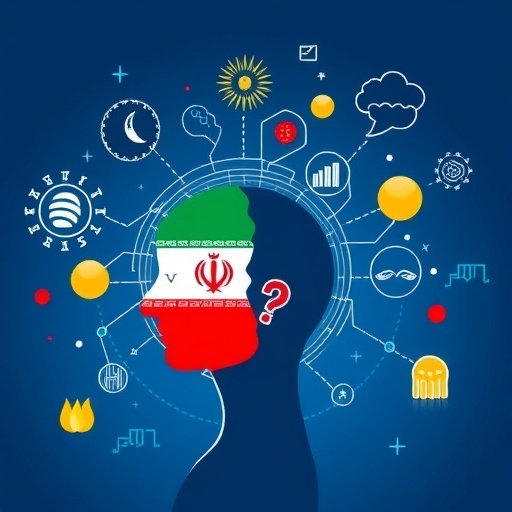
Recent scientific advancements have ushered in a new era for the diagnosis of emotional-behavioral disorders, especially in the context of mental health. Researchers, particularly Rezazadeh, Minaei, Falsafinejad, and their colleagues, have dedicated their efforts to develop diagnostic classification models that aim to revolutionize how these disorders are diagnosed and treated. The findings from their recent study conducted in Iran shed light on the efficacy of these models, demonstrating a significant leap forward in precision medicine for mental health.
Emotional-behavioral disorders pose a significant challenge in the field of psychiatry, primarily due to the subjective nature of traditional diagnostic methods. The reliance on self-reported symptoms can lead to inconsistencies and misdiagnoses complicating treatment pathways. The introduction of diagnostic classification models offers a data-driven approach that leverages machine learning algorithms to analyze vast quantities of data, thus facilitating a more accurate diagnosis and fostering personalized treatment plans.
These diagnostic classification models utilize comprehensive datasets, which include variables such as demographic factors, clinical history, and behavioral assessments. By integrating various data points, these models can identify patterns and correlations that might not be readily evident to human clinicians. This advanced analytical capability supports clinicians by providing them with a clearer understanding of a patient’s emotional and behavioral profile, helping to distinguish between different disorders that may present similarly.
The research conducted in Iran serves as a pivotal case study in this realm. By focusing on the unique socio-cultural dynamics present in Iranian society, the study highlights the importance of contextual factors when developing diagnostic models. This ensures that the metrics employed are not only scientifically sound but also culturally relevant, enabling better engagement with patients. As such, the findings from this research could pave the way for broader application across diverse populations, enhancing the global landscape of mental health diagnostics.
Furthermore, the advancement of these diagnostic models represents more than just technological progress; it embodies a shift towards a more compassionate and nuanced understanding of mental health disorders. By minimizing the stigma often associated with such diagnoses, these innovative tools have the potential to encourage individuals to seek help and engage with mental health services more readily. The implications for public health are profound, as early and accurate diagnosis can significantly improve treatment outcomes and overall quality of life for those affected by emotional-behavioral disorders.
As mental health continues to emerge as a critical area of focus globally, studies like this one exemplify the necessity of interdisciplinary approaches. The collaboration among data scientists, mental health professionals, and sociologists is instrumental in creating robust models that reflect the complexities of human behavior and emotional well-being. This convergence of expertise enhances the reliability of the findings and ensures that clinical practices are informed by the latest evidence-backed methodologies.
In addition to clinical implications, the research also opens up avenues for educational initiatives aimed at mental health practitioners. By integrating these diagnostic classification models into training programs, future clinicians will be better equipped to utilize data analytics for the benefit of their patients. This educational reform can foster a new generation of mental health professionals who are adept at leveraging technology to improve patient care.
The potential for these models extends beyond individual diagnosis; they also hold promise for epidemiological studies examining the prevalence of emotional-behavioral disorders within populations. By understanding how these disorders manifest across different demographic groups, public health policymakers can design targeted interventions and allocate resources more effectively, ultimately leading to improved mental health support systems.
In the backdrop of the COVID-19 pandemic, the urgency for reliable mental health diagnostic tools has escalated. The isolation and stress that many individuals have experienced during this time have accentuated the need for timely and accurate mental health care. As the world grapples with the psychological aftermath of the pandemic, the findings from Rezazadeh et al. underscore the importance of innovation in addressing contemporary mental health challenges.
Looking forward, there is substantial potential for refinement and enhancement of these diagnostic models. Research teams can build upon the initial findings by incorporating user feedback and real-world effectiveness data. Continuous iteration will be crucial in adapting these models to address emerging trends in emotional-behavioral disorders and to continuously meet the needs of diverse populations.
This study not only contributes to the scientific literature but also ignites discussions on future directions in mental health diagnostics. The integration of artificial intelligence in psychiatry may soon be commonplace, transforming the landscape of how emotional-behavioral disorders are understood, diagnosed, and treated. As researchers continue to innovate, the ultimate goal remains the same: to provide individuals with the care and support they deserve in navigating their mental health challenges.
As the momentum builds around diagnostic classification models, the call for collaboration among interdisciplinary professionals is greater than ever. By sharing insights, resources, and methodologies, researchers and clinicians can work hand-in-hand to forge a path towards a more comprehensive understanding of emotional-behavioral disorders. This collective effort will not only enhance diagnostic precision but also foster a global mental health movement that prioritizes the well-being of individuals and communities at large.
In conclusion, the work done by Rezazadeh, Minaei, Falsafinejad, and their colleagues is a testament to the transformative power of data in the field of mental health. As the evidence mounts and support for these innovative diagnostic tools strengthens, there is hope for a future where emotional-behavioral disorders can be accurately diagnosed and effectively treated, ultimately leading to improved mental health outcomes for individuals worldwide.
Subject of Research: Development of diagnostic classification models for emotional-behavioral disorders in Iran.
Article Title: Unveiling the Potential of Diagnostic Classification Models for Precise Diagnosis in Emotional-Behavioral Disorders: Evidence from Iran.
Article References:
Rezazadeh, R., Minaei, A., Falsafinejad, M.R. et al. Unveiling the Potential of Diagnostic Classification Models for Precise Diagnosis in Emotional-Behavioral Disorders: Evidence from Iran. Child Psychiatry Hum Dev (2026). https://doi.org/10.1007/s10578-026-01972-1
Image Credits: AI Generated
DOI: https://doi.org/10.1007/s10578-026-01972-1
Keywords: diagnostic classification, emotional-behavioral disorders, machine learning, precision medicine, mental health, public health policy, interdisciplinary collaboration, Iran.


