


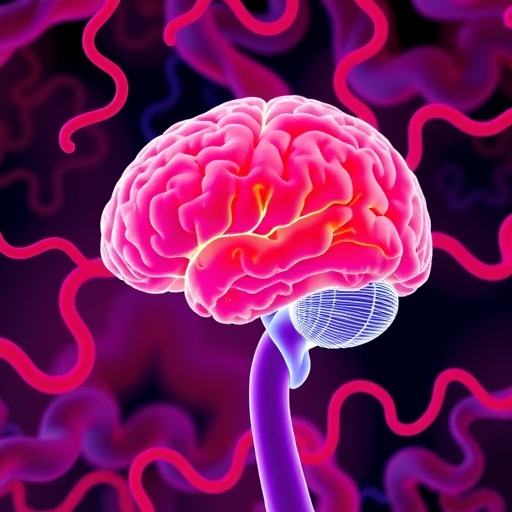
In a groundbreaking advancement in Alzheimer’s disease research, a study led by biomedical engineers at USC Viterbi School of Engineering has unveiled a novel, non-invasive diagnostic method that could substantially alter the understanding and treatment of this devastating condition. The urgent need for early diagnosis is underscored by the fact that over seven million Americans are currently living with Alzheimer’s disease, and available testing methods are typically invasive, costly, and limited in accuracy. Traditional approaches often involve painful spinal taps or expensive imaging techniques, which are not universally accessible.
The innovative research led by Professor Vasilis Marmarelis scrutinizes the dynamics of blood flow within the brain, emphasizing how these circulatory factors could be pivotal in the onset and progression of Alzheimer’s disease. While the consistently highlighted “amyloid cascade hypothesis” posits that the accumulation of amyloid beta initiates a chain reaction leading to tau tangling, Marmarelis’ work shifts the lens toward the brain’s vascular dynamics. The premise that impaired blood flow could be a fundamental aspect of Alzheimer’s disease opens avenues for interventions that transcend traditional amyloid and tau-centric paradigms in therapeutic strategies.
Utilizing a robust dataset collected over five years from 200 participants, the research team meticulously analyzed the complex interplay between arterial blood pressure fluctuations, carbon dioxide levels, and subsequent changes in cerebral blood flow and cortical oxygenation. Preliminary observations made by Marmarelis indicated that Alzheimer’s patients exhibit a marked impairment in vasomotor reactivity, the body’s mechanism for regulating blood flow in response to increased carbon dioxide levels. This impairment can hinder the essential cerebral perfusion required for cognition, suggesting that the brain’s ability to adapt its blood supply is crucial for maintaining cognitive health.
In developing the innovative Cerebrovascular Dynamics Index (CDI), the researchers leveraged non-invasive Doppler ultrasound techniques to measure blood flow velocity in key cerebral arteries, alongside near-infrared spectroscopy to assess the oxygenation levels in the brain’s cortex. This strategy represented a significant departure from traditional diagnostic methods by focusing on real-time assessments of cerebral perfusion dynamics rather than static measurements of pathological proteins.
The newly established CDI demonstrated remarkable efficacy, yielding an impressive Area Under the Curve (AUC) metric of 0.96 when differentiating between individuals with mild cognitive impairment or Alzheimer’s and their cognitively healthy counterparts. Such high diagnostic performance marks a substantial advancement compared to the standard amyloid PET tests, which achieved an AUC of 0.78. This shift signifies a critical enhancement in the accuracy of diagnostic tests, possibly allowing for earlier detection of cognitive impairments, which is vital for timely intervention.
The implications of this research extend beyond mere diagnostics; they present potential therapeutic pathways that could enhance blood flow regulation within the brain, providing new strategies for Alzheimer’s prevention and treatment. Marmarelis elaborated on various promising interventions that could be developed based on these findings. Among these, the promotion of regular aerobic exercise has been identified as a powerful tool for improving cerebral blood flow and overall cognitive function. Research from the Alzheimer’s Association has reinforced the benefits of lifestyle changes, including adherence to the MIND diet, which emphasizes nutritional elements that support brain health.
Another innovative approach involves controlled inhalation of slightly reduced oxygen and increased carbon dioxide, a method inspired by techniques utilized in athletic training. Initial data suggest that this might effectively improve cerebral blood flow regulation, offering a novel, non-invasive tool for intervention. Equally compelling is the advent of transcutaneous auricular vagus nerve stimulation (taVNS), a technique that stimulates the vagus nerve via the ear and has shown promising effects on cerebral blood flow regulation.
As the research unfolds, it is evident that this emergent understanding of Alzheimer’s disease and the underlying mechanisms of blood flow dysfunction could pave the way for a paradigm shift in treatment protocols. Marmarelis envisions a future where enhanced blood perfusion would serve as both a preventive measure and a therapeutic target, possibly in combination with existing amyloid-targeting strategies.
In conclusion, the profound findings reported by Marmarelis and his team signal a critical evolution in Alzheimer’s research. The identification of dysregulated cerebral blood flow as a central player in cognitive decline offers not only a robust framework for understanding the disease but also sets the stage for innovative interventions that could redefine patient care. While traditional diagnostic methods have shaped our comprehension of Alzheimer’s, this new direction emphasizes the significance of cerebral perfusion regulation, suggesting a holistic approach that encompasses lifestyle, enterprising techniques, and comprehensive brain health strategies.
In summary, the intersection of cutting-edge technology, innovative scientific inquiry, and a commitment to enhancing cognitive health establishes a hopeful future for Alzheimer’s patients and caregivers alike. By shifting the focus from mere detection of pathological markers to restoration of healthy brain dynamics, researchers are heralding a new era in the battle against Alzheimer’s disease, where early diagnosis and dynamic brain health management can become the cornerstones of effective intervention.
Keywords
Cite Scienmag News
Cassandra Pierce. (August 25, 2025). Revolutionizing Alzheimer’s: Insights into How Brain Blood Flow May Transform Understanding and Treatment. Scienmag. https://scienmag.com/revolutionizing-alzheimers-insights-into-how-brain-blood-flow-may-transform-understanding-and-treatment/
Cassandra Pierce. "Revolutionizing Alzheimer’s: Insights into How Brain Blood Flow May Transform Understanding and Treatment." Scienmag, 25 August 2025, https://scienmag.com/revolutionizing-alzheimers-insights-into-how-brain-blood-flow-may-transform-understanding-and-treatment/. Accessed 5 September 2026.
Cassandra Pierce. "Revolutionizing Alzheimer’s: Insights into How Brain Blood Flow May Transform Understanding and Treatment." Scienmag. August 25, 2025. https://scienmag.com/revolutionizing-alzheimers-insights-into-how-brain-blood-flow-may-transform-understanding-and-treatment/


