

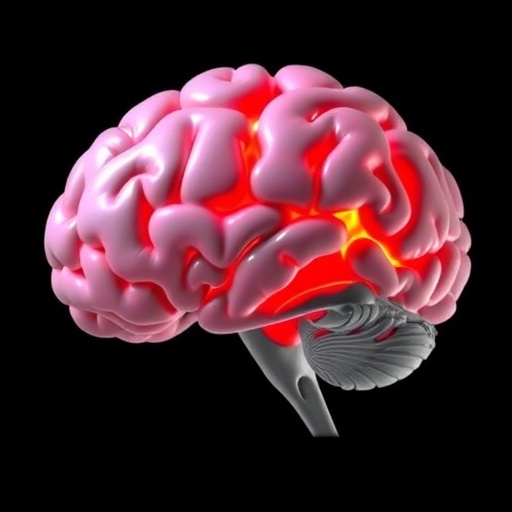
In a groundbreaking study set to redefine standards in medical imaging and neurology, researchers have unveiled a revolutionary system known as ICH-HPINet. This innovative technology utilizes a hybrid propagation interaction network tailored specifically for the segmentation of 3D intracerebral hemorrhage (ICH). The implications of this study, published in a recent issue of Scientific Reports, may position it at the forefront of advancements in neurosurgery and emergency medicine. The potential for improved patient outcomes cannot be overstated, as timely and accurate identification of intracerebral hemorrhages remains a critical factor in acute care.
Intracerebral hemorrhage is a severe form of stroke that presents unique challenges in diagnosis and treatment. It occurs when blood vessels in the brain rupture, leading to bleeding within the brain tissue. The rapid assessment and mapping of these hemorrhages are vital, as they can significantly impact patient mortality and morbidity. Traditional imaging modalities often struggle to provide the speed and accuracy required during acute medical crises, which emphasizes the need for advanced segmentation techniques in medical imaging.
The research team, led by Hao Tao, along with collaborators Jin and Yang, has addressed this pressing need through the development of ICH-HPINet. Their approach unites sophisticated machine learning techniques with cutting-edge imaging capabilities to facilitate real-time analysis of brain scans. By leveraging the power of deep learning and network propagation methods, ICH-HPINet has shown a remarkable capacity for enhancing the clarity and precision of hemorrhage segmentation in 3D volumetric images.
One of the standout features of ICH-HPINet is its unique ability to integrate multiple channels of information from various imaging sources. This hybrid architecture allows the system to capture not only spatial data but also contextual cues that are vital for recognizing the complexity of ICH. The result is a highly responsive system that interprets real-time imaging data with unprecedented levels of accuracy, potentially transforming how clinicians approach patient management.
Another significant advantage of ICH-HPINet is its interactive capacity. Unlike traditional static imaging systems, this new platform offers a dynamic interface that can engage healthcare professionals. Physicians can interact with the system to visualize different slices of the brain in real-time, while simultaneously receiving segmentation outputs on the areas affected by hemorrhage. This comprehensive approach not only aids in diagnosis but also fosters collaborative efforts among medical staff, contributing to better-informed decision-making.
Additionally, ICH-HPINet has been subjected to rigorous validation tests against existing methods for intracerebral hemorrhage segmentation. The results demonstrated that it outperformed conventional technologies in both speed and accuracy. These benchmarks were drawn from a wide array of data sets, attesting to the robustness of the technology in capturing diverse imaging variations encountered in clinical practice. The study reveals that ICH-HPINet has the potential to reduce the time needed for diagnosis, which can ultimately translate to quicker intervention and improved survival rates for patients.
The study also emphasizes the role of artificial intelligence in modern healthcare, particularly in the realm of diagnostics. As machine learning algorithms become increasingly sophisticated, the integration of AI in clinical workflows presents an opportunity to improve the standard of care. ICH-HPINet exemplifies how advancements in AI can propel medical imaging techniques into new realms of efficiency, accuracy, and usability.
Emerging from the team’s findings is a call for healthcare providers to embrace these new technologies. With the introduction of ICH-HPINet, medical institutions are encouraged to consider incorporating advanced imaging solutions into their clinical processes. This proactive approach could pave the way for widespread adoption of AI-driven technologies, elevating the standard of emergency care for neurological conditions across the globe.
The team’s collaborative effort underscores the importance of interdisciplinary work in scientific advancements. By bringing together experts from various fields—radiology, machine learning, and neurology—the research exemplifies how diverse perspectives can foster innovation and scientific progress. This collaborative spirit is vital in navigating the complexities of human health, particularly in areas as intricate as brain disorders and imaging techniques.
As the healthcare community looks to the future, studies like those conducted by Tao and colleagues will serve as critical cornerstones in the ongoing evolution of medical practice. The application of ICH-HPINet in real-world situations will further illuminate its potential, solidifying the importance of continuous research and development in the face of varied and evolving healthcare challenges.
In summation, the advent of ICH-HPINet represents a pivotal moment in neurology and medical imaging. This innovative hybrid network offers a glimpse into the future of patient diagnostics, emphasizing the necessity for timely and precise care within emergency medical settings. As the research unfolds and applications diversify, it stands to reason that ICH-HPINet could become a quintessential tool in the fight against stroke-related complications, ultimately enhancing patient care and saving lives.
As healthcare technology continues to advance, the implications of research conducted by Tao et al. suggest a future where intelligent systems underpin clinical decision-making. Their work exemplifies the potential of merging artificial intelligence with healthcare practices, which may lead to improved outcomes for patients with intracerebral hemorrhage. The journey towards the widespread adoption of such cutting-edge technologies is just beginning, but the promise is profound.
The medical community eagerly anticipates further research and development of ICH-HPINet, with hopes that it will set a new standard in emergency care. The possibilities for enhancing patient outcomes through technology-driven solutions are endless, and ICH-HPINet stands as a beacon of hope in the ongoing quest to improve surgical and therapeutic interventions for conditions that could lead to grave consequences.
As we stand on the brink of what could potentially be a revolution in medical imaging and diagnosis, the innovative work by Tao, Jin, and Yang not only marks significant progress in how we understand ICH but also paves the way for future research endeavors in artificial intelligence and healthcare. The fusion of these fields promises to unlock greater efficiencies, reduced intervention times, and ultimately, the ability to save more lives through targeted and accurate medical interventions.
Subject of Research: Artificial Intelligence in Medical Imaging
Article Title: ICH-HPINet: a hybrid propagation interaction network for intelligent and interactive 3D intracerebral hemorrhage segmentation
Article References:
Tao, H., Jin, H., Yang, C. et al. ICH-HPINet: a hybrid propagation interaction network for intelligent and interactive 3D intracerebral hemorrhage segmentation.
Sci Rep (2025). https://doi.org/10.1038/s41598-025-30973-8
Image Credits: AI Generated
DOI: 10.1038/s41598-025-30973-8
Keywords: Intracerebral hemorrhage, medical imaging, artificial intelligence, machine learning, segmentation, neural networks.


