


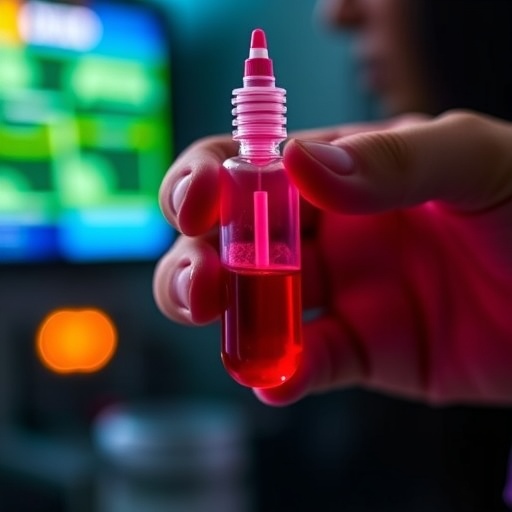
A groundbreaking breakthrough in the field of blood preservation has emerged from collaborative research conducted by scientists at the Universities of Leeds and Manchester. By innovating a new cryopreservation technique, these researchers aim to transform the methods of storage and delivery of red blood cells, especially in emergency situations, military contexts, and remote healthcare settings. The work has the potential to address the significant logistical challenges posed by the limited shelf life of refrigerated blood, which is restricted to a mere 42 days.
The research team, led by Dr. Fraser Macrae of Leeds and Professor Matthew Gibson of Manchester, has developed a novel formulation involving a unique mix of cryoprotectants. Unlike traditional methods that utilize glycerol, a chemical agent that has been the standard in preserving red blood cells, the new approach employs a combination of polyampholytes, DMSO, and trehalose. The cocktail not only enhances the preservation of red blood cells but also streamlines the post-thaw process, significantly reducing the time required to prepare blood for transfusion.
This innovation surpasses the operational headaches typically encountered in clinical settings where the time-consuming thawing and washing process of glycerol-preserved blood can exceed one hour. In certain critical situations, such as trauma emergencies where swift action is paramount, any delay dramatically increases the risk of adverse outcomes for patients. The newly created PaDT formulation, which includes polyampholytes as one of its key components, reduces the post-thaw treatment time to approximately 25 minutes. This drastic improvement exemplifies how advanced scientific research can bridge gaps in existing medical protocols.
The underlying mechanisms through which the PaDT formulation achieves its efficacy hinge on the unique properties of its ingredients. Polyampholytes serve as novel cryoprotectants with the ability to mitigate ice formation inside cells, thereby preserving cell integrity and function. Meanwhile, DMSO acts as a permeating agent, entering the cells to replace water molecules, effectively preventing ice crystallization that could damage cellular structures. Trehalose, a natural sugar known for its protective qualities, bolsters cell resilience against dehydration and stabilizes proteins essential for cell functionality during the thawing process.
In addition to enhancing the viability of red blood cells, this new method is poised to have significant implications across multiple domains of medicine, particularly emergency care. With the prospect of maintaining a readily available supply of frozen blood, healthcare professionals could dramatically improve their response strategies during crises, such as natural disasters or battlefield injuries. The research team envisions a future where blood rarefied through this methodology could be easily stockpiled, eliminating the dependency on constant blood donations and streamlining the complex logistics of blood supply management.
As the science behind preserving red blood cells continues to advance, the potential applications of this new technique extend beyond just transfusions. The research team is actively exploring the possibility of applying the PaDT method to other critical cell types, including stem cells and platelets, thus broadening the impact of their findings across various medical fields. Such versatility could open up new avenues for regenerative medicine, where the long-term preservation of cell types is crucial for therapeutic applications.
Notably, preliminary tests conducted with full-size blood bags have yielded promising results, with the recovery rates of red blood cells exceeding the minimum standards set by organizations such as the U.S. military and the American Association of Blood Banks. This accomplishment serves as a testament to the scalability of the new method and its viability for clinical use. As healthcare systems globally grapple with the complexities of blood management, research such as this provides a vital step toward solidifying a more reliable and efficient blood supply chain.
Dr. Macrae expressed enthusiasm about the speed and efficiency of their new method, highlighting how it can fundamentally alter the operational landscape of blood storage and delivery. By enabling healthcare practitioners to utilize frozen blood on demand, the PaDT formulation represents a significant leap forward in medical science tailored to meet the needs of high-stakes environments. The implications of such advancements are aspirational, envisioning a scenario where blood will always be ‘on tap’ to ensure timely transfusions for those in need.
The collaborative efforts between the universities’ research teams and industry partners like CryoLogyx have proven instrumental in bringing this method from concept to reality. Such synergies between academia and industry accentuate the importance of innovation in the scientific community, promoting access to cutting-edge research that can be rapidly translated into practical solutions for everyday healthcare challenges. As the research progresses, additional studies will be crucial to fully understand the long-term effects and applications of this novel preservation technique.
Moreover, the research findings are documented comprehensively in the journal Cryobiology, confirming the robust peer-review process that supports the credibility and impact of such scientific advancements. It is essential that ongoing discussions and efforts continue in the medical and research communities to further promote standards and practices that will enhance the availability and use of life-saving treatments amid pressing healthcare challenges.
Through this sustained focus on innovation and improvement in blood preservation technologies, the future of transfusion medicine appears promising. As we advance, fostering a greater understanding of methods that enable flexible and efficient blood use can revolutionize healthcare delivery and ensure that caregivers have the resources they need to save lives at critical moments.
In summary, this research heralds a new era of medical capability, paving the way for enhanced care in circumstances where every second counts. The collaborative effort between the universities and their innovation partners underscores the profound potential of this research, reinforcing the critical nature of continued investment and support for scientific exploration in the medical field.
Keywords
Cite Scienmag News
Denise Maddox. (September 9, 2025). Revolutionary ‘On-Demand Blood’ Technology Promises to Transform Emergency Transfusions. Scienmag. https://scienmag.com/revolutionary-on-demand-blood-technology-promises-to-transform-emergency-transfusions/
Denise Maddox. "Revolutionary ‘On-Demand Blood’ Technology Promises to Transform Emergency Transfusions." Scienmag, 9 September 2025, https://scienmag.com/revolutionary-on-demand-blood-technology-promises-to-transform-emergency-transfusions/. Accessed 5 September 2026.
Denise Maddox. "Revolutionary ‘On-Demand Blood’ Technology Promises to Transform Emergency Transfusions." Scienmag. September 9, 2025. https://scienmag.com/revolutionary-on-demand-blood-technology-promises-to-transform-emergency-transfusions/


