


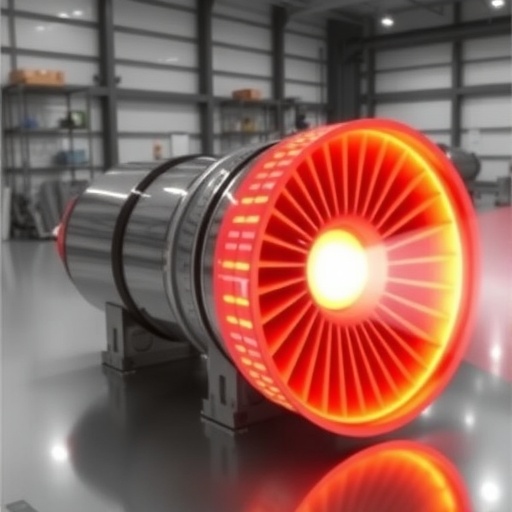
Researchers from South Korea have made significant strides in the realm of high-temperature materials, particularly high-entropy alloys (HEAs) that could redefine the capabilities of aerospace engineering. These materials, known for their exceptional structural integrity and unique properties, stand to revolutionize not just aircraft design, but the entire aerospace field. While nickel-based alloys have long been the backbone of high-temperature applications, their limitations have compelled scientists to search for advanced materials able to withstand temperatures that far exceed the standard.
Historically, nickel-based alloys have been the go-to materials for high-temperature settings, including the demanding environments encountered by modern aircraft and missiles. However, researchers have continually faced challenges with these materials, particularly in maintaining structural integrity as temperatures approach and exceed 1100 °C. Such limitations have far-reaching implications for the performance and efficiency of aviation technology, particularly as the aerospace industry increasingly emphasizes speed and fuel economy.
The recent breakthroughs presented by a research team led by Joonsik Park, a professor at Hanbat National University, shed light on new possibilities for overcoming the temperature constraints associated with nickel-based alloys. The team has delved into the world of high-entropy alloys, which are composed of a combination of multiple elements, imparting them with uniquely desirable properties that enhance their performance at elevated temperatures. This is a dynamic shift that opens the door to innovative applications in high-temperature environments.
In an exciting set of experiments, the research group tested TiTaNbMoZr high-entropy alloys with advanced coating technologies aimed at protecting the substrate from extreme oxidation. Oxygen, one of the most abundant elements in the atmosphere, poses a significant threat to metallic materials at high temperatures by promoting oxidation. The treatment involved a sequential two-step process implementing B and Si pack cementation coatings, which produced an exceptionally stable nano-grain-sized coating layer that could withstand prolonged exposure to high-temperature conditions.
The findings unveil a critical comparison of various coating techniques. Notably, the study assessed the efficacy of two different coatings: Si-pack cementation and a novel B–Si-pack cementation. The data indicated that while the untreated TiTaNbMoZr high-entropy alloy suffered severe degradation when subjected to 1300 °C, the Si-pack cementation-coated variant was not much better off. This treatment resulted in crack formation attributed to the oxidation of Zr-rich phases, highlighting the limitations inherent in current coating methodologies.
However, the real game-changer came from the B–Si-pack cementation approach. The results demonstrated not only resistance to oxidative degradation but also the development of a structurally stable surface layer that effectively protected the overall integrity of the high-entropy alloy. This superior oxidation resistance is a monumental achievement, particularly given the extreme conditions the material was subjected to during testing.
Quantitative comparisons during the experiments revealed stark differences in mass gains across sample coatings after oxidation at high temperatures. The B–Si-pack cementation-coated high-entropy alloy exhibited remarkably lower mass gain under the same 1300 °C conditions compared to untreated and Si-pack cementation-coated alloys. This implies a significant advancement in protective measures for high-temperature applications, reinforcing the notion that innovative coating strategies are critical to the future of aerospace materials.
The innovative findings presented in this study are pivotal for the future of aerospace engineering, particularly as industries aim to push operational boundaries. The ability of the B–Si-pack cementation coating to maintain its nanostructure even after extensive thermal exposure is a testament to the potential of advanced high-entropy alloys. With such resilience, these materials can effectively serve components exposed to extreme conditions, such as those found in fighter jets and missile technologies.
The implications of this research extend beyond just aviation. The enhanced thermal resistance demonstrated by the new alloys and coatings could inspire technological advancements across a range of high-temperature engineering fields. It’s not just the military that could benefit; industries such as energy and manufacturing may also harness these developments to produce more efficient and durable components.
Prof. Joonsik Park articulates the magnitude of their findings eloquently: the capability to develop materials that endure much higher temperatures than traditional nickel-based alloys heralds a new age in material science. He highlights the importance of tailoring coating strategies to the composition of the material, emphasizing that successful outcomes hinge on meticulous engineering and innovative approaches.
As we look ahead, it is essential that we continue to explore the untapped potential of high-entropy alloys and their coatings. This research signifies a remarkable crossroads in material science, where performance meets practicality, paving the way for next-generation materials that will not only meet the challenges of today but also the demands of tomorrow’s aerospace innovations. Their findings point toward a future where material limitations define less, allowing engineers to dream bigger and build better.
By opening new doors in high-temperature applications, the ongoing exploration of high-entropy alloys and advanced coatings marks a significant leap forward in material science. This research serves as a critical reminder that the quest for better-performing materials is not just an academic exercise but a necessary pursuit for advancing technology and enhancing the capabilities of the aerospace sector.
As we navigate through these exciting discoveries, the quest for high-temperature alloys not only highlights the continuing need for innovation in materials technology but also reminds those in the industry that the designs of tomorrow depend on the breakthroughs of today. With rigorous research and a commitment to excellence, the aerospace industry stands on the precipice of transformative change as scientists and engineers alike work to translate these findings into practical applications that will take flight.
Keywords
Materials science, Aerospace engineering, Mechanical engineering, Metallurgy, Thin films, Nanotechnology, Thermodynamics, Oxidation
Cite Scienmag News
Denise Maddox. (October 28, 2025). Revolutionary Heat Shield Set to Transform Aerospace Manufacturing and Extend Engine Lifespan. Scienmag. https://scienmag.com/revolutionary-heat-shield-set-to-transform-aerospace-manufacturing-and-extend-engine-lifespan/
Denise Maddox. "Revolutionary Heat Shield Set to Transform Aerospace Manufacturing and Extend Engine Lifespan." Scienmag, 28 October 2025, https://scienmag.com/revolutionary-heat-shield-set-to-transform-aerospace-manufacturing-and-extend-engine-lifespan/. Accessed 5 September 2026.
Denise Maddox. "Revolutionary Heat Shield Set to Transform Aerospace Manufacturing and Extend Engine Lifespan." Scienmag. October 28, 2025. https://scienmag.com/revolutionary-heat-shield-set-to-transform-aerospace-manufacturing-and-extend-engine-lifespan/


