

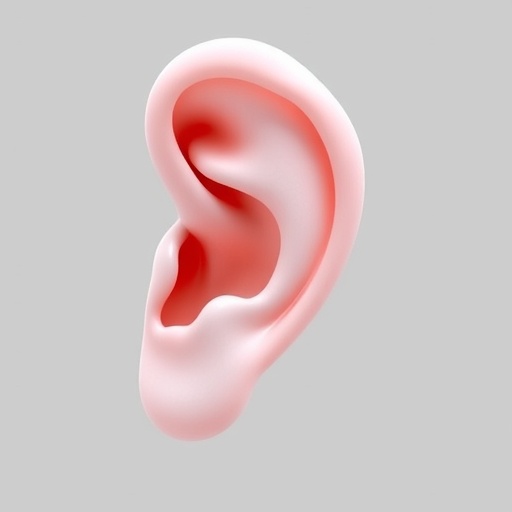
In recent years, the medical community has witnessed a transformational evolution in reconstructive techniques, particularly concerning ear reconstruction. One of the most innovative strides has emerged from the intersection of 3D printing technology and medical applications, as demonstrated by the work of Schoenfeld, Ad-El, Hayun, and their team. This groundbreaking research introduces a novel approach to total ear reconstruction, leveraging the precision and customization capabilities inherent in 3D printing. Such advancements have the potential to redefine ear reconstructive surgery and improve patient outcomes substantially.
Traditionally, ear reconstruction has posed significant challenges for surgeons, as the ear’s complex anatomy and the need for aesthetic precision are paramount. The conventional methods often relied on autologous tissue, which, while effective, can lead to donor site morbidity and often result in suboptimal cosmetic outcomes. The research team has explored the potential for 3D-printed implants that mimic the anatomical configurations of the human ear. This innovative approach aims to minimize complications associated with traditional surgical techniques while providing aesthetically pleasing results.
The 3D-printed aids utilized in this novel approach are designed using advanced software that enables the creation of highly detailed models based on individual patient anatomy. By employing imaging technologies like CT scans, the researchers can capture the intricate details of the ear’s structure and use them to inform the design of personalized implants. This level of customization is unprecedented, as it ensures that each implant fits seamlessly into the patient’s unique ear anatomy, enhancing both function and appearance.
Moreover, the materials used in the 3D printing process are specifically chosen for their biocompatibility and durability. The use of medical-grade polymers and bioresorbable materials ensures that the implants not only integrate well with the surrounding tissues but also reduce the risk of rejection. This careful selection of materials represents a significant advancement in the field of reconstructive surgery, as it addresses one of the primary concerns regarding the use of synthetic implants.
The research dives deep into the procedural aspects surrounding the production of these 3D-printed aids. The team details the entire workflow, from the initial imaging to the final surgical implementation. The creation of the 3D-printed models involves a meticulous process, where the data obtained from imaging is translated into a digital model, followed by printing with high precision to achieve the desired anatomical geometry. This incredible attention to detail is vital for achieving optimal surgical outcomes.
Schoenfeld and colleagues have also conducted preliminary clinical trials to assess the effectiveness of these 3D-printed implants. Early results demonstrate a high level of patient satisfaction, with many reporting improvements not only in the aesthetic appearance of their ears but also in self-esteem and overall quality of life. This feedback is crucial in understanding the impact of technological advancements in medical practices and underscores the importance of patient-centered approaches in medical research.
As the research progresses, the team is keenly aware of the ethical implications surrounding the use of advanced technologies in medicine. They emphasize the importance of rigorous regulatory standards and extensive testing to ensure that such innovations do not compromise patient safety. Transparency and ethical considerations are at the forefront of their research agenda, as they aim to establish best practices for the implementation of 3D printing in clinical settings.
One of the most exciting aspects of this research is its potential to expand beyond ear reconstruction. The methodologies and technologies developed for this project could easily be adapted for other reconstructive procedures, including those needed for facial and cranial defects. This versatility of application showcases the endless possibilities 3D printing offers in the field of medicine, encouraging further exploration and innovation.
Additionally, the impact of this research extends beyond clinical settings and into the realms of education and training. The creation of 3D models allows for enhanced training opportunities for medical students and professionals alike. These models can serve as invaluable tools for practice in surgical techniques, providing an interactive and realistic medium for learning. By improving education and training, the research team’s contributions may not only elevate every surgeon’s skill set but also enhance overall patient care.
The collaborative nature of this project is also noteworthy, involving input from surgeons, engineers, and material scientists. This interdisciplinary teamwork underscores the importance of diverse expertise in fostering innovation. The convergence of different fields has proven to be a powerful catalyst for advancing the capabilities of reconstructive surgery. By breaking down silos between disciplines, the research team has been able to develop comprehensive solutions that address multifaceted challenges in patient care.
As the healthcare industry continues to evolve with technology, the implications of 3D printing in medicine cannot be overstated. The findings of Schoenfeld and his colleagues mark a pivotal moment in this evolution, where the fusion of artistic and medical principles enhances the quality of life for patients dealing with the hardships of ear deformities and injuries. This research represents a beacon of hope for patients and an exciting frontier for the medical community, setting the stage for future innovations that could transform a wide range of surgical practices.
In conclusion, the introduction of novel 3D-printed aids for total ear reconstruction stands as a testament to the profound impact of technology on medicine. The work of Schoenfeld and his team exemplifies how a rigorous scientific approach combined with innovative techniques can lead to improved patient outcomes and satisfaction. The future of reconstructive surgery is bright with the promise of such advancements, and the ongoing exploration of 3D printing applications will undoubtedly pave the path for even greater breakthroughs in the years to come.
As this field continues to develop, it will be exciting to witness how these techniques will further refine surgical outcomes and, ultimately, enhance the quality of life for countless individuals facing reconstructive challenges. With research like this leading the charge, we stand on the threshold of a new era in medical innovation.
Subject of Research: Total Ear Reconstruction through 3D Printing
Article Title: Novel 3D-printed aids for total ear reconstruction
Article References:
Schoenfeld, L., Ad-El, D., Hayun, Y. et al. Novel 3D-printed aids for total ear reconstruction. 3D Print Med 11, 55 (2025). https://doi.org/10.1186/s41205-025-00310-w
Image Credits: AI Generated
DOI: https://doi.org/10.1186/s41205-025-00310-w
Keywords: 3D printing, ear reconstruction, biocompatibility, patient-centered care, surgical innovation.


