

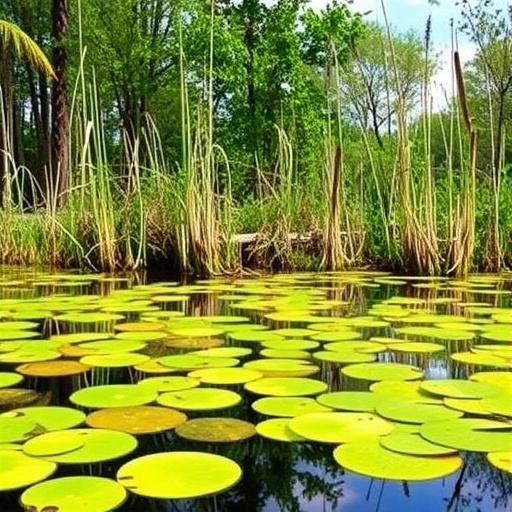
In a groundbreaking study that is set to reshape our understanding of coastal ecosystems, researchers led by Chen, HY., Ge, ZM., and Zhu, KH. delve into the dynamics of carbon and nitrogen recovery in restored coastal wetlands. These habitats, often overlooked yet vital to the global biosphere, serve as critical buffers against climate change while providing a myriad of ecological benefits. The research emphasizes the potential of restored wetlands to regain lost carbon and nitrogen levels, offering new insights into their role in climate regulation.
Coastal wetlands, which include marshes, mangroves, and seagrasses, have been recognized for their unparalleled capacity to sequester carbon. However, degradation due to human interference has led to significant losses in these essential habitats. The study illuminates that restoration efforts, if properly executed, can facilitate substantial recovery processes. This restoration is not just beneficial for local biodiversity but carries significant implications for global carbon cycles and nitrogen management, which are crucial for our planet’s health.
The researchers employed a multifaceted approach, integrating field studies, remote sensing technology, and advanced modeling techniques to assess the resilience of these ecosystems. They monitored areas subjected to restoration efforts, comparing them with degraded sites to capture a comprehensive picture of recovery trajectories over time. By meticulously documenting changes in carbon and nitrogen storage, the research highlights the effectiveness of various restoration strategies. This rich data set provides a solid foundation for future conservation policies and initiatives.
One of the striking findings of the study indicates that the recovery of carbon and nitrogen is not uniform across different types of coastal wetlands. The researchers discovered that specific traits of restored wetlands, such as plant diversity and hydrology, directly influenced the speed and extent of carbon and nitrogen recovery. Some wetland configurations showed remarkable resilience, demonstrating recovery patterns that could be seen within just a few years post-restoration. Such insights underscore the need for tailored approaches in wetland restoration projects, taking into account the unique environmental conditions of each site.
Moreover, the study reveals the critical relationship between biodiversity and ecosystem health. The presence of diverse plant species in coastal wetlands not only enhances habitat resilience but also plays a pivotal role in nutrient cycling. This finding aligns with ongoing discussions in ecological science regarding the intrinsic value of biodiversity. The enhanced functionality observed in more diverse wetlands provides compelling evidence for implementing policies aimed at conserving species-rich habitats as part of broader climate adaptation strategies.
The researchers also highlight the importance of long-term monitoring in evaluating restoration success. Their analysis advocates for sustained data collection to track changes in ecosystem functions over time. By establishing comprehensive monitoring frameworks, policymakers can better understand the long-term impacts of restoration activities. This recommendation is particularly salient in the context of climate change, where ongoing shifts in environmental conditions may affect ecosystem responses and recovery processes.
As we stand on the brink of a climate crisis, the implications of this research cannot be overstated. Restored coastal wetlands offer a dual benefit: they serve as effective carbon sinks while simultaneously providing habitat for a diverse array of species. The ability of such ecosystems to sequester carbon means they can play a significant role in our efforts to mitigate climate change impacts, particularly in coastal regions that are disproportionately affected by rising sea levels and extreme weather events.
The study also touches on the socio-economic aspects of wetland restoration. Healthy coastal ecosystems contribute to local economies through fisheries and tourism, highlighting the intertwining of ecological health and human prosperity. This economic rationale presents a compelling argument for governments and stakeholders to invest in coastal restoration projects. By fostering healthy ecosystems, communities can simultaneously enhance their resilience to climate impacts while promoting sustainable livelihood opportunities.
In conclusion, Chen et al.’s research on ecosystem carbon and nitrogen recovery in restored coastal wetlands offers a beacon of hope in the face of ecological degradation. The findings present a compelling case for the restoration of these invaluable ecosystems, emphasizing the necessity of integrating ecological integrity into climate action strategies. As policymakers grapple with the intricacies of climate adaptation and mitigation, insights from this study will undoubtedly guide efforts to rejuvenate coastal wetlands, protect biodiversity, and enhance the resilience of both ecosystems and human communities.
In light of these revelations, it becomes imperative for global leaders to prioritize the preservation and restoration of coastal wetlands. To achieve meaningful progress in climate resilience and biodiversity conservation, a multi-pronged approach that encompasses science, policy, and community engagement is essential. Facilitating collaboration across sectors will enhance our collective ability to tackle one of the most pressing challenges of our time.
The ocean, often termed the lungs of our planet, is inextricably linked to the health of coastal wetlands. As these critical ecosystems continue to be threatened, the urgent need for restoration and protection has never been clearer. The dialogue stemming from Chen et al.’s research is poised to catalyze action from scientists, policymakers, and climate advocates alike. United under the common cause of safeguarding our planet, we can harness the resilience of coastal wetlands to forge a sustainable future.
The road ahead is fraught with challenges, but the prospects for restored wetlands are inspiring. By implementing innovative restoration practices tailored to the unique needs of each ecosystem, we can enhance carbon and nitrogen recovery, foster biodiversity, and build resilience against the unpredictable tides of climate change. The commitment to restore these vital ecosystems is not merely an environmental issue; it is a moral imperative that calls for collective action and solidarity.
As we reflect on the lessons gleaned from this research, it is clear that the path to ecological restoration is rooted in our ability to listen to nature and respond thoughtfully to its needs. Embracing the complexities of coastal ecosystems will not only aid in their recovery but also enrich our understanding of the interconnectedness of life on Earth. Through informed action, we can ensure that coastal wetlands continue to thrive for generations to come.
In essence, this research serves as both a wake-up call and a source of inspiration. The findings resonate with the urgency of protecting our natural world while reaffirming the potential for recovery through concerted effort and innovation. The time for action is now, and coastal wetlands could be at the heart of the solution we seek.
Subject of Research: Coastal wetlands restoration and its effects on carbon and nitrogen recovery.
Article Title: Ecosystem carbon and nitrogen recovery in restored coastal wetlands.
Article References:
Chen, HY., Ge, ZM., Zhu, KH. et al. Ecosystem carbon and nitrogen recovery in restored coastal wetlands.
Commun Earth Environ (2025). https://doi.org/10.1038/s43247-025-03036-z
Image Credits: AI Generated
DOI: 10.1038/s43247-025-03036-z
Keywords: Coastal wetlands, restoration, carbon sequestration, nitrogen recovery, biodiversity.


