

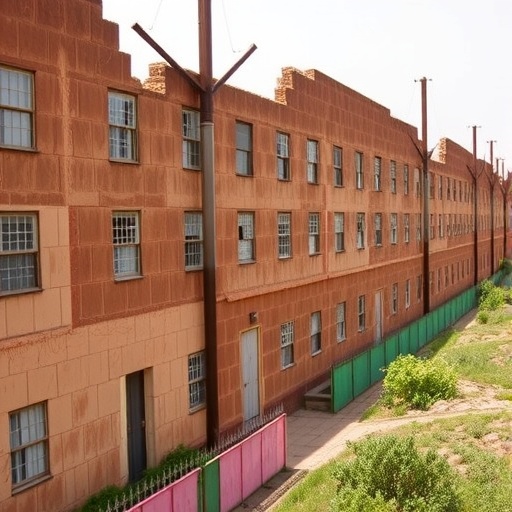
In recent years, the dust of historical interpretation has settled over the remarkable earthen structures known as the Walls of Benin, an ancient architectural feat that continues to astonish archaeologists and historians alike. These linear earthworks, primarily located in Nigeria, have sparked intense debates among scholars regarding their origins, purpose, and the technological capabilities of the societies that constructed them. T.L. Evans, in a stimulating article titled “The Walls of Benin Reconsidered: Interpreting West African Linear Earthworks Using A. J. H. Goodwin’s Unpublished Excavation Data,” brings a fresh perspective to this discourse by leveraging previously unpublished data. This research not only invites a re-evaluation of these enigmatic earthworks but also broadens our understanding of the cultural and historical contexts surrounding them.
The Walls of Benin, comprised of an impressive network of embankments, ditches, and walls, stretch across several kilometers. Historically, they have been attributed to the Benin Kingdom, a significant political and economic power in West Africa that thrived from the 13th century until British colonial incursion in the late 19th century. Evans’ article delves into the intricate relationship between these earthworks and the people who built them, examining how they reflect both social organization and technological prowess. By closely analyzing A. J. H. Goodwin’s excavation records, Evans sheds light on previously overlooked aspects of these structures.
Goodwin’s archaeological endeavors in the mid-20th century provide invaluable insight into the cultural practices and methodologies employed by ancient Benin builders. His unpublished excavation data, meticulously reviewed by Evans, reveals layers of information about construction techniques that have long held mysteries for researchers. The combination of stratigraphic record analysis and empirical measurements allows for a more nuanced interpretation of the earthen walls and their construction phases.
In Evans’ analysis, the materials and construction techniques employed in the creation of the Walls of Benin are thoroughly examined. These walls were primarily made from laterite, a soil type rich in iron that solidifies over time. The author makes clear that the properties of laterite not only made it an ideal choice for durability but also reflected the technological awareness of the builders. The advanced understanding of local geology suggests that the ancient community possessed not only the resources but also the knowledge necessary to manipulate them effectively.
One of the critical discussions arising from Evans’ article is the purpose of the Walls of Benin. Traditionally viewed as fortifications, the author posits that their function may have been more multifaceted. The walls likely served not only to protect against external threats but also to demarcate cultural and political boundaries within the kingdom. As Evans explores theories of symbolism and spatial organization, readers are invited to contemplate the broader implications of these earthworks on social cohesion and identity among the Benin people.
An important point made by Evans is the socio-political context within which the Walls of Benin were constructed. The article emphasizes that the earthworks were not merely physical barriers but representations of power and authority. The scale of construction indicates a highly organized society capable of mobilizing labor for large-scale projects. Evans suggests that the walls could be viewed as a statement of unity, demonstrating the collective identity of the Benin Kingdom and its ability to withstand challenges, both internal and external.
Moreover, Evans emphasizes the role of trade and economic power in the construction of these walls. The strategic location of the Benin Kingdom along trans-Saharan trade routes not only facilitated commerce but also likely provided the resources required for such ambitious construction projects. As trade flourished, the kingdom’s political landscape transformed, allowing for the accumulation of wealth and the mobilization of labor that resulted in extensive earthworks.
The article also raises intriguing questions about the interactions between different cultures and societies in pre-colonial West Africa. The geographical spread of similar earthworks across various regions hints at a shared technological and cultural heritage among neighboring communities. Evans encourages readers to contemplate the interconnectedness of historical societies in West Africa and how such relationships may have influenced the evolution of the earthworks, including the Walls of Benin.
As Evans revisits the historical narratives surrounding the Walls of Benin, he is careful to mention the role of colonialism in distorting historical perspectives. The British colonial regime’s disregard for indigenous expertise and practices led to a marginalization of local histories. By re-examining Goodwin’s data, Evans seeks to restore agency to the Benin builders and highlight their role in shaping their own history, which had been overshadowed by colonial narratives.
In the concluding sections, Evans calls for continued research into the Walls of Benin and similar earthworks across West Africa. He underscores the importance of interdisciplinary approaches that incorporate archaeology, anthropology, and historical analysis to develop a more comprehensive understanding of these remarkable structures. His call to action resonates within the ongoing efforts to preserve and appreciate the rich heritage of West Africa that is often overlooked in mainstream historical discourses.
As the archaeological community engages with Evans’ findings, a ripple effect of interest in the Walls of Benin may emerge among both scholars and the public. The potential for discovering new sites and conducting further excavations remains high, particularly given the wealth of unpublished materials that await exploration. The Walls of Benin stand as a testament to human ingenuity and a reminder of the importance of affirming the narratives of marginalized societies.
Overall, T.L. Evans’ thought-provoking article recontextualizes the Walls of Benin and encourages ongoing discourse surrounding historical interpretation, cultural significance, and the complexities of identity in West African societies. The research not only serves to honor the legacy of A. J. H. Goodwin but also beckons a new era of scholarship focused on the continued exploration and appreciation of the remarkable achievements of pre-colonial Africa.
In many ways, the scholarly work undertaken by Evans is a timely reminder of the stories that remain to be told. As we revisit the past, it becomes crucial to give voice to the unsung narratives that contribute to a fuller understanding of human history. It is through such rigorous exploration that we can ensure that the Walls of Benin and the civilizations that erected them are not merely relics of the past but living symbols of resilience and cultural richness that continue to inspire future generations.
Subject of Research: Interpretation of the Walls of Benin and their historical significance through unpublished excavation data.
Article Title: The Walls of Benin Reconsidered: Interpreting West African Linear Earthworks Using A. J. H. Goodwin’s Unpublished Excavation Data
Article References:
Evans, T.L. The Walls of Benin Reconsidered: Interpreting West African Linear Earthworks Using A. J. H. Goodwin’s Unpublished Excavation Data.
Afr Archaeol Rev 42, 309–332 (2025). https://doi.org/10.1007/s10437-025-09627-7
Image Credits: AI Generated
DOI: https://doi.org/10.1007/s10437-025-09627-7
Keywords: Benin Kingdom, linear earthworks, archaeology, colonial history, cultural heritage, social organization, engineering, interactive relationships, African history.


