

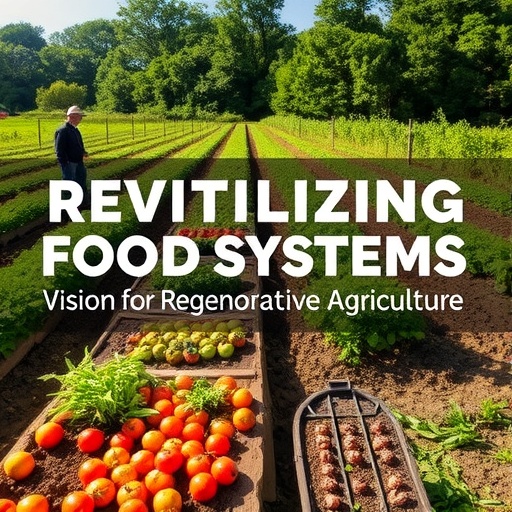
The global food system, as it stands today, faces challenges that jeopardize its sustainability and inclusivity. A groundbreaking proposal posited by researchers, including S. O’Keeffe, T.T. Amede, and B.O. Bockline, aims to redefine our approach to food systems in ways that are both regenerative and inclusive. The initiative, detailed in their upcoming article in Ambio in 2025, embraces the urgency of transforming our food production and consumption patterns to ensure resilience against climate change, economic inequality, and food insecurity. In an era where these issues threaten the very fabric of societies and ecosystems, the call for a regenerative inclusive food systems (RIFS) has never been more pertinent.
The researchers articulate that the current food system is resource-intensive, often leading to environmental degradation, loss of biodiversity, and increased greenhouse gas emissions. In contrast, the vision proposed by O’Keeffe and colleagues underscores the potential of regenerative practices that not only diminish harm but actively improve the ecosystem. Through innovative agricultural techniques that prioritize soil health, biodiversity, and water conservation, the regenerative approach offers a pathway to restoring ecological balance while meeting the food needs of a growing global population.
At the heart of this vision lies the concept of inclusivity, which seeks to empower marginalized communities that often bear the brunt of food system failures. The article outlines how restorative practices can be harmonized with social equity initiatives. Farmer cooperatives, community-supported agriculture, and localized food systems can create economic opportunities in underserved areas, thereby generating not just food but also wealth and stability. The authors argue that pursuing an inclusive agriculture model is not merely a matter of ethics but is crucial for creating a resilient food system.
Furthermore, the article addresses the pivotal role of policymakers in facilitating such a transformation. The authors advocate for investment in research and development of regenerative practices, alongside incentives for farmers transitioning to these methods. This requires a concerted effort across multiple sectors—government, private, and non-governmental organizations—to foster environments where innovation can thrive. The identification and dismantling of the regulatory barriers that hinder regenerative agriculture will be essential to harness the full potential of this paradigm shift.
Education and public awareness also feature prominently within the proposed framework. By disseminating knowledge about regenerative practices, the goal is to cultivate a culture of sustainability that spans from farmers to consumers. Schools and community organizations can play a central role in this educational push, promoting understanding about the benefits of regenerative agriculture and encouraging informed food choices amongst citizens.
Crucially, the research lays out a comprehensive vision that links ecological health with public health. Nutritional outcomes are often correlated with the environmental repercussions of food production methods. As such, regenerative practices are not only intended to mitigate climate change but also to address nutritional deficiencies and improve the overall health of populations. By shifting to food systems that prioritize quality over quantity, the authors suggest that communities can combat diet-related health issues while preserving natural resources.
Community engagement is highlighted as a cornerstone of the RIFS framework. Involving local voices in the decision-making process on food systems ensures that diverse perspectives and needs are considered. Engaging communities in understanding their local ecosystems and how best to utilize them sustainably fosters stewardship that can lead to lasting change. This participatory approach can challenge the status quo of top-down policies that often overlook the unique circumstances of diverse populations.
The risks and vulnerabilities associated with the current food system are exacerbated by climate change; droughts, floods, and shifting weather patterns have made traditional farming practices increasingly untenable. The regenerative food systems model provides adaptive strategies that enhance resilience to these climate-related shocks. Through diversified crop rotations, agroecological practices, and permaculture, farmers can build systems that withstand environmental uncertainties.
Furthermore, the financial implications of adopting regenerative practices are addressed in the article. Although transitioning to regenerative agriculture may require initial investments, the long-term benefits in terms of sustainability, productivity, and climate resilience could outweigh these costs. The authors highlight examples of farmers who have successfully made this transition, noting increased yields, reduced input costs, and improved soil and water quality as key outcomes.
The integration of technology into regenerative agricultural practices presents another area ripe for innovation. Emerging technologies such as precision agriculture, drone monitoring for soil health, and biotechnology can enhance the effectiveness of regenerative practices. The combination of traditional ecological knowledge with modern technology can lead to improved efficiencies and accountability in food production.
As consumer awareness grows around issues such as climate change and health, the demand for sustainably produced food continues to rise. The authors emphasize that regenerative food systems are not just a trend, but a necessary evolution in our relationship with food. The proposed framework aligns with increasing consumer preferences for ethical and environmentally friendly products, creating a viable market for regenerative foods.
Investment in infrastructure is essential for the success of RIFS. The authors explore the need for improved transportation and logistics systems that facilitate the distribution of regenerative products. Access to urban markets, for example, can be enhanced through the establishment of local food hubs that connect farmers directly to consumers. This not only reduces the carbon footprint associated with food transportation but also supports local economies.
Lastly, the article underscores the importance of monitoring and evaluating the impacts of transitioning to regenerative food systems. Metrics and benchmarks will be crucial for assessing progress and ensuring accountability. Robust data collection mechanisms can provide insights into how RIFS are performing in real-time and where additional support may be needed.
In conclusion, the research put forth by O’Keeffe and her colleagues presents a compelling case for reimagining our food systems. Through an integrated approach that embraces regenerative practices and prioritizes inclusivity, the potential for creating a sustainable and resilient food future is within reach. This framework lays the groundwork for a transformative shift toward food systems that honor our environmental and social responsibilities, ensuring that generations to come can thrive in harmony with the planet.
Subject of Research: Regenerative, Inclusive Food Systems
Article Title: Regenerating the food system: A proposed vision and guiding principles for regenerative, inclusive food systems (RIFS)
Article References:
O’Keeffe, S., Amede, T.T., Bockline, B.O. et al. Regenerating the food system: A proposed vision and guiding principles for regenerative, inclusive food systems (RIFS).
Ambio (2025). https://doi.org/10.1007/s13280-025-02319-1
Image Credits: AI Generated
DOI:
Keywords: Regenerative Agriculture, Inclusive Food Systems, Sustainability, Climate Change Resilience, Community Engagement, Nutritional Health.


