


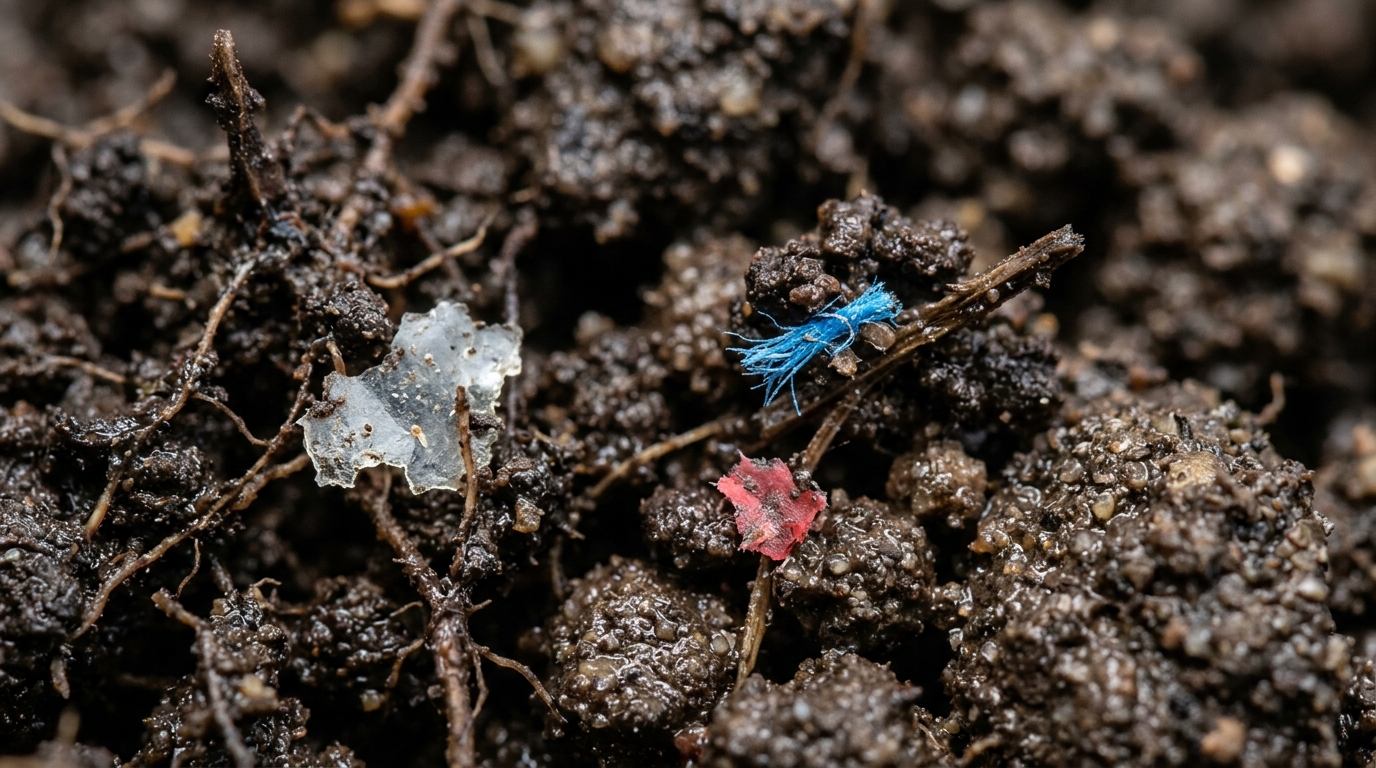
A comprehensive review published in Environmental Challenges in December 2026 concludes that no single sampling or extraction method is universally superior for detecting microplastics in soil. The study, led by Tilahun Kasa and colleagues, evaluated methodological techniques used to sample, extract, identify, and quantify microplastics in terrestrial matrices. By analyzing 97 suitable studies identified through a systematic literature search, the authors highlight significant heterogeneity in current practices. The review emphasizes that reliable analysis depends on a combination of representative field sampling, appropriate aggregate dispersion, organic matter removal, density separation, filtering, and polymer confirmation, rather than reliance on a single standardized protocol.
The investigation addresses the growing concern over plastic pollution in soil systems, where microplastics can alter physicochemical and biological properties. These particles, defined as fragments smaller than 5 mm, originate from the fragmentation of larger plastic debris through mechanical action, weathering, and biodegradation. The review notes that microplastics in soil can influence bulk density, porosity, water retention, and nutrient cycles, potentially affecting soil fertility and agricultural productivity. Given these ecological implications, the accuracy of microplastic abundance measurements is critical for risk assessment and environmental research, yet sampling and extraction procedures have yet to be standardized across the field.
The researchers conducted a thorough literature search in February 2025 across five major scientific databases, including Google Scholar, ScienceDirect, SpringerLink, Wiley Online Library, and PubMed. Following the Preferred Reporting Items for Systematic Reviews and Meta-analyses (PRISMA 2020) criteria, the initial search yielded 155 documents. After removing duplicates and screening titles and abstracts, 97 studies were included in the final review. These studies were selected based on their provision of methodological information regarding sample collection, preparation, extraction, identification, or quantification of microplastics in soil or terrestrial matrices.
Sampling design is a primary determinant of data reliability, as microplastic distribution varies significantly due to land use, agricultural activities, and pollution sources. The review compares various strategies, including random, stratified, grid, transect, and composite sampling. Random sampling is noted for its simplicity and ability to reduce selection bias, but it may fail to capture spatial variability in heterogeneous environments. In contrast, systematic grid and transect sampling offer structured coverage, useful for identifying directional gradients along roads or irrigation canals. However, the review cautions that increasing the number of subsamples within a single transect does not equate to independent statistical replication, which should be established across separate fields or plots.
Composite sampling, which involves blending multiple subsamples into a single unit, is frequently used to reduce the influence of small-scale geographic variability. The plum-blossom method, a specific type of composite design, uses five subsampling points within a defined plot to create a representative sample. While these methods improve spatial representativeness, the review stresses that subsamples within a composite should not be treated as independent observations. To accurately assess uncertainty, researchers must collect multiple independent composites within each depth stratum, as mixing material from different sources can dilute or mask localized microplastic hotspots.
Sample preparation is a critical but often overlooked stage that significantly impacts extraction efficiency. Soil aggregates can physically entrap microplastics, preventing their recovery during subsequent separation steps. The review highlights the importance of aggregate dispersion using methods such as shaking, moderate grinding, or chemical dispersants like sodium hexametaphosphate. However, excessive mechanical treatment or prolonged ultrasonication can damage microplastic particles, leading to the generation of secondary fragments and an overestimation of smaller particle abundance. A balance must be struck between maximum aggregate disruption and the preservation of particle integrity.
Organic matter removal is another essential step, as soil organic matter can interfere with density separation and spectroscopic identification due to overlapping densities and optical characteristics. Common methods include oxidation with hydrogen peroxide or Fenton’s reagent, as well as alkaline or acid digestion. The review notes that while Fenton oxidation is effective for organic-rich soils, its efficiency is sensitive to pH and temperature. Acid digestion can dissolve organic debris but may degrade certain polymers like nylon and polyethylene terephthalate. Therefore, digestion conditions must be optimized to remove organic material without compromising the target polymer fraction.
Density separation remains the most common extraction method, utilizing buoyant solutions to separate plastic particles from mineral soil fractions. Saturated sodium chloride is a cost-effective option for low-density polymers such as polyethylene and polypropylene, but it cannot consistently recover denser polymers. Higher-density media like sodium bromide or zinc chloride can improve recovery of a broader range of polymers but involve higher costs and potential co-extraction of non-plastic materials. The review indicates that recovery rates vary significantly depending on soil texture, organic matter content, and particle size, underscoring the need for matrix-specific optimization of flotation conditions.
Alternative extraction techniques, including electrostatic, oil-based, and magnetic separation, have shown promise for specific analytical scenarios. Electrostatic separation exploits differences in electrical properties and can achieve high recovery rates for larger particles, but its performance declines for fine-textured soils and smaller particles. Oil-based separation can recover polymers across a wide density range, though residual oil may interfere with subsequent spectroscopic analysis. Magnetic separation offers a rapid approach for recovering microplastics of various densities, but its reliability for quantitative analysis requires further validation in heterogeneous agricultural soils. These methods are often complementary to density separation rather than replacements.
Identification of microplastics requires confirmation of polymer composition, as visual inspection alone is prone to misidentification. Spectroscopic techniques such as Fourier-transform infrared (FTIR) and Raman spectroscopy provide polymer-specific chemical information and are widely used for particle-level analysis. FTIR is non-destructive and suitable for larger particles, while Raman spectroscopy offers higher spatial resolution for smaller particles but is susceptible to fluorescence interference from organic matter. Thermal analytical methods like pyrolysis-gas chromatography-mass spectrometry (Py-GC/MS) quantify polymer mass rather than particle number or shape, making them complementary to spectroscopic approaches. The choice of identification technique depends on the required level of particle-specific information and the analytical throughput.
The review concludes that methodological heterogeneity remains a substantial barrier to comparing reported soil microplastic concentrations. Discrepancies in reported levels may reflect differences in sampling design, soil mass, matrix composition, and extraction protocols rather than actual environmental contamination. To improve reproducibility and comparability, the authors recommend transparent reporting of sampling parameters, soil characteristics, preparation procedures, and recovery validation. Future research should focus on integrated, matrix-specific validation studies that account for the combined impact of sampling, extraction, and identification techniques.
Establishing standardized reporting and validation practices is essential for developing reproducible analytical workflows tailored to specific monitoring objectives. The study underscores that no single technique is always superior, and method selection should be guided by the study’s aim, soil matrix, target particle size, and polymer range. By addressing these methodological challenges, researchers can enhance the accuracy of soil microplastic measurements and better understand the ecological and human health hazards associated with plastic pollution in terrestrial environments.
Subject of Research: Methodological review of sampling and extraction techniques for soil microplastics
Article Title: Sampling and extraction methods for soil microplastics: current advances and limitations
Article References: Kasa, T., Reddythota, D., Berihun, M. E., Tola, S. Y., & Beyene, Y. K. (2026). Sampling and extraction methods for soil microplastics: current advances and limitations. Environmental Challenges, 25, Article 101696. https://doi.org/10.1016/j.envc.2026.101696
Image Credits: AI Generated
DOI: 10.1016/j.envc.2026.101696
Keywords: soil microplastics, sampling methods, extraction techniques, density separation, polymer identification, environmental analysis, soil contamination, methodological review, FTIR spectroscopy, aggregate dispersion, Sampling, extraction
Cite Scienmag News
Violet Maxwell. (November 7, 2026). Review Finds No Single Best Method for Soil Microplastic Analysis. Scienmag. https://scienmag.com/review-finds-no-single-best-method-for-soil-microplastic-analysis/
Violet Maxwell. "Review Finds No Single Best Method for Soil Microplastic Analysis." Scienmag, 7 November 2026, https://scienmag.com/review-finds-no-single-best-method-for-soil-microplastic-analysis/. Accessed 16 November 2026.
Violet Maxwell. "Review Finds No Single Best Method for Soil Microplastic Analysis." Scienmag. November 7, 2026. https://scienmag.com/review-finds-no-single-best-method-for-soil-microplastic-analysis/




