

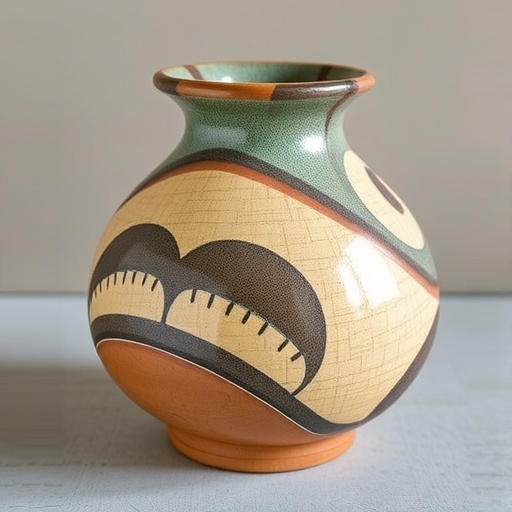
In a groundbreaking exploration of ancient pottery, researcher T. Sadykov has undertaken a significant re-evaluation of the pottery typology associated with the Kokel archaeological culture, which thrived during the third to fourth centuries CE in the Tuva Republic of Inner Asia. By employing a cutting-edge geometric morphometrics approach, Sadykov aims to illuminate the complexities and nuances of this enigmatic culture, allowing for a fresh perspective on its ceramic artifacts. This research not only sheds light on the intricacies of Kokel pottery but also positions itself as a pivotal contribution to the field of Asian archaeology.
The Kokel archaeological culture is characterized by its distinctive pottery, which has long intrigued scholars. Previous classifications of these artifacts were often based on subjective interpretations. However, Sadykov’s innovative approach leverages geometric morphometrics—an advanced statistical method used to analyze shapes and variations in geometric structures—enhancing the accuracy and objectivity of the pottery typology. By quantitatively assessing the form and size of the artifacts, this method allows researchers to establish clearer distinctions and classifications within the pottery assemblage.
In his study, Sadykov meticulously collected a representative sample of Kokel pottery, encompassing various shapes, styles, and decorative elements. Each artifact was subjected to geometric morphometric analysis, which involved digitizing the forms and creating a comprehensive database. This systematic approach facilitates a thorough comparative analysis, enabling the identification of subtle morphological differences that might have gone unnoticed through traditional visual assessments.
One of the most significant aspects of Sadykov’s research is the integration of this advanced methodology with archaeological context. The study meticulously considers the provenance of the pottery, including its production techniques, distribution, and socio-cultural implications. By grounding the geometric analysis in contextual information, the research provides a multi-dimensional understanding of Kokel pottery that transcends mere typological classification. This holistic approach ensures that the findings are not only statistically robust but also rich in cultural relevance.
The results of Sadykov’s study reveal previously unrecognized patterns in Kokel pottery. For instance, the analysis uncovered distinct clusters of shapes that correlate with specific periods or cultural interactions within the region. These findings challenge earlier assumptions about the uniformity of Kokel pottery and suggest a more dynamic interrelation with neighboring cultures. Such revelations are crucial for understanding the broader historical landscape of Inner Asia during this period.
Furthermore, Sadykov’s application of geometric morphometrics holds promise for future archaeological research beyond Kokel pottery. This methodology can be adapted to a variety of archaeological artifacts, providing a powerful tool for examining historical material culture across diverse contexts. As the field of archaeology continues to embrace technological advancements, Sadykov’s work exemplifies how innovation can enhance our understanding of the past, pushing the boundaries of traditional methods.
The implications of this research extend to both academic discourse and public engagement with history. By bringing a scientific lens to the study of pottery, Sadykov enhances the credibility of archaeological interpretations, fostering a deeper appreciation of the intricate relationships between artifacts and the cultures that produced them. This work underscores the importance of interdisciplinary approaches in archaeology, where the fusion of technology and traditional methods can yield profound insights into human history.
Moreover, Sadykov’s findings prompt a reevaluation of the significance of ceramic markings and aesthetics. The research emphasizes that the artistry of pottery is not solely a reflection of functional use, but also an expression of identity, beliefs, and social dynamics within the Kokel culture. Each piece of pottery tells a story, embodying the values and creativity of its makers. Understanding these narratives enriches our comprehension of the Kokel community and adds depth to the historical record of Inner Asia.
As this groundbreaking research surfaces in academic circles, it is poised to generate interest and dialogue among archaeologists, historians, and even the general public. The study not only redefines our understanding of Kokel pottery but also highlights the broader significance of ceramics as a key to unlocking the complexities of ancient cultures. As the archaeological narrative continues to evolve, Sadykov’s work stands as a beacon of innovation, encouraging new avenues of exploration and inquiry in the annals of Asian archaeology.
Ultimately, T. Sadykov’s re-evaluation of Kokel pottery typology exemplifies the transformative power of modern technology in archaeology. By embracing geometric morphometrics, researchers can transcend traditional boundaries, revealing intricate details and patterns that were previously obscured. This research not only sheds light on the Kokel culture but also paves the way for future discoveries and a renewed appreciation of the rich tapestry of human history.
In conclusion, the implications of Sadykov’s work are far-reaching, promising to inspire a new generation of archaeologists to adopt innovative methodologies in their research. As we delve deeper into the complexities of ancient cultures, studies like these remind us that there is still much to uncover. The beauty and significance of ceramic artifacts lie not only in their physical form but also in the stories they carry—stories waiting to be told through the lens of modern scientific inquiry.
The re-evaluation of Kokel pottery typology signals a vital shift in archaeological practice, advocating for the integration of quantitative methods into traditional humanities. This intersection of science and history enriches our understanding of the past, reminding us that archaeology is not merely the study of artifacts, but an ongoing dialogue with the history they represent.
Subject of Research: Re-evaluation of the pottery typology of the Kokel archaeological culture
Article Title: Re-evaluating the pottery typology of the Kokel archaeological culture (3rd–fourth centuries CE, Tuva Republic, Inner Asia) with a geometric morphometrics approach
Article References: Sadykov, T. Re-evaluating the pottery typology of the Kokel archaeological culture (3rd–fourth centuries CE, Tuva Republic, Inner Asia) with geometric morphometrics approach. asian archaeol (2025). https://doi.org/10.1007/s41826-025-00119-w
Image Credits: AI Generated
DOI: https://doi.org/10.1007/s41826-025-00119-w
Keywords: Kokel culture, pottery typology, geometric morphometrics, Tuva Republic, archaeology, ancient ceramics, cultural analysis, material culture, statistical methods, historical research, interdisciplinary approaches.


