


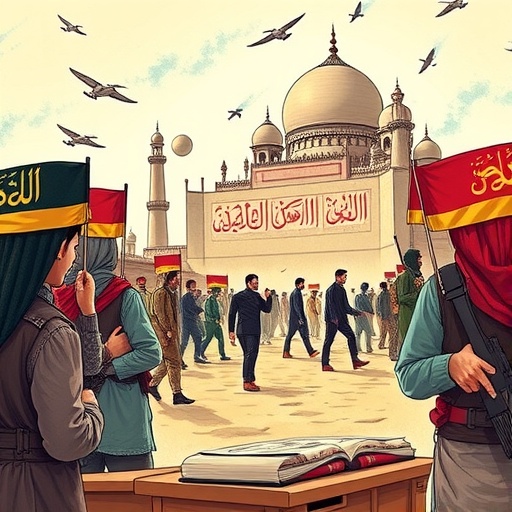
The representation of Jihad in education has been a contentious issue, particularly within England’s GCSE Religious Education textbooks. In an era where misinformation can spread rapidly, it becomes paramount to address the nuances surrounding such a sensitive topic. Many education stakeholders have voiced concerns that the portrayal of Jihad in textbooks lacks depth and accuracy, leading to misconceptions among students. With the curriculum shaping young minds, ensuring a comprehensive understanding of this concept is essential for fostering informed discussions about religion, culture, and socio-political contexts.
Recent analyses of GCSE Religious Education textbooks reveal a tendency to oversimplify or misinterpret Jihad, often escalating stereotypes and generalizations. This trend not only undermines the complexity of Islamic teachings but also reinforces negative perceptions about Muslims in broader society. One cannot ignore the impact that such narratives can have on the minds of young learners, who are at a formative stage for understanding societal dynamics. Therefore, a reevaluation of how Jihad is presented in educational materials is not merely an academic concern; it touches on moral and ethical obligations to educate fearlessly and accurately.
Jihad, rooted in Arabic meaning “struggle” or “striving,” encompasses a variety of interpretations, encompassing both personal and collective dimensions of effort in adhering to Islamic principles. The common depiction seen in textbooks, which predominantly aligns with militant interpretations, fails to capture this broader perspective. This reductive presentation not only disservices students but also ignores the diversity within the Muslim community’s interpretations of Jihad. The challenge lies in ensuring educational content provides a balanced view that reflects both historical and contemporary realities of the term.
Moreover, the lack of expert input in the curation of educational materials exacerbates these misrepresentations. Often, textbook authors may not be specialists in religious studies or Islamic teachings, resulting in a skewed portrayal that does not reflect the input of scholars in the field. This raises critical questions about the processes involved in selecting and validating textbook content. Peer-reviewed contributions from qualified scholars should be a priority, ensuring that students are given access to accurate and well-rounded perspectives, free from bias.
Educators must also be mindful of the implications of teaching about Jihad without adequate context. In the current geopolitical landscape, where conversations about terrorism and extremism are prevalent, presenting Jihad without its comprehensive historical, social, and religious background can inadvertently fuel intolerance. Educational institutions should aim for a curriculum that not only combats stereotypes but also fosters empathy and understanding. This transition towards a more thoughtful educational framework can be achieved by integrating voices from various scholarly traditions.
The impact of educational content on student perceptions can be profound. Psychological studies have shown that what students learn about different cultures influences their interpersonal interactions and attitudes. When students perceive Islam exclusively through the lens of violence and extremism, it forms a barrier to meaningful engagement with their peers from diverse backgrounds. Therefore, addressing the biases in textbooks is not an isolated issue; it is foundational to promoting social cohesion in increasingly multicultural societies.
It is also noteworthy that while discussions about Jihad often surface in Religious Education, they intersect with broader themes of morality, ethics, and human rights. Engaging students in critical discussions about these themes allows them to cultivate a more nuanced appreciation of global issues. This is crucial in an age characterized by rapid information dissemination and polarized public opinion. Students equipped with critical thinking skills are less likely to succumb to prejudiced views and are better prepared to navigate the complexities of the modern world.
Efforts to revamp GCSE Religious Education textbooks must involve collaboration among educators, policymakers, and researchers. Creating advisory panels comprising experts in Islam, education, and cultural studies can ensure that textbook content aligns with contemporary scholarship and societal needs. The goal should be to develop resources that are not only educational but also resonate with students’ lived experiences, bridging the gap between theory and real-world applications.
It’s imperative to consider the role of ongoing training for educators in this process. Teachers who are well-informed about the complexities of terms like Jihad are better positioned to facilitate discussions and encourage students to think critically. Professional development workshops focusing on religious literacy could serve as an effective vehicle for reforming educational practices, equipping teachers with the knowledge and tools they need to provide a comprehensive curriculum.
The call for revamping GCSE Religious Education textbooks is a necessary step in addressing broader issues of representation and inclusivity within educational materials. By aligning curriculum content with a deeper understanding of religious complexities, we contribute to a more equitable educational landscape. This initiative is not only beneficial for Muslim students but for all learners, as it broadens their horizons and provides them with the understanding necessary to engage with diverse perspectives.
In conclusion, addressing the misrepresentation of Jihad in GCSE Religious Education textbooks is essential for cultivating a more informed, compassionate, and cohesive society. By implementing thoughtful changes and including expert opinions, educators can reshape the narrative surrounding Jihad, ultimately fostering a more accurate understanding of Islam and encouraging students to embrace diversity. In a world rife with division, reinforcing education with truth, empathy, and understanding is a responsibility we must collectively uphold.
Hussain, N. Addressing critical concerns in the representation of Jihad within England’s GCSE Religious Education textbooks: a call for revamping and accuracy.
j. relig. educ. (2025). https://doi.org/10.1007/s40839-025-00283-2
Cite Scienmag News
Courtney Benton. (November 1, 2025). Revamping Jihad Representation in GCSE Religious Texts. Scienmag. https://scienmag.com/revamping-jihad-representation-in-gcse-religious-texts/
Courtney Benton. "Revamping Jihad Representation in GCSE Religious Texts." Scienmag, 1 November 2025, https://scienmag.com/revamping-jihad-representation-in-gcse-religious-texts/. Accessed 4 September 2026.
Courtney Benton. "Revamping Jihad Representation in GCSE Religious Texts." Scienmag. November 1, 2025. https://scienmag.com/revamping-jihad-representation-in-gcse-religious-texts/


