


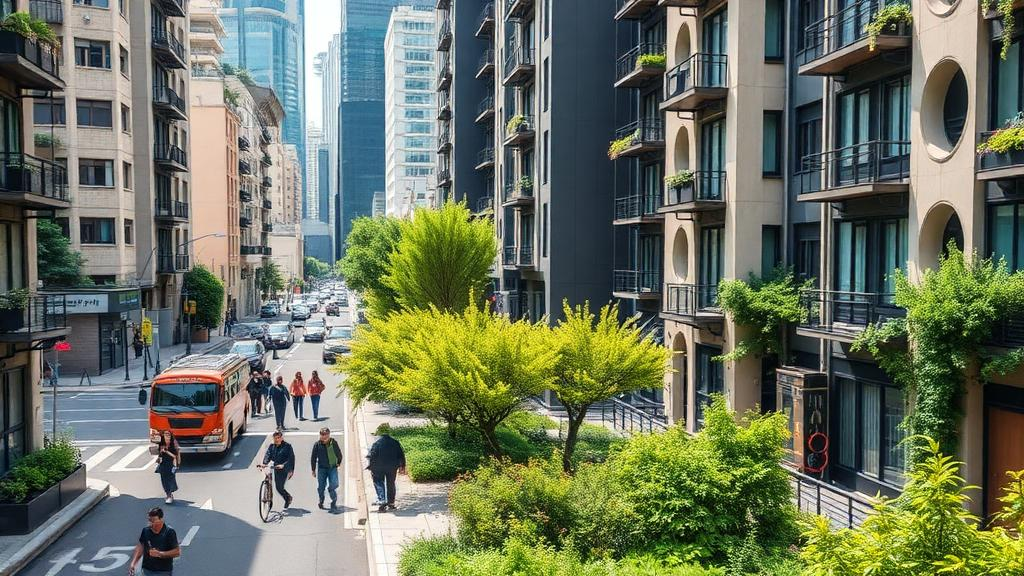
Urban trees and parks have long been celebrated as the lungs of the modern city, but a sweeping new review argues that the way planners classify and deploy green infrastructure is fundamentally out of step with the science of how vegetation actually cleans the air. In a systematic review published in the journal Air Quality, Atmosphere & Health, a team of researchers led by Jeong-Hee Eum of Kyungpook National University and Jung-Hun Woo of Seoul National University reclassified urban green infrastructure according to how it mitigates particulate matter, rather than the legal or developmental purposes for which it was originally created. Drawing on 139 peer-reviewed studies and eight Korean laws and policy documents, the team distilled four functional criteria and used them to build a typology of ten distinct green infrastructure types, each with its own planning strategy tailored to the dense, complex environments where billions of people live and breathe.
The urgency behind the work is stark. Fine particulate matter, or PM2.5, consists of particles no wider than 2.5 micrometers, small enough to penetrate deep into the lungs and reach the alveoli, driving respiratory disease, cardiovascular illness, and premature mortality. The problem is most acute in high-density cities, where pedestrian-level exposure tracks closely with daily mobility patterns and where emission sources sit mere meters from the people inhaling them. South Korea, the study’s analytical case, recorded the highest annual mean PM2.5 concentration among OECD countries in 2019 at 24.8 micrograms per cubic meter, and not a single Korean city met the World Health Organization guideline of 10 micrograms per cubic meter. Although national averages have gradually declined, the frequency of high-concentration episodes has increased, and vulnerable populations such as children, older adults, and people with respiratory illnesses continue to bear disproportionate exposure.
The researchers argue that the institutional machinery governing urban greenery is poorly equipped for this challenge. In South Korea, green spaces are managed through fragmented frameworks: the Ministry of Land, Infrastructure and Transport classifies urban parks and greenbelts under a spatial planning logic, while the Korea Forest Service manages urban forests through a function-oriented system. Even green spaces explicitly intended to combat fine dust, such as buffer greenbelts and particulate matter reduction forests, lack a coherent typology. The result is a patchwork of categories organized by legal designation or project objective rather than by the physical mechanisms that determine whether a given patch of vegetation removes particles from the air, blocks their transport, or inadvertently traps them where people walk.
That last point is central to the review’s scientific core. Vegetation influences urban particulate matter through three interacting mechanisms: deposition, in which particles are intercepted, adsorbed, or absorbed onto leaf surfaces; blocking, in which vegetation structures redirect polluted airflow away from receptors; and dispersion, in which plant assemblages modify turbulence and ventilation to dilute concentrations. Crucially, these mechanisms can work against each other. Dense plantings that maximize leaf surface area for deposition can simultaneously reduce wind speed and restrict ventilation, causing pollutants to accumulate at pedestrian level. Studies cited in the review show that identical vegetation configurations can lower exposure along open roads yet worsen accumulation inside street canyons, where building geometry traps stagnant air. The net effect of any green intervention therefore depends on wind conditions, street height-to-width ratios, vegetation porosity, and proximity to emission sources.
The biological details matter as much as the aerodynamics. At the level of individual plants, deposition efficiency is governed by leaf surface morphology: stomatal size and density, wax layer thickness, surface roughness, grooves, and trichomes all enhance particle capture. Coniferous species generally outperform broadleaf trees because of their more complex foliage and greater total leaf area, and evergreen species maintain year-round filtration while deciduous trees shed their filtering capacity each winter. Rainfall plays a restorative role, washing accumulated particles from leaves and renewing deposition capacity, which suggests that maintenance practices such as periodic spraying during dry spells could sustain long-term performance. At the assemblage level, larger canopies, greater canopy cover, and higher leaf area density increase removal, but only up to a point: optimal particulate matter reduction is typically achieved at intermediate vegetation density and porosity, where particle capture is balanced against adequate airflow.
From this evidence base, the team derived four classification criteria: the original development purpose of the green space, its proximity to major emission sources, the vulnerability of nearby human receptors, and its physical structure. Applying these criteria as filters within a structured planning matrix, they generated ten functional types. These range from neighborhood-oriented green spaces and sensitive receptor-oriented greenery around schools and hospitals, to roadside linear infrastructure, buffer-type mitigation forests near industrial sources, large-scale open spaces, riverine corridors, forest-adjacent zones that channel clean air into cities, residential complex greenery, building-integrated systems such as green roofs and walls, and small-scale pocket parks embedded in dense urban fabric.
Each type demands a different design logic. In residential areas, structurally diverse, multilayered vegetation with high-deposition species enhances particle settling, while natural ground cover and permeable surfaces suppress dust resuspension. Around schools and hospitals, dense perimeter plantings of shrubs and small trees intercept pollutants, but upper canopy layers are kept open to preserve visibility, ventilation, and safety. Along roads, medians planted with tall trees of high clear-bole height promote vertical dispersion, while sidewalk plantings adopt continuous multilayered structures to shield pedestrians, with density adjusted to street canyon geometry to avoid choking ventilation. Buffer forests near industrial complexes require high density, sufficient width, and a higher proportion of evergreens, with denser planting on the source side and moderate porosity on the leeward side to enable controlled dispersion. Riverine corridors and forest-adjacent zones, by contrast, must preserve airflow pathways, avoiding dense transverse planting that would block the ventilation corridors that carry pollutants out of the city.
The framework also draws a distinction that carries significant public health weight: reducing ambient concentrations is not the same as reducing human exposure. Concentration reduction lowers particulate levels through deposition and dispersion across the urban atmosphere, while exposure reduction focuses on interrupting pollutant transport toward people, particularly at breathing height, roughly one to two meters above ground. For green infrastructure serving vulnerable populations, the authors argue, exposure reduction may yield greater health benefits than equivalent ambient reductions elsewhere, because epidemiological studies consistently show steeper exposure-response relationships in susceptible groups. The framework’s receptor-vulnerability criterion thus doubles as an environmental justice instrument, directing resources to locations where high pollution, vulnerable populations, and green space deficits overlap, a pattern that research in cities from Philadelphia to Seoul shows is disturbingly common.
The authors are candid about the framework’s limits. It is a conceptual decision-support tool built from qualitative synthesis, not a validated predictive model; the reviewed evidence was methodologically heterogeneous, spanning field monitoring, computational modeling, wind-tunnel experiments, remote sensing, and laboratory studies, each with its own biases and scale dependencies. No quantitative thresholds were set for variables such as vegetation porosity, buffer width, or source-receptor distance, and the institutional component is rooted in Korean legal categories that may not translate directly to other planning systems. Future validation through long-term field observations and high-resolution computational fluid dynamics modeling, with attention to non-exhaust traffic emissions and climate-driven stagnation events, is the stated next step.
Even so, the conceptual shift the study proposes is likely to resonate far beyond South Korea. As metropolitan areas across Asia and beyond densify, the temptation is to treat greenery as a monolithic good and simply plant more of it. This review makes the case that where a tree stands, what surrounds it, who breathes beside it, and how its canopy is structured determine whether it cleans the air or quietly fouls it. Green infrastructure, the authors conclude, should be understood not merely as recreational amenity but as public health infrastructure, planned with the same functional precision that engineers apply to water systems and transit networks. In cities where the air itself is a hazard, that reframing may prove to be one of the most consequential planning ideas of the decade.
Subject of Research: Functional classification of urban green infrastructure for particulate matter mitigation in high-density cities
Article Title: Reframing urban green infrastructure for particulate matter mitigation: a systematic review and functional planning framework for high-density cities
Article References: Eum, J.-H., Son, J.-M., Park, J.-H., Sung, U.-J., Kim, J.-E., Guenther, A., & Woo, J.-H. (2026). Reframing urban green infrastructure for particulate matter mitigation: a systematic review and functional planning framework for high-density cities. Air Quality, Atmosphere & Health, 19(10), Article 219. https://doi.org/10.1007/s11869-026-02099-x
Image Credits: AI Generated
DOI: 10.1007/s11869-026-02099-x
Keywords: urban green infrastructure, particulate matter, PM2.5, air quality, urban planning, South Korea, vegetation deposition, street canyons, nature-based solutions, public health, environmental justice, systematic review
Cite Scienmag News
Russell Cooper. (September 30, 2026). Rethinking Urban Greenery: A New Playbook for Fighting Deadly Air Pollution in Crowded Cities. Scienmag. https://scienmag.com/rethinking-urban-greenery-a-new-playbook-for-fighting-deadly-air-pollution-in-crowded-cities/
Russell Cooper. "Rethinking Urban Greenery: A New Playbook for Fighting Deadly Air Pollution in Crowded Cities." Scienmag, 30 September 2026, https://scienmag.com/rethinking-urban-greenery-a-new-playbook-for-fighting-deadly-air-pollution-in-crowded-cities/. Accessed 4 October 2026.
Russell Cooper. "Rethinking Urban Greenery: A New Playbook for Fighting Deadly Air Pollution in Crowded Cities." Scienmag. September 30, 2026. https://scienmag.com/rethinking-urban-greenery-a-new-playbook-for-fighting-deadly-air-pollution-in-crowded-cities/


