


Tarragona (Spain), July 1st, 2024 – Nitrogen is an important and abundant element on earth. In fact, nitrogen in gas state is the most abundant gas of the atmosphere. This element is in our body as part of our DNA and in the centre of haemoglobin. But nitrogen is also involved in our health. Saturated nitrogen-containing heterocycles are among the most common molecular fragments in chemical compounds, particularly within medicinal chemistry. These motifs, which are frequently found in a wide range of top-selling pharmaceuticals, enhance biological activities when included in drug-like structures. However, synthesizing these cyclic amines presents significant challenges.

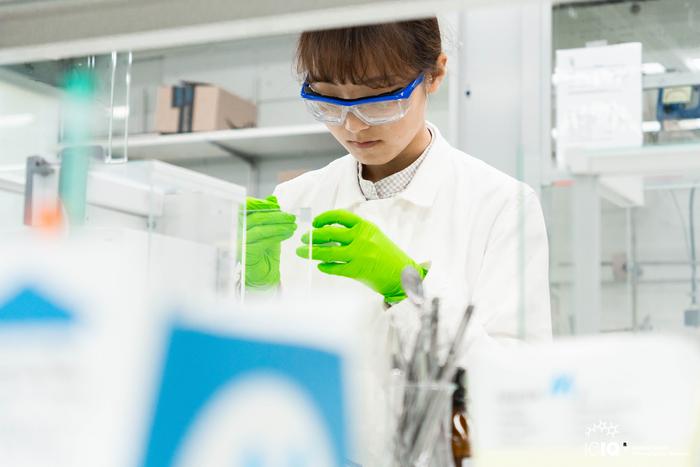
Credit: ICIQ
Tarragona (Spain), July 1st, 2024 – Nitrogen is an important and abundant element on earth. In fact, nitrogen in gas state is the most abundant gas of the atmosphere. This element is in our body as part of our DNA and in the centre of haemoglobin. But nitrogen is also involved in our health. Saturated nitrogen-containing heterocycles are among the most common molecular fragments in chemical compounds, particularly within medicinal chemistry. These motifs, which are frequently found in a wide range of top-selling pharmaceuticals, enhance biological activities when included in drug-like structures. However, synthesizing these cyclic amines presents significant challenges.
Researchers from the Institute of Chemical Research of Catalonia (ICIQ) have engineered a novel and facile metal-free intramolecular C(sp3)–N bond forming protocol that enables the efficient synthesis biorelevant cyclic molecules, along with other nitrogen-containing heterocycles. This work, published in Nature Synthesis, introduce new tools for advancing synthetic organic chemistry.
About a century ago, Hofmann, Löffler and Freytag (HLF) described a mechanism to generate cyclic compounds without using metals. This transformation relies on radical mechanisms based on hydrogen atom transfer reactions. Over the past decades, the use of hypervalent iodine reagents (HIRs) has significantly increased the synthetic applicability and sustainability of these methods. However, several daunting challenges remain. Still now, HLF methodology exhibits a high selectivity towards five-membered ring formation. This is unfortunate, as one of the most frequent nitrogen cyclic compounds in approved drugs is piperidine, a six-membered ring. Moreover, this reactivity cannot be translated to the formation of lactones, another prevalent architecture in pharmaceuticals, due to undesired side reactions.
Old reagents, new tricks
In an effort to address these shortcomings, the research groups led by Prof. Monica H. Pérez-Temprano and Prof. Feliu Maseras, have performed a novel mechanistic approach that shifts from the traditional HLF mechanism to a versatile new pathway. This innovative method bypasses the classical hydrogen atom transfer process and enhances the synthetic applications of HIRs in metal-free C(sp3)–N bond forming reactions.
The breakthrough presented in the work of Prof. Pérez-Temprano and Prof. Maseras involves the use of hexafluoro-2-propanol (HFIP) as solvent to unlock a single electron transfer mechanism between HIRs and the substrates. This process generates a radical cation that initiates the intramolecular C(sp3)–N bond forming reaction.
“HFIP is a fascinating yet intriguing solvent with unique physicochemical properties, that has become pivotal in C–H functionalization reactions. While its use in metal-free HIR-mediated transformations is well-documented, it was unprecedented that this solvent could provoke a distinct mechanistic paradigm that circumvents the traditional HAT processes,” explains Prof. Mónica Pérez-Temprano.
“Both, experimental and computational studies support this mechanistic proposal, highlighting HFIP’s multifunctional role in facilitating the reaction. The experimental mechanisms were further clarified with Density Functional Theory (DFT) calculations, carried out by Jiale Xie herself. Jiale is the first author of this work and is carrying out her PhD at ICIQ,” adds Prof. Feliu Maseras
Journal
Nature Synthesis
Article Title
HFIP-assisted selective intramolecular synthesis of heterocycles by single electron transfer
Cite Scienmag News
Bethany Barker. (July 1, 2024). Rethinking old reaction mechanisms to obtain drug-type molecules. Scienmag. https://scienmag.com/rethinking-old-reaction-mechanisms-to-obtain-drug-type-molecules/
Bethany Barker. "Rethinking old reaction mechanisms to obtain drug-type molecules." Scienmag, 1 July 2024, https://scienmag.com/rethinking-old-reaction-mechanisms-to-obtain-drug-type-molecules/. Accessed 4 September 2026.
Bethany Barker. "Rethinking old reaction mechanisms to obtain drug-type molecules." Scienmag. July 1, 2024. https://scienmag.com/rethinking-old-reaction-mechanisms-to-obtain-drug-type-molecules/

