

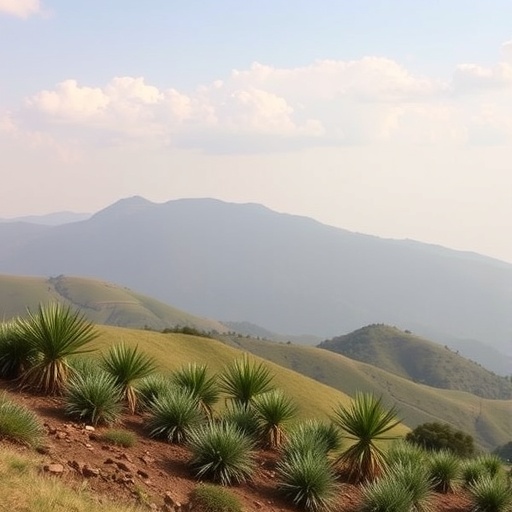
In a groundbreaking study, researchers have delved deep into the environmental challenges that plague the Ethiopian highlands, an area renowned for its breathtaking landscapes and rich biodiversity. This region, however, is not without its issues, as degradation has led to significant ecological consequences that require immediate action. The authors, Elias, Aneseyee, Mekeberiaw, and their colleagues, aim to highlight the pressing need for restoration initiatives to counteract the damage caused by years of environmental neglect. Their findings reveal an intricate web of issues, presenting a compelling case for the restoration of this vital ecological zone.
The Ethiopian highlands, often referred to as the “Roof of Africa,” are characterized by their unique climatic conditions and diverse ecosystems. Unfortunately, intensive agricultural practices, deforestation, and overgrazing have accelerated the rate of land degradation in this region. This loss of fertile soil not only threatens local agriculture but also endangers the water supply and biodiversity. The research conducted by Elias and team provides a comprehensive overview of these challenges, drawing attention to the interplay between human activity and environmental sustainability.
One of the most alarming aspects uncovered in the study is the alarming rate of soil erosion that the Ethiopian highlands experience. Erosion, fueled by deforestation and unsustainable farming practices, has led to a reduction in arable land. This continues to create food security issues for millions of residents who depend on agriculture for their livelihoods. As the soil quality deteriorates, crop yields plummet, perpetuating a cycle of poverty and dependency on external food sources. The implications of this situation are dire, necessitating a focused response from both local communities and government authorities.
Water availability is another critical concern raised within the research. The Ethiopian highlands are home to several major river systems that provide water for not only local consumption but also for surrounding regions. However, the degradation of catchment areas has destabilized water flow patterns, resulting in both flooding during periods of heavy rainfall and drought during dry seasons. The study underscores the urgent need for restoring these ecosystems to ensure a balanced and sustainable water supply system. Implementing strategies such as rainwater harvesting and afforestation could mitigate these water-related issues.
Biodiversity in the Ethiopian highlands is also under tremendous threat due to the rapid loss of habitat. The unique flora and fauna that inhabit this region are increasingly at risk as human settlement expands and natural habitats shrink. Elias and his colleagues emphasize the need for conservation efforts to protect endangered species and restore their natural habitats. This includes implementing protected areas where wildlife can thrive, coupled with community engagement to promote sustainable practices that allow for coexistence between humans and nature.
A crucial component of the research emphasizes the role of community involvement in restoration efforts. The authors assert that local populations must be key stakeholders in any restoration initiative aimed at their land. By fostering ownership and involvement in conservation practices, communities can not only contribute to the preservation of their environment but also benefit economically from sustainable practices. Engaging communities can result in alternative income sources, such as eco-tourism and organic farming, empowering them to value their natural resources while actively participating in their preservation.
The researchers put forth a series of targeted recommendations for restoring the Ethiopian highlands. These include adopting agroecological practices, which emphasize sustainable farming techniques that nourish both the soil and the community. By integrating modern scientific knowledge with local farming traditions, it is possible to create resilient agricultural systems that can withstand the challenges of climate change. The application of these practices could also lead to an increase in crop diversity, improving food security while ensuring the health of the ecosystem.
Elias and collaborators also identify the vital role of policy changes in facilitating restoration efforts. This could mean enforcing stricter regulations on land use to prevent further degradation, as well as providing financial support for sustainable agriculture and reforestation projects. By advocating for stronger governance and accountability, the researchers hope to create an enabling environment for successful restoration initiatives. The synergy between policy, community action, and scientific research is crucial in overcoming the challenges faced by the highlands.
In addition to hands-on restoration projects, the researchers call for increased funding for environmental education and awareness programs. Promoting an understanding of ecological principles within communities is essential for fostering a culture of conservation. The more people learn about the importance of maintaining a healthy ecosystem, the more likely they are to engage in practices that avoid further degradation. Awareness campaigns can mobilize communities to take proactive steps in preserving their environment.
Monitoring and evaluation are critical aspects of any restoration initiative. The research articulates the necessity of establishing systems that can assess the effectiveness of restoration practices over time. By choosing appropriate indicators to gauge improvements in soil health, biodiversity, and water quality, stakeholders can better understand what strategies are working and what needs adjustment. This adaptive management approach fosters continuous learning and improvement in restoration efforts.
Elias and his team remind us that the restoration of the Ethiopian highlands is not only a local issue but a global one. The effects of climate change resonate far beyond geographic boundaries, impacting global ecosystems and human populations. By restoring these highlands, we lay the groundwork for a more sustainable future, contributing to global efforts against climate change. The interconnectedness of local actions and global outcomes is a vital part of the conversation on environmental stewardship.
As the study drives home the potential for restoration, it emphasizes hope and empowerment. Even in the face of substantial challenges, it is possible to shift from degradation to restoration. The geographic and ecological significance of the Ethiopian highlands serves as a rallying point for urgent action. Collective efforts involving scientists, policymakers, and local communities can yield transformative changes that not only restore the landscape but also elevate the quality of life for many who depend on it.
Finally, the authors conclude that an integrated approach that combines scientific knowledge, traditional practices, and community engagement is essential for restoring the Ethiopian highlands. This study serves as a clarion call, urging stakeholders at every level to recognize the value of restoring one of Africa’s most precious ecosystems. The pathway from degradation to restoration is not without its challenges, but it is also replete with opportunities for growth, innovation, and sustainability.
Subject of Research: Environmental challenges and restoration strategies in the Ethiopian highlands.
Article Title: From degradation to restoration: addressing the environmental challenges in the Ethiopian highlands.
Article References:
Elias, E., Aneseyee, A.B., Mekeberiaw, A. et al. From degradation to restoration: addressing the environmental challenges in the Ethiopian highlands. Environ Monit Assess 198, 58 (2026). https://doi.org/10.1007/s10661-025-14914-6
Image Credits: AI Generated
DOI: https://doi.org/10.1007/s10661-025-14914-6
Keywords: Ethiopian highlands, restoration, environmental challenges, soil erosion, biodiversity, sustainable practices, community involvement, climate change.


