


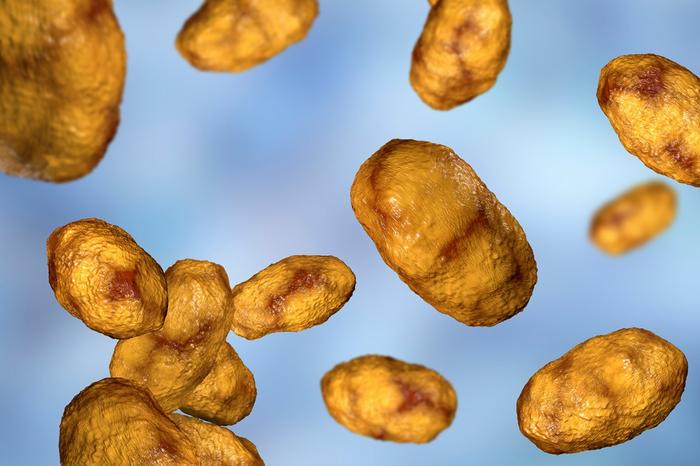
Researchers from The University of Queensland have identified how a common bacterium is able to manipulate the human immune system during respiratory infections and cause persistent illness.
The research, led by Professor Ulrike Kappler from UQ’s School of Chemical and Molecular Biosciences, studied the virulence mechanisms of Haemophilus influenzae, a bacterium that plays a significant role in worsening respiratory tract infections.

Credit: UQ
Researchers from The University of Queensland have identified how a common bacterium is able to manipulate the human immune system during respiratory infections and cause persistent illness.
The research, led by Professor Ulrike Kappler from UQ’s School of Chemical and Molecular Biosciences, studied the virulence mechanisms of Haemophilus influenzae, a bacterium that plays a significant role in worsening respiratory tract infections.
“These bacteria are especially damaging to vulnerable groups, such as those with cystic fibrosis, asthma, the elderly, and Indigenous communities,” Professor Kappler said.
“In some conditions, such as asthma and chronic obstructive pulmonary disease, they can drastically worsen symptoms.
“Our research shows the bacterium persists by essentially turning off the body’s immune responses, inducing a state of tolerance in human respiratory tissues.”
Professor Kappler said the bacterium had a unique ability to ‘talk’ to and deactivate the immune system, convincing it there was no threat.
The researchers prepared human nasal tissue in the lab, growing it to resemble the surfaces of the human respiratory tract, then monitored gene expression changes over a 14-day ‘infection’.
They found very limited production of inflammation molecules over time, which normally would be produced within hours of bacteria infecting human cells.
“We then applied both live and dead Haemophilus influenzae, showing the dead bacteria caused a fast production of the inflammation makers, while live bacteria prevented this,” Professor Kappler said.
“This proved that the bacteria can actively reduce the human immune response.”
Co-author and paediatric respiratory physician Emeritus Professor Peter Sly from UQ’s Faculty of Medicine, said the results show how Haemophilus influenzae can cause chronic infections, essentially living in the cells that form the surface of the respiratory tract.
“This is a rare behaviour that many other bacteria don’t possess,” Emeritus Professor Sly said.
“If local immunity drops, for example during a viral infection, the bacteria may be able to ‘take over’ and cause a more severe infection.”
The findings will lead to future work towards new treatments to prevent these infections by helping the immune system to recognise and kill these bacteria.
“We’ll look at ways of developing treatments that enhance the immune system’s ability to detect and eliminate the pathogen before it can cause further damage,” Professor Kappler said.
The research was published in PLOS Pathogens.
Journal
PLoS Pathogens
Cite Scienmag News
Ophelia Keating. (July 11, 2024). Respiratory bacteria ‘turns off’ immune system to survive. Scienmag. https://scienmag.com/respiratory-bacteria-turns-off-immune-system-to-survive/
Ophelia Keating. "Respiratory bacteria ‘turns off’ immune system to survive." Scienmag, 11 July 2024, https://scienmag.com/respiratory-bacteria-turns-off-immune-system-to-survive/. Accessed 4 September 2026.
Ophelia Keating. "Respiratory bacteria ‘turns off’ immune system to survive." Scienmag. July 11, 2024. https://scienmag.com/respiratory-bacteria-turns-off-immune-system-to-survive/

