


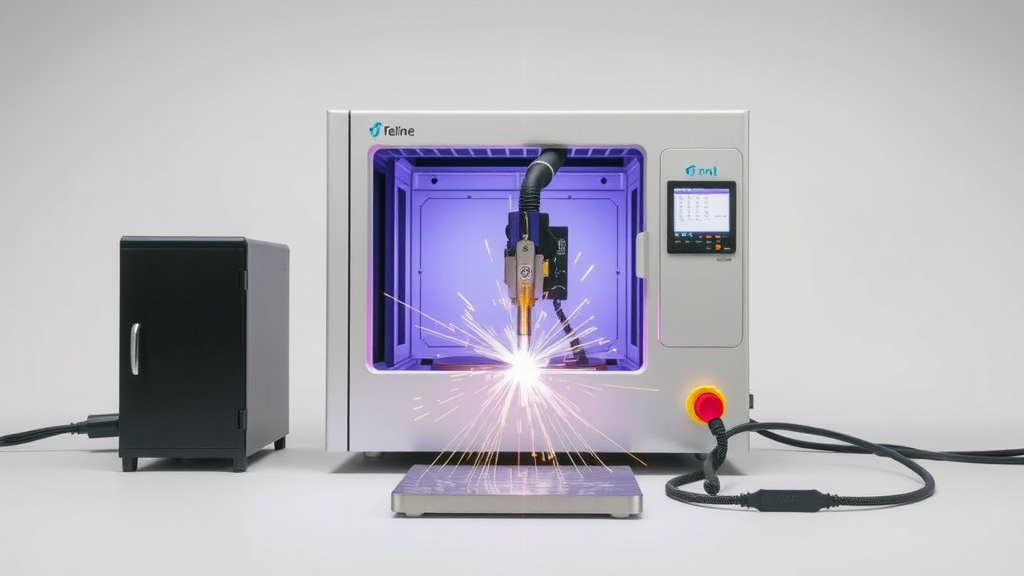
A team of Brazilian researchers has built and validated a fully open-source resistance welding machine capable of joining advanced thermoplastic composite materials for roughly 407 US dollars, a fraction of the five-figure price tag typically attached to commercial welding stations used in aerospace and automotive laboratories. The system, named OpenWelT (Open source Welding for Thermoplastics), is described in the journal HardwareX and is certified by the Open Source Hardware Association under UID BR000022. By releasing complete design files, electrical schematics, firmware and software under permissive licenses, the team hopes to dismantle one of the most stubborn barriers facing composites research: the cost and opacity of the equipment needed to study it.
The motivation behind the project lies in a quiet revolution sweeping through structural engineering. Fiber-reinforced thermoplastic composites are increasingly favored over traditional thermoset materials in aerospace, automotive and wind energy applications because they offer exceptional specific strength, corrosion resistance, fatigue tolerance and damage resistance. The aerospace sector in particular has embraced these materials, reporting weight savings of 20 to 30 percent alongside an approximate 25 percent reduction in total production costs. Unlike thermosets, which cure irreversibly, thermoplastic matrices can be melted and re-consolidated, which makes them inherently weldable. That weldability allows large structures to be joined without rivets or adhesives, and it has already transformed flagship aircraft components.
Resistance welding is widely regarded as one of the most efficient and promising techniques for joining these materials. The principle is elegantly simple. An electric current is passed through a resistive heating element placed at the joint interface, and Joule heating, governed by the relationship Q = I²Rt, raises the temperature until the thermoplastic matrix melts. Polymer chains then diffuse across the interface, and the joint consolidates under pressure as the assembly cools. Crucially, even though melting temporarily reduces molecular weight, thermoplastics retain their original mechanical properties once cooled, provided the joint achieves low void content and strong interlaminar bonding. The technology has a distinguished industrial pedigree: the Fokker 50’s main landing gear doors were among the earliest aerospace applications, and the J-nose component on the wing leading edges of the Airbus A340-500/600 and A380 was re-engineered from multiple aluminum pieces into a single polyphenylene sulfide composite weldment, eliminating thousands of rivets and shedding nearly 20 percent of the component’s weight.
Yet resistance welding is notoriously difficult to execute well. Current leakage is a serious risk, especially when welding composites reinforced with conductive carbon fibers. Temperature distribution along the joint interface is rarely uniform, and overheating at the edges can thermally degrade the polymer while the center remains insufficiently melted, producing voids and partially fused zones that weaken the bond. Weld quality is acutely sensitive to pressure and timing, and inadequate parameters can cause joint deconsolidation, excessive resin squeeze-out or fiber displacement. The process also demands access to both sides of the workpiece and highly specific tooling for each component geometry. Conventional alternatives fare no better: mechanical fastening introduces stress concentrations, galvanic corrosion, delamination from drilling and weight penalties, while adhesive bonding requires long curing times, extensive surface preparation and joints whose quality degrades under environmental exposure.
The OpenWelT platform tackles each of these challenges through a combination of clever design and low-cost automation. The machine’s main structure is built from modular aluminum V-slot profiles, providing lightness and portability while the welding base itself is made of wood, chosen deliberately because it acts as both a structural support and an electrical insulator, preventing current from escaping through the machine frame. During operation, external ceramic insulator plates, which are not permanent parts of the equipment, are positioned at the joint interface to serve as thermal barriers, concentrating energy within the weld zone and shielding the wooden base from localized heat. This dual insulation strategy directly addresses the leakage and thermal-control problems that plague conventional setups.
Perhaps the most distinctive innovation is the machine’s autonomous pressure management. Instead of relying on manual pneumatic presses or expensive hydraulic systems, OpenWelT employs an electric linear actuator driven by an Arduino Uno microcontroller that processes signals from a 100-kilogram load cell in real time through an HX711 24-bit amplifier. This closed feedback loop applies and maintains the perpendicular consolidation force with precision and repeatability, eliminating dependence on external pressure systems. The power subsystem pairs a Huawei R4850G2 rectifier with a Juntek DPM8624 programmable buck-boost converter, delivering a regulated welding output of up to 60 volts and 24 amps with fine decimal adjustment, which helps prevent both edge overheating and incomplete melting at the weld center. Galvanic separation between the high-power welding circuit and the low-voltage control electronics ensures that back-electromotive forces and ground loops cannot corrupt the sensitive measurement chain.
The entire apparatus is orchestrated by a custom Python-based graphical interface that acquires voltage, current, power, temperature via a Type-K thermocouple and pressure at one hertz, logging every variable with timestamps and exporting standardized PDF reports alongside raw data files. The software automatically validates each incoming data frame, imposes upper safety limits of 24 amps and 1.5 megapascals, and generates voltage-versus-time curves without requiring expensive laboratory data acquisition boards. Because the firmware and interface are fully open, researchers can freely modify the control algorithms, implement alternative feedback loops or adapt the platform for entirely different experimental setups, something impossible with proprietary commercial stations.
To validate the machine, the team welded three replicate lap-joint specimens of glass fiber-reinforced polyetherimide (GF/PEI) thermoplastic composite according to the ASTM D5868 standard, using 10 volts, 14 amps, 1 megapascal of pressure and a 100-second weld time. The heating element was a woven stainless steel mesh with 40-micrometer wires, cleaned ultrasonically before each run to guarantee reproducible contact resistance. The welded joints achieved a mean lap shear strength of 29.83 ± 1.2 megapascals, with an average power of 45.69 ± 1.1 watts, a power density of 0.14 ± 0.03 W/mm², and an average electrical resistivity of 0.23 ± 0.02 ohms. Optical microscopy of the joint cross-sections revealed excellent interfacial consolidation with only minor porosity, attributed to residual solvent in the matrix or slight thermal gradients, while dark-field imaging confirmed that reinforcing fibers were undamaged, well encapsulated by the polymer and free of delamination. The low coefficient of variation across replicates, roughly 4 percent, demonstrated stable and repeatable performance under fixed conditions.
The implications extend well beyond one material system. The authors envision the platform serving as a general-purpose testbed for any process combining controlled force with localized Joule heating, including heat sealing of polymer films, thermal bonding of textiles and membranes, and thermally activated adhesive curing, requiring only adapted sample fixturing. Because the continuously recorded voltage at constant current is a direct signature of the heating element’s resistance, the machine can also characterize the electrothermal behavior of metallic meshes, conductive coatings and nanocomposite heating elements on their own. For teaching laboratories and institutions without access to industrial welding stations, the complete documentation and low cost make it feasible to prepare standard-compliant specimens and expose students to a full sensor-to-actuator control chain, from load-cell acquisition to automated report generation.
The researchers are candid about current limitations. Validation was performed on a single material system and joint geometry at one optimized parameter set, and thermocouple monitoring is restricted to the 50 to 400 °C range. The serial protocol lacks checksum verification and automatic reconnection, and the software does not yet offer closed-loop temperature control or machine-learning integration. Ongoing work aims to map the wider parameter space of voltage, current, pressure and time. Nevertheless, with hardware licensed under CERN-OHL-S v2.0, software under the MIT License, documentation under CC BY 4.0, and all design files hosted on a public repository, OpenWelT represents a significant democratization of advanced composites manufacturing research, proving that a benchtop machine assembled from off-the-shelf components, printed PETG brackets and reclaimed materials can produce joints of genuine structural quality.
Subject of Research: An open-source, low-cost resistance welding machine for joining and studying thermoplastic composite materials.
Article Title: Open-source modular resistance welding equipment for thermoplastic composites
Article References: Reis, J. F., Barbosa Marques, L. F., Lucas Vieira, M. O., Gomes, D. N., Kotz, T. A., & de Oliveira Hein, L. R. (2026). Open-source modular resistance welding equipment for thermoplastic composites. HardwareX, 28, Article e00839. https://doi.org/10.1016/j.ohx.2026.e00839
Image Credits: AI Generated
DOI: 10.1016/j.ohx.2026.e00839
Keywords: resistance welding, thermoplastic composites, open-source hardware, aerospace materials, GF/PEI, Joule heating, Arduino control, lap shear strength, ASTM D5868, composite joining, HardwareX, low-cost laboratory equipment
Cite Scienmag News
Denise Maddox. (September 22, 2026). Researchers Unveil $407 Open-Source Welding Machine for Thermoplastic Composites. Scienmag. https://scienmag.com/researchers-unveil-407-open-source-welding-machine-for-thermoplastic-composites/
Denise Maddox. "Researchers Unveil $407 Open-Source Welding Machine for Thermoplastic Composites." Scienmag, 22 September 2026, https://scienmag.com/researchers-unveil-407-open-source-welding-machine-for-thermoplastic-composites/. Accessed 4 October 2026.
Denise Maddox. "Researchers Unveil $407 Open-Source Welding Machine for Thermoplastic Composites." Scienmag. September 22, 2026. https://scienmag.com/researchers-unveil-407-open-source-welding-machine-for-thermoplastic-composites/


