

Thursday, July 16, 2026
Science
No Result
View All Result
  • Login
  • HOME
  • SCIENCE NEWS
  • CONTACT US
  • HOME
  • SCIENCE NEWS
  • CONTACT US
No Result
View All Result
Scienmag
No Result
View All Result
Home Science News Science Education

Researchers Test Tiny Molecules to Slow Lung Cancer Progression

July 16, 2026
in Science Education
Reading Time: 2 mins read
0
Researchers Test Tiny Molecules to Slow Lung Cancer Progression

Researchers Test Tiny Molecules to Slow Lung Cancer Progression

65
SHARES
587
VIEWS
Share on FacebookShare on Twitter
ADVERTISEMENT

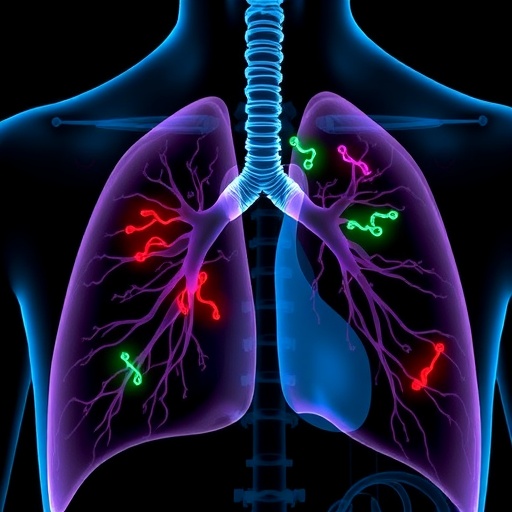
Texas A&M researchers report that two endogenous microRNAs—microRNA-15a and microRNA-16—can restrain non-small cell lung cancer (NSCLC) cell growth by reshaping cellular protein control. In a new experimental study, restoring these small regulatory RNAs reduced both proliferation and protein synthesis, suggesting a route to slow tumor progression without directly “killing” cells.

MicroRNAs function as post-transcriptional regulators: they fine-tune which proteins cells produce and, by doing so, help maintain protein homeostasis (proteostasis). Proteostasis supports proper folding, turnover, and balance of the proteome; when it collapses, cells can shift toward dysfunctional survival programs—an enabling step in cancer.

The work centers on the idea that microRNAs act like molecular traffic lights for cell-state decisions. According to the study’s lead investigator, disrupting proteostasis is a key reason many cancer cells become cancerous. By reintroducing microRNA-15a and microRNA-16 into NSCLC cells, the researchers observed a partial re-establishment of normal regulatory constraints that control metabolism and growth.

Mechanistically, the approach targets signaling downstream of gene expression rather than a single oncogenic protein. This matters because cancer frequently reflects network failures: when multiple “brakes” on cell division are removed, cells can enter a self-reinforcing cycle of growth. MicroRNA replacement appears to restore some of these brakes by altering proteostasis-related pathways.

The investigators emphasize translational caution. The results do not claim cure; instead, they propose that microRNA-based therapy might arrest or slow disease enough to create time for combination treatment. In clinical oncology, such time could improve the effectiveness of surgery, radiation, or pharmacologic regimens delivered later.

The microRNAs were not initially discovered in cancer research. Fluckey’s lab began with skeletal muscle biology, where microRNAs help regulate muscle growth, protein turnover, and insulin sensitivity. Building on those observations, the team suspected the same regulatory RNAs might influence tumor behavior.

Future therapy development will likely require delivery systems that preferentially enter cancer cells while limiting exposure to healthy tissue. One envisioned strategy uses engineered viral vectors to deliver therapeutic genetic material carrying the microRNA program.

The study also highlights the value of cross-disciplinary collaboration within Texas A&M, linking investigators with complementary expertise to generate new experimental directions.

Subject of Research: Cells
Article Title: MicroRNA 15a and 16 Regulate Proteostasis in Non-Small Cell Lung Cancer
News Publication Date: 2-May-2026
Web References: https://pubmed.ncbi.nlm.nih.gov/42077822/
References: 10.1096/fba.2026-00075
Image Credits: Texas A&M University

Keywords: microRNA, lung cancer, NSCLC, proteostasis, proteostasis regulation, molecular regulation, RNA therapeutics, cellular growth control, viral delivery

Tags: cancer cell proliferation controlmicroRNA delivery for cancer treatmentmicroRNA regulation of tumor growthmicroRNA-15a and microRNA-16 in lung cancermicroRNA-based cancer therapymolecular mechanisms of microRNAnetwork failures in cancer progressionpost-transcriptional gene regulation in cancerproteostasis in cancer cellsrestoring cellular homeostasis in tumorssignaling pathways in lung cancertargeting non-small cell lung cancer
Share26Tweet16
Previous Post

Tooth Chemistry Uncovers Origins of St. Helena’s Liberated Africans

Next Post

Immune Cell Interaction Breakdown Drives Aging, New Study Finds

Related Posts

Study suggests dropping SAT/ACT requirements could boost access, but hinder admissions
Science Education

Study suggests dropping SAT/ACT requirements could boost access, but hinder admissions

July 16, 2026
Simulation boosts nursing students’ home-visit training immersion, skills still under study
Science Education

Simulation boosts nursing students’ home-visit training immersion, skills still under study

July 16, 2026
UK lawmakers call for radical resident doctor training reform to cut prescribing errors
Science Education

UK lawmakers call for radical resident doctor training reform to cut prescribing errors

July 15, 2026
Study Shows Parents as Coaches Increase Children’s Physical Activity
Science Education

Study Shows Parents as Coaches Increase Children’s Physical Activity

July 15, 2026
DSI to lead $1 million Anthropic Claude credits drive for AI research
Science Education

DSI to lead $1 million Anthropic Claude credits drive for AI research

July 15, 2026
Early Technology Training Boosts Clinician Confidence in Patient Care
Science Education

Early Technology Training Boosts Clinician Confidence in Patient Care

July 15, 2026
Next Post
Immune Cell Interaction Breakdown Drives Aging, New Study Finds

Immune Cell Interaction Breakdown Drives Aging, New Study Finds

  • Mothers who receive childcare support from maternal grandparents show more

    Mothers who receive childcare support from maternal grandparents show more parental warmth, finds NTU Singapore study

    27656 shares
    Share 11059 Tweet 6912
  • University of Seville Breaks 120-Year-Old Mystery, Revises a Key Einstein Concept

    1061 shares
    Share 424 Tweet 265
  • Bee body mass, pathogens and local climate influence heat tolerance

    682 shares
    Share 273 Tweet 171
  • Researchers record first-ever images and data of a shark experiencing a boat strike

    546 shares
    Share 218 Tweet 137
  • Groundbreaking Clinical Trial Reveals Lubiprostone Enhances Kidney Function

    531 shares
    Share 212 Tweet 133
Science

Embark on a thrilling journey of discovery with Scienmag.com—your ultimate source for cutting-edge breakthroughs. Immerse yourself in a world where curiosity knows no limits and tomorrow’s possibilities become today’s reality!

RECENT NEWS

  • Biochar Enables Earthworms to Survive Copper and Glyphosate Pollution
  • Early inflammation signal fuels oral cancer, suggests immunoprevention strategy
  • Forest Rivers Remove Nitrogen as Natural Processes Shift Throughout Seasons
  • LIG1 Loss Reveals Targetable Weakness Against Chemotherapy-Resistant Triple-Negative Breast Cancer

Categories

  • Agriculture
  • Anthropology
  • Archaeology
  • Athmospheric
  • Biology
  • Biotechnology
  • Blog
  • Bussines
  • Cancer
  • Chemistry
  • Climate
  • Earth Science
  • Editorial Policy
  • Marine
  • Mathematics
  • Medicine
  • Pediatry
  • Policy
  • Psychology & Psychiatry
  • Science Education
  • Social Science
  • Space
  • Technology and Engineering

Subscribe to Blog via Email

Enter your email address to subscribe to this blog and receive notifications of new posts by email.

Join 5,146 other subscribers

© 2025 Scienmag - Science Magazine

Welcome Back!

Login to your account below

Forgotten Password?

Retrieve your password

Please enter your username or email address to reset your password.

Log In
No Result
View All Result
  • HOME
  • SCIENCE NEWS
  • CONTACT US

© 2025 Scienmag - Science Magazine

Discover more from Science

Subscribe now to keep reading and get access to the full archive.

Continue reading
