

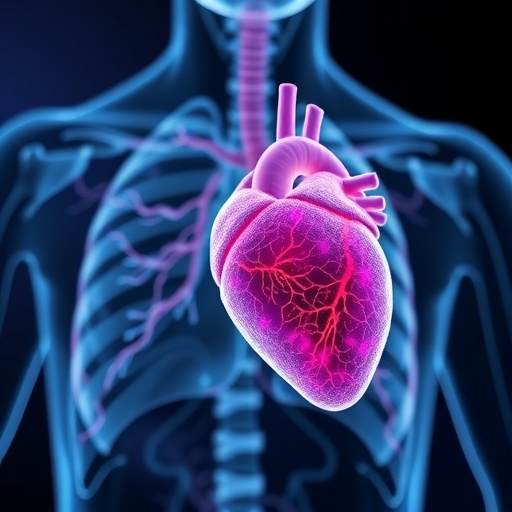
In a groundbreaking advance that could reshape our approach to cardiovascular and inflammatory diseases, an international team of scientists has mapped the intricate workings of the thromboxane A₂ receptor—a pivotal player in blood clotting and inflammation. This detailed molecular visualization, achieved using cutting-edge cryo-electron microscopy, unveils the receptor’s active conformation and the unique mechanisms it uses to transmit signals across the cell membrane. The ramifications of this discovery extend far beyond basic science, offering a powerful framework for the development of targeted therapies aimed at a spectrum of conditions from pulmonary arterial hypertension to certain malignancies.
At the heart of this study lies the thromboxane A₂ receptor, a specialized protein embedded in the membranes of blood platelets and various cell types integral to vascular and immune function. This receptor orchestrates vital physiological responses including the promotion of platelet aggregation, regulation of blood vessel tone, and modulation of inflammation. However, the fleeting nature of thromboxane A₂, the molecule that activates it, has historically obscured the precise details of its receptor interaction, hindering deeper understanding and drug development.
The research team, which included experts from Trinity College Dublin, overcame this longstanding hurdle by employing advanced cryo-electron microscopy techniques—allowing them to capture unprecedented high-resolution snapshots of the receptor in its activated state. These images provide a static yet vivid portrayal of how ligand binding triggers receptor activation and initiates intracellular signaling, illuminating previously unknown facets of this critical molecular interface.
One of the most surprising revelations from this molecular atlas is that the thromboxane receptor employs an unconventional “activation switch.” Unlike many G protein-coupled receptors, whose activation typically hinges on well-characterized conformational rearrangements, this receptor’s mechanism diverges, indicating a unique evolutionary adaptation that fine-tunes its signaling efficiency and specificity. This distinct activation pathway may also inform the receptor’s broad involvement in diverse physiological and pathological processes.
Furthermore, the team discovered that signaling molecules access the thromboxane receptor not from the external cellular environment, as is commonly seen, but rather from within the lipid bilayer of the cell membrane itself. This innovation in receptor pharmacology reshapes existing paradigms of receptor-ligand interaction and could have profound implications for how drugs are designed to modulate this receptor selectively and effectively.
Dr. Pawel Krawinski, lead postdoctoral researcher in the School of Medicine and School of Biochemistry and Immunology at Trinity College Dublin, emphasizes the translational potential of these insights. The thromboxane receptor’s engagement in myriad diseases—ranging from cardiovascular disorders and pulmonary arterial hypertension to fibrotic lung disease and various cancers—means that tailored modulation of this receptor’s activity could herald new therapeutic strategies with enhanced efficacy and safety.
Precisely mapping the binding sites and activation pathways paves the way for next-generation drugs capable of blocking or fine-tuning receptor function with remarkable precision. Such pharmacological interveners could mitigate harmful thrombotic events, diminish pathogenic vasoconstriction, and dampen excessive inflammatory responses—offering hope for better clinical management of chronic and acute conditions alike.
Beyond therapeutic promise, this research sheds light on rare hereditary mutations in thromboxane receptor genes, which manifest as bleeding disorders due to dysfunctional platelet aggregation. Understanding the structural underpinnings of these genetic variants provides a foundational basis for improved diagnostic assays and individualized patient care, facilitating more accurate prognoses and targeted treatments.
The comprehensive approach integrated structural biology, computational modeling, and rigorous laboratory validation, exemplifying interdisciplinary synergy in unraveling complex molecular systems. The synergy between these methodologies has been crucial in constructing a functional map of the receptor’s dynamic states, enabling researchers to visualize how subtle structural variations influence biological outcomes.
This study not only deepens our grasp of a fundamentally important signaling system but also invigorates the drug discovery landscape by furnishing a molecular blueprint to guide medicinal chemists and pharmacologists. The implications for drug development are immense, particularly as the world grapples with aging populations and the escalating burden of cardiovascular and inflammatory diseases.
In publishing their results in the prestigious journal Nature Communications, the researchers invite the global scientific community to explore the newly revealed architecture and activation mechanics of the thromboxane receptor. The availability of these molecular maps encourages collaborative endeavors aimed at translating these insights into clinical interventions.
A video accompanying the publication further illustrates the molecular map in action, providing a dynamic visualization that conveys the elegance and complexity of the receptor’s functional cycle. This educational resource underscores the significance of visual tools in disseminating intricate scientific findings beyond the specialized audience.
In essence, this molecular cartography of the thromboxane A₂ receptor is poised to spearhead a new era of precision medicine, where detailed structural knowledge unlocks the potential for safer, more targeted treatments. Such advances embody the future of pharmacology, wherein understanding the molecular choreography of receptor activation becomes the cornerstone of therapeutic innovation.
Subject of Research: Thromboxane A₂ receptor structure and signaling mechanisms
Article Title: A New Molecular Map of the Thromboxane A₂ Receptor Reveals Unique Activation Mechanisms
News Publication Date: Not specified
Web References:
https://www.youtube.com/watch?v=PQzATDeIGyE
http://dx.doi.org/10.1038/s41467-026-69844-9
References:
Published in Nature Communications, DOI: 10.1038/s41467-026-69844-9
Keywords:
Thromboxane A₂ receptor, cryo-electron microscopy, blood clotting, inflammation, receptor activation, G protein-coupled receptors, cardiovascular disease, pulmonary arterial hypertension, receptor signaling, structural biology, molecular map, drug discovery


