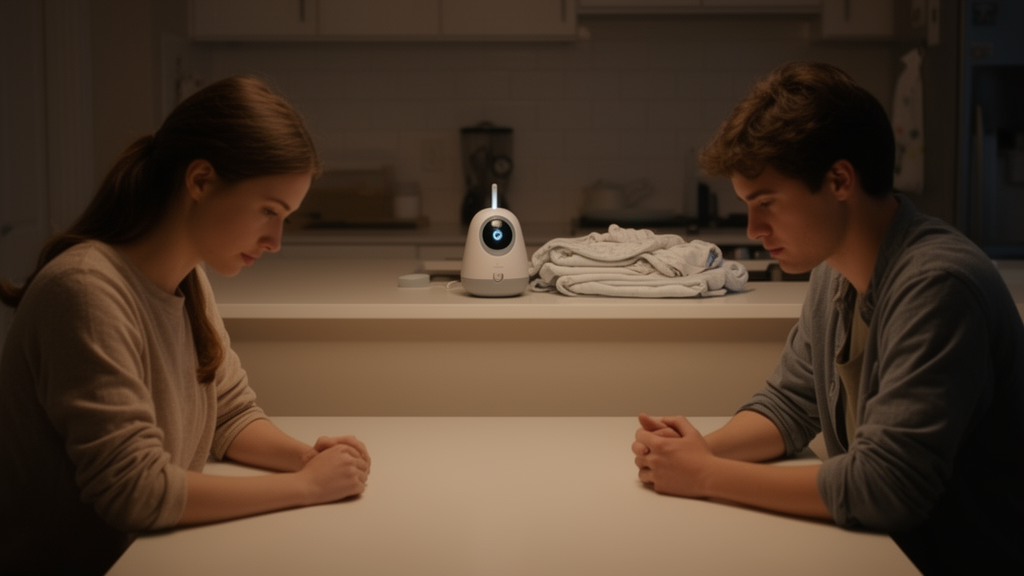
Couples in the Netherlands whose pregnancy was unplanned are more likely to separate in the years after their child is born, according to a new study published in the European Journal of Population. Using prospective, population-based birth cohort data from Rotterdam, the country’s second largest city, researchers found that couples with an unplanned pregnancy resulting in a birth had a 19% higher predicted probability of experiencing relationship dissolution by the time their child was five years old, compared with couples whose pregnancy was planned.
The finding is notable because the Netherlands offers favourable social benefits and family-friendly employment opportunities that could, in principle, alleviate the stressors associated with unexpected parenthood. The association persisted despite this supportive policy environment, suggesting that the link between pregnancy intention and later separation is not easily erased by public provisions alone.
The study, authored by Judith C. Koops, Ellen Verbakel, Renske Keizer and Clair Enthoven, also examined whether the association varied by birth order and socioeconomic status, since both may influence the level of stress associated with an unplanned pregnancy resulting in a birth. The association did not differ between first and higher-order births, indicating that whether it was a couple’s first child or a later one made no measurable difference to the dissolution risk.
Socioeconomic status, however, did moderate the association. The relationship between unplanned pregnancies leading to a birth and relationship dissolution was stronger among women with higher educational attainment than among those with medium educational attainment. The authors suggest this pattern may reflect differences in role expectations and time allocation, as higher educated women are often more strongly invested in their careers and may face greater challenges in adjusting work and family commitments following an unplanned pregnancy resulting in a birth.
The study is exploratory in nature and focuses on couples in a single Dutch city, so the findings describe an association rather than a demonstrated causal effect, and further research is needed to understand the mechanisms underlying the link. The authors emphasise that the results highlight the importance of considering birth intention when studying separation outcomes among families with young children, a factor they describe as largely overlooked in the European literature on separation and divorce.
Because the analysis relies on prospective, population-based cohort data from Rotterdam, it tracks families forward in time rather than asking parents to recall past circumstances, which strengthens the measurement of pregnancy intention. Nevertheless, the results apply to the studied population and period, and the authors caution that the mechanisms connecting an unplanned birth to later separation remain to be established. The article was published as an open-access, peer-reviewed accepted paper on 19 September 2026, with a final version of record to follow.
Subject of Research: The association between unplanned pregnancies resulting in birth and relationship dissolution in the Netherlands.
Article Title: Relationship Breaker? Unplanned Births and Relationship Dissolution
Article References: Koops, J. C., Verbakel, E., Keizer, R., & Enthoven, C. (2026). Relationship Breaker? Unplanned Births and Relationship Dissolution. European Journal of Population. https://doi.org/10.1007/s10680-026-09787-5
Image Credits: AI Generated
DOI: 10.1007/s10680-026-09787-5
Keywords: unplanned pregnancy, relationship dissolution, birth cohort, Netherlands, socioeconomic status, educational attainment, family planning, parenting stress, separation, demography, Relationship, Breaker
Cite Scienmag News
Courtney Benton. (October 28, 2026). Research report: Relationship Breaker? Unplanned Births and Relationship Dissolution. Scienmag. https://scienmag.com/research-report-relationship-breaker-unplanned-births-and-relationship-dissolution/
Courtney Benton. "Research report: Relationship Breaker? Unplanned Births and Relationship Dissolution." Scienmag, 28 October 2026, https://scienmag.com/research-report-relationship-breaker-unplanned-births-and-relationship-dissolution/. Accessed 28 October 2026.
Courtney Benton. "Research report: Relationship Breaker? Unplanned Births and Relationship Dissolution." Scienmag. October 28, 2026. https://scienmag.com/research-report-relationship-breaker-unplanned-births-and-relationship-dissolution/