


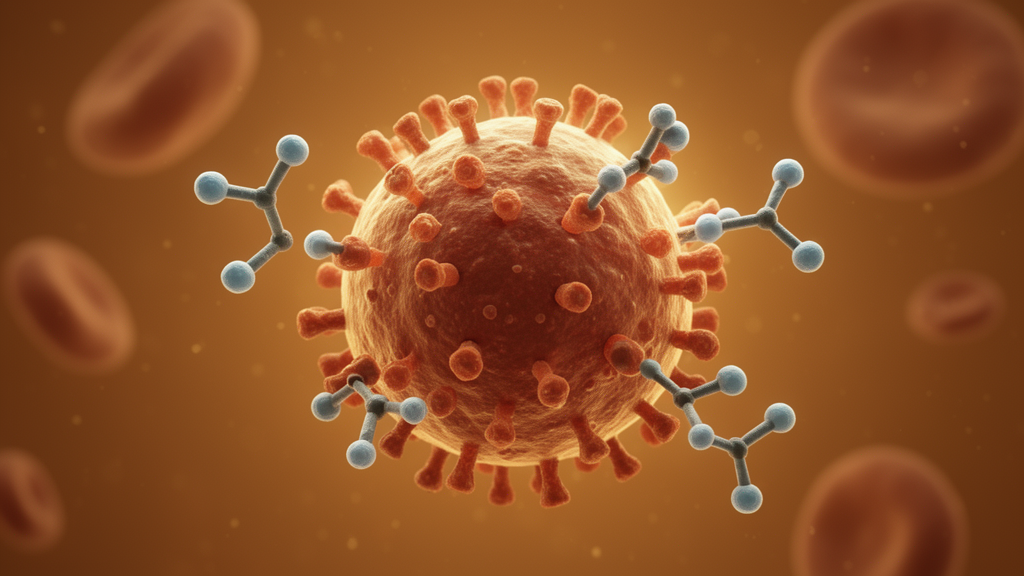
Dengue virus remains one of the most burdensome human pathogens on the planet, infecting an estimated hundreds of millions of people each year across tropical and subtropical regions and placing enormous strain on health systems during seasonal outbreaks. The virus circulates as four antigenically distinct serotypes, and infection with one serotype can leave individuals vulnerable to more severe disease upon secondary infection with another, a phenomenon linked to the complex interplay between antibodies and viral surfaces. Developing vaccines that induce strong, balanced, and durable protection against all four serotypes has therefore proven to be one of the most difficult challenges in modern vaccinology. Against this backdrop, a new structural and biophysical study published in npj Viruses by Guntur Fibriansah, Shee-Mei Lok, and colleagues at Duke–National University of Singapore Medical School, together with collaborators at the National University of Singapore, the University of Oxford, and Vanderbilt University Medical Center, offers a strikingly simple molecular insight: removing a single sugar modification from the surface of dengue virus serotype 2 can dramatically increase how well the virus is recognized by some of the most potent neutralizing antibodies known.
The modification in question is an N-linked glycosylation at asparagine residue 153 of the viral envelope protein, a carbohydrate chain that decorates the outer surface of the virion. Glycosylation is a common strategy employed by enveloped viruses to shield vulnerable protein surfaces from immune surveillance, since the bulky, flexible sugar chains can physically obstruct antibody access to epitopes that would otherwise be exposed. In the case of dengue virus, the N153 glycan sits in a region of the envelope protein landscape that overlaps with binding sites targeted by well-characterized human monoclonal antibodies. The research team reasoned that if this glycan were removed, the underlying protein surface would become more accessible, and antibodies that struggle to engage the glycosylated wild-type virus might bind the mutant far more effectively.
To test this hypothesis, the investigators constructed a mutant dengue virus 2 in which asparagine 153 was replaced by glutamine, a substitution designated N153Q that eliminates the glycosylation consensus sequence without otherwise altering the envelope protein sequence. Previous work had already shown that this deglycosylated mutant displays attenuated infection in a mouse model, and importantly, that attenuation appears to be driven mainly by the mutant’s increased susceptibility to antibodies rather than by an intrinsic defect in viral fitness. This distinction matters for vaccine design, because an attenuated candidate whose weakness lies in antibody sensitivity is precisely the kind of candidate that could stimulate strong protective responses while remaining controllable by the immune system.
The heart of the new study lies in its structural comparison of wild-type and N153Q mutant viruses in complex with two human monoclonal antibodies, 2D22 and C10, both of which are known to neutralize dengue virus 2 with high potency. Using cryo-electron microscopy at physiological temperature, the team determined structures of the antibody fragment-antigen complexes bound to intact virions at resolutions ranging from 2.7 to 3.2 angstroms. These near-atomic maps allowed the researchers to visualize, across the entire icosahedral viral surface, exactly where the antibody fragments docked and, crucially, how many of the available binding sites were actually occupied on each virus particle. Such whole-virion structural analysis is essential for dengue, because the virus presents its envelope proteins in a herringbone arrangement with multiple distinct epitope environments, and antibody occupancy patterns can differ dramatically depending on the accessibility of each site.
The cryo-EM analysis revealed a clear and consistent difference between the two viruses. Both 2D22 and C10 showed increased occupancies on the N153Q mutant compared with the wild-type virus, meaning that a larger fraction of the antibody binding sites on the mutant virion surface were engaged by antibody fragments. This finding directly supports the interpretation that the glycan at position 153 had been physically blocking access to epitopes on the wild-type virus, and that its removal unveiled additional binding sites. In neutralization assays, the same pattern held: the human monoclonal antibodies 2D22 and C10 were more potent against the mutant than against the wild-type virus, consistent with the idea that a greater number of accessible epitopes allows antibodies to coat the virion more completely and thereby block infection more efficiently.
To complement the structural work, the researchers turned to biolayer interferometry, a technique that measures the real-time kinetics of antibody binding to and dissociation from the virus particles. At 30 degrees Celsius, an interesting nuance emerged: both antibodies exhibited a slower binding rate with the mutant than with the wild-type virus, but they also displayed a slower dissociation rate, meaning that once attached, they held on more tightly. The slower on-rate may reflect subtle conformational or dynamic differences in the mutant’s surface, while the slower off-rate indicates a net gain in binding stability. Overall affinity, which reflects the balance between these two rates, was thus shaped by competing kinetic effects at the lower temperature.
At 37 degrees Celsius, however, the picture became unambiguous. When the experiments were repeated at physiological temperature, the affinities of both 2D22 and C10 for the dengue virus 2 particles increased significantly for both the wild-type and the N153Q mutant. This temperature dependence underscores an important methodological point for the field: structural and biophysical measurements performed at reduced temperatures may not fully capture the behavior of virus-antibody interactions in the human body, where fever-range and core temperatures prevail. By conducting their cryo-EM imaging and binding assays at 37 degrees Celsius, the team ensured that their observations of enhanced antibody engagement on the deglycosylated mutant reflect conditions closer to those encountered during an actual infection.
The implications of these findings extend beyond basic virology into practical vaccine development. A live attenuated vaccine candidate works by replicating sufficiently to stimulate immunity while causing minimal disease, and the safety margin of such candidates often depends on how readily the immune system can control them. The N153Q mutant’s attenuation in mice, attributable to heightened antibody susceptibility, combined with the demonstration that key neutralizing epitopes become more accessible when the glycan is absent, suggests a dual advantage. The mutant should be easier for the immune system to clear during immunization, reducing the risk of uncontrolled replication, while simultaneously presenting its most vulnerable surfaces to the antibody-producing machinery, potentially eliciting highly potent neutralizing responses. As the authors note, the N153Q mutant might therefore serve as a good vaccine candidate precisely because important epitopes are made more accessible for stimulating potent antibodies.
More broadly, the study adds to a growing appreciation that viral glycans are not merely passive decorations but active modulators of antigenicity whose manipulation can be exploited rationally. Similar strategies of glycan removal or repositioning have informed vaccine design efforts for other enveloped viruses, and the dengue work demonstrates that the approach can be validated at the level of intact virion structure and single-molecule binding kinetics. The technical achievement of resolving Fab-decorated dengue virions at 2.7 to 3.2 angstrom resolution at physiological temperature also sets a benchmark for future structural studies of flavivirus-antibody complexes. As dengue continues to expand its geographic range under the pressures of urbanization, climate change, and mosquito vector spread, every additional tool for designing better vaccines carries real public health weight. This study’s demonstration that a single point mutation can strip away a molecular shield and lay bare the virus’s most vulnerable surfaces offers a conceptually elegant step toward that goal, and it will likely encourage further exploration of glycan engineering in next-generation dengue vaccine candidates.
Subject of Research: Structural and biophysical analysis of how loss of N153 glycosylation on dengue virus 2 enhances recognition by neutralizing antibodies
Article Title: Dengue virus 2 lacking N153 glycosylation displayed enhanced recognition by neutralizing antibodies
Article References: Fibriansah, G., Ng, T.-S., Lim, X.-N., Ng, J. W. S., Tan, A. W. K., Ting, D. H. R., Screaton, G. R., Crowe, J. E., Alonso, S., & Lok, S.-M. (2026). Dengue virus 2 lacking N153 glycosylation displayed enhanced recognition by neutralizing antibodies. npj Viruses. https://doi.org/10.1038/s44298-026-00241-1
Image Credits: AI Generated
DOI: 10.1038/s44298-026-00241-1
Keywords: dengue virus 2, N153 glycosylation, N153Q mutant, neutralizing antibodies, cryo-electron microscopy, monoclonal antibody 2D22, monoclonal antibody C10, biolayer interferometry, epitope accessibility, live attenuated vaccine, flavivirus, vaccine design
Cite Scienmag News
Kristina Jarvis. (October 8, 2026). Removing One Sugar Shield Makes Dengue Virus 2 More Visible to Potent Neutralizing Antibodies. Scienmag. https://scienmag.com/removing-one-sugar-shield-makes-dengue-virus-2-more-visible-to-potent-neutralizing-antibodies/
Kristina Jarvis. "Removing One Sugar Shield Makes Dengue Virus 2 More Visible to Potent Neutralizing Antibodies." Scienmag, 8 October 2026, https://scienmag.com/removing-one-sugar-shield-makes-dengue-virus-2-more-visible-to-potent-neutralizing-antibodies/. Accessed 8 October 2026.
Kristina Jarvis. "Removing One Sugar Shield Makes Dengue Virus 2 More Visible to Potent Neutralizing Antibodies." Scienmag. October 8, 2026. https://scienmag.com/removing-one-sugar-shield-makes-dengue-virus-2-more-visible-to-potent-neutralizing-antibodies/


