


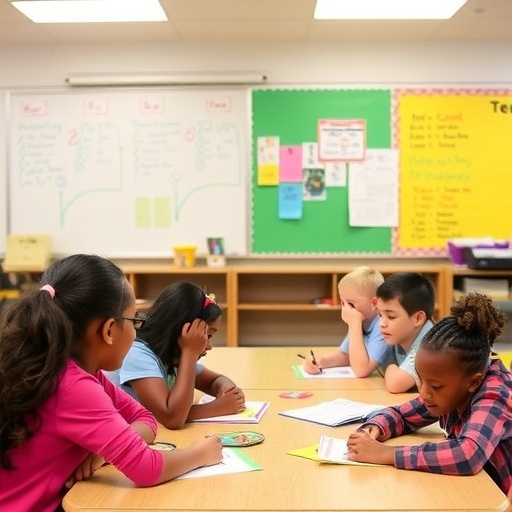
In Texas, an innovative approach to teaching and learning has been unveiled that transforms the classroom experience for second-grade students and their teachers alike. In the forthcoming article “Seeing Teaching and Learning Differently,” researchers C.P. Brown and L.C. McKenzie delve into a profound case study that examines the intricacies of instructional dynamics. What makes this research particularly compelling is its focus on how educators and their young learners navigate the complexities of instruction, revealing insights that could have far-reaching implications for teaching methodologies.
The study challenges traditional views of pedagogy, suggesting that the current framework may not sufficiently address the cognitive and emotional needs of young students. Instead, Brown and McKenzie advocate for a more holistic understanding of educational practices. By adopting an integrative approach, they argue that the relationships formed in the classroom directly influence both teaching effectiveness and student engagement. This perspective not only redefines teaching strategies but also raises questions about long-standing assumptions in education.
At the heart of the research lies a systematic observation of classroom interactions. The authors meticulously analyzed how second-grade teachers presented their lessons and how students reacted to these presentations. The nuanced observations gathered from these interactions showcased a variety of responses, ranging from enthusiasm to confusion. By understanding these responses, educators can tailor their approaches to better meet the needs of their students. The study highlights that effective teaching is not a one-size-fits-all endeavor; rather, it requires adaptability based on real-time feedback from students.
Utilizing both qualitative and quantitative methodologies, the researchers captured a detailed account of the classroom environment. This dual approach allowed for a richer understanding of the educational dynamics at play. For example, they recorded verbal exchanges, non-verbal cues, and students’ emotional responses during different instructional methods. This comprehensive analysis illuminates the often-overlooked intricacies of the student-teacher relationship, showcasing how investment in these partnerships enhances learning outcomes.
The implication of these findings is clear: educators must be trained to recognize the diverse ways in which students comprehend and engage with instruction. This necessitates professional development programs that emphasize empathy, adaptability, and responsive teaching practices. Teachers equipped with these competencies can better facilitate a learning environment that is both nurturing and intellectually stimulating. The research underscores the importance of ongoing teacher training to equip educators with the tools necessary to thrive in diverse classroom settings.
Moreover, the authors assert that the integration of emotional intelligence into educational stratagems is pivotal. Recognizing the emotional landscape of the classroom not only fosters a positive learning atmosphere but also encourages student resilience. Brown and McKenzie’s research articulates the importance of teachers affirming students’ emotional experiences, thereby reducing anxiety and fostering a sense of belonging. Such validation can lead to improved academic performance and a greater love for learning, particularly crucial during the formative years of education.
The implications extend beyond individual classrooms; they suggest systemic changes within educational institutions. Schools could benefit from embedding these insights into their curricula and pedagogical frameworks. By prioritizing instructional methodologies that encompass emotional and social dimensions, educational systems can create environments conducive to holistic student development. This could potentially result in a transformative shift in educational practices across the country, especially in early childhood education settings.
As we navigate an increasingly complex world, the need for adaptive learning approaches becomes ever more pronounced. The findings of Brown and McKenzie resonate with the idea that education should equip students not just with academic knowledge but also with the skills necessary to thrive in society. These principles are reflected in the 21st-century learning paradigm, which values critical thinking, collaboration, and socio-emotional skills alongside traditional educational content.
In essence, “Seeing Teaching and Learning Differently” serves as a timely reminder that the educational landscape is continually evolving. The research conducted by Brown and McKenzie urges us to rethink our assumptions about teaching and learning in the early years. It advocates for a paradigm shift that respects the individuality of each learner, facilitating an educational experience that is both personal and profound.
As educators, policymakers, and stakeholders reflect on these insights, a collective commitment to fostering adaptable teaching methods is essential. The research emphasizes a collaborative approach to improving student outcomes while fostering an educational culture that values both cognitive and emotional growth. The ripple effects of such commitment could be substantial, impacting future generations and shaping a more resilient, informed citizenry.
Ultimately, the case study presents an invaluable opportunity for educational innovation. By embracing a more nuanced perspective of teaching and learning, we stand at the cusp of transformative change. Brown and McKenzie’s analysis not only underscores the significance of adapting instructional practices but also highlights the importance of recognizing the complex emotional landscapes within our classrooms.
As education continues to evolve, the insights garnered from this research will undoubtedly inform future studies, innovations, and policies aimed at enhancing the educational experience for all. By prioritizing a more comprehensive understanding of the teaching-learning nexus, we can lay the foundation for a more equitable and effective educational system.
In summary, the forthcoming article by Brown and McKenzie encapsulates many pressing issues in modern education, emphasizing the criticality of learning environments that are adaptable, emotionally intelligent, and responsive to the needs of diverse learners.
Brown, C.P., McKenzie, L.C. Seeing Teaching and Learning Differently: A Case Study of How Second Grade Teachers and their Students in Texas Make Sense of Instruction.
Early Childhood Educ J (2025). https://doi.org/10.1007/s10643-025-02057-9
Cite Scienmag News
Courtney Benton. (November 21, 2025). Reimagining Classroom Dynamics: Insights from Texas Second Graders. Scienmag. https://scienmag.com/reimagining-classroom-dynamics-insights-from-texas-second-graders/
Courtney Benton. "Reimagining Classroom Dynamics: Insights from Texas Second Graders." Scienmag, 21 November 2025, https://scienmag.com/reimagining-classroom-dynamics-insights-from-texas-second-graders/. Accessed 4 September 2026.
Courtney Benton. "Reimagining Classroom Dynamics: Insights from Texas Second Graders." Scienmag. November 21, 2025. https://scienmag.com/reimagining-classroom-dynamics-insights-from-texas-second-graders/


