

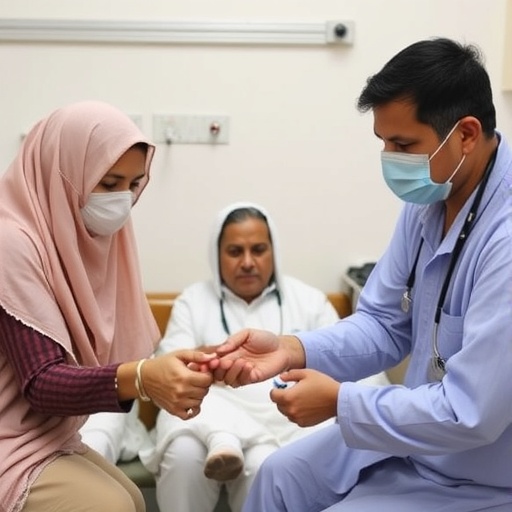
In a groundbreaking qualitative policy analysis set to reshape healthcare priorities in Pakistan, researchers Thobani, Shawar, Shalwani, and colleagues have spotlighted the critical need to prioritize rehabilitation services within the country’s health system. Published in the International Journal for Equity in Health in 2026, this study dives deep into the underlying policy frameworks, systemic challenges, and opportunities that define rehabilitation efforts in a region grappling with an immense burden of disability and chronic health conditions. As global health discourse increasingly recognizes the centrality of rehabilitation in achieving sustainable health outcomes, this analysis provides an urgent call to action for policymakers, healthcare providers, and stakeholders to recalibrate their strategies toward inclusive, accessible rehabilitation care.
Rehabilitation, often perceived as a post-acute care service, is indispensably linked to mitigating disability, improving quality of life, and fostering societal participation for millions of Pakistanis. Despite this, the study outlines that rehabilitation services have historically been marginalized in policy discourses, overshadowed by acute care and communicable disease priorities. Through meticulous qualitative research methods, including in-depth interviews with policymakers, healthcare practitioners, and patient advocates, the authors unravel the systemic neglect and fragmented implementation that have relegated rehabilitation to the peripheries of health system planning and resource allocation.
One of the study’s core revelations is the glaring disparity between the rising epidemiological demand for rehabilitation and the health system’s capacity to meet it. Pakistan confronts a dual burden of disease where both communicable and noncommunicable diseases contribute to long-term disability. Traumatic injuries, stroke, congenital disorders, and chronic conditions such as diabetes and cardiovascular diseases create an escalating need for comprehensive rehabilitation services. Yet, the health infrastructure remains woefully underprepared, constrained by limited funding, insufficient workforce training, and weak institutional frameworks.
The policy analysis provides a granular exploration of the legislative and regulatory landscape governing rehabilitation services. It draws attention to the absence of coherent national policies that integrate rehabilitation as a fundamental component of health care. While some provincial initiatives have begun to incorporate rehabilitation, there is an overarching fragmentation in governance, resulting in inconsistent standards, service delivery models, and data collection mechanisms. These gaps contribute to inequities in access, with rural and socioeconomically disadvantaged populations disproportionately underserved.
Another layer of complexity stems from the health workforce challenges highlighted by the study. Rehabilitation professionals, including physiotherapists, occupational therapists, speech therapists, and rehabilitation nurses, represent a scarce commodity in Pakistan’s health system. The research underscores the shortage of formal training programs, limited professional recognition, and inadequate career development pathways as critical barriers to scaling up workforce capacity. This professional vacuum directly affects the quality and availability of rehabilitation interventions, curtailing their effectiveness across diverse clinical settings.
The researchers place significant emphasis on the need for integrated service delivery models that embed rehabilitation into primary health care. Given Pakistan’s large rural population and the uneven distribution of tertiary care facilities, decentralized rehabilitation services emerge as a strategic necessity. The study advocates for the adoption of community-based rehabilitation (CBR) approaches that leverage local resources and empower patients and families through education and self-management support. This aligns with global best practices endorsing rehabilitation as not only a clinical intervention but a community-driven continuum of care.
Financial constraints are also explored in depth as a formidable challenge to rehabilitation prioritization. Public health expenditure in Pakistan is modest relative to GDP, and within this limited budget, rehabilitation competes with multiple pressing demands. The authors argue for innovative financing mechanisms, including public-private partnerships, insurance schemes, and international donor engagement, to mobilize resources dedicated explicitly to rehabilitation services. Additionally, cost-effectiveness analyses should inform policymaking to demonstrate the long-term economic and social benefits of investing in rehabilitation.
A particularly compelling insight arises from the cultural and societal dimensions influencing rehabilitation uptake. Stigma associated with disability and lack of awareness about rehabilitation potentials pose substantial obstacles. Families may abandon or isolate individuals with disabilities due to social misconceptions or economic pressures. The study recommends comprehensive public awareness campaigns and inclusion initiatives that shift societal attitudes, normalize disability, and promote equity in health and social participation.
Technological advancements and digital health innovations offer promising avenues highlighted in the research for overcoming systemic limitations. Tele-rehabilitation platforms, mobile health applications, and remote monitoring can extend rehabilitation services to hard-to-reach populations. However, barriers such as limited digital literacy, infrastructure deficits, and regulatory uncertainties must be addressed. Strategic investments in eHealth infrastructure coupled with capacity-building for healthcare providers can facilitate the integration of technology into rehabilitation pathways effectively.
The analysis does not shy away from examining the ramifications of policy inertia and fragmented leadership within health ministries and related sectors. Coordination deficits between federal and provincial authorities, insufficient stakeholder engagement, and weak accountability mechanisms undermine rehabilitation prioritization. The authors propose the establishment of dedicated governance bodies with clear mandates to oversee rehabilitation policy formulation, implementation, monitoring, and evaluation, fostering intersectoral collaboration and transparency.
In terms of data and evidence, the study acknowledges significant gaps that impede informed decision-making. Rehabilitation outcomes, service utilization patterns, and population-level disability metrics are inconsistently recorded or absent. The authors call for the development of standardized data collection instruments and inclusion of rehabilitation indicators in national health information systems. Robust evidence generation is pivotal for tracking progress and tailoring interventions responsive to emerging needs.
Importantly, the research situates rehabilitation within the broader context of health equity and social justice. It underscores how marginalized groups, including women, older adults, and persons living in conflict-affected areas, face compounded vulnerabilities impacting access to rehabilitation. Accordingly, policies must adopt an equity lens that consciously addresses intersectional barriers, ensuring that rehabilitation services contribute to narrowing, rather than widening, health disparities.
This policy analysis stands out not only for its comprehensive exploration but also for its practical recommendations. It calls for a multi-pronged strategy that encompasses policy reform, workforce development, financing innovation, community engagement, and technological integration. By doing so, it envisions a rehabilitative health system that is proactive, patient-centered, and resilient, capable of responding effectively to Pakistan’s evolving health landscape.
The publication of this analysis arrives at a critical juncture as Pakistan pursues ambitious health sector reforms in alignment with Sustainable Development Goals and universal health coverage commitments. It challenges conventional paradigms and urges stakeholders to recognize rehabilitation as a fundamental right and indispensable pillar of health systems strengthening. The authors poignantly argue that neglecting rehabilitation undermines the broader goals of health promotion, disease prevention, and social inclusion.
In essence, this work serves as a clarion call for a paradigm shift in Pakistan’s health system—one that elevates rehabilitation from an overlooked appendage to a core strategic priority. Its findings and recommendations have the potential to catalyze systemic change not only within Pakistan but also in other low- and middle-income countries confronting similar challenges. As the world’s health landscape grows more complex with aging populations and chronic disease burdens, such insightful, evidence-based policy analyses are indispensable to shaping equitable and sustainable health futures.
Subject of Research:
Prioritization of rehabilitation services within Pakistan’s health system through qualitative policy analysis.
Article Title:
Prioritizing Rehabilitation in Pakistan’s Health System: A Qualitative Policy Analysis.
Article References:
Thobani, R.S., Shawar, Y.R., Shalwani, Q. et al. Prioritizing rehabilitation in Pakistan’s health system: a qualitative policy analysis. Int J Equity Health (2026). https://doi.org/10.1186/s12939-026-02760-y
Image Credits: AI Generated


