


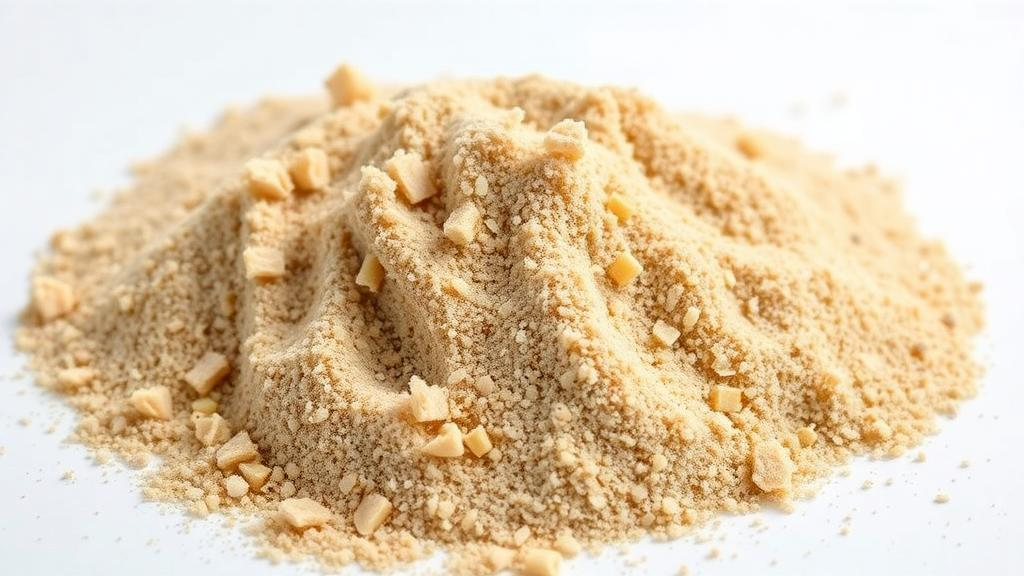
Every year, the construction industry demolishes billions of tonnes of buildings, and much of the resulting rubble ends up as crushed concrete that could replace the natural sand mined for new mortar and concrete. The obstacle is stubbornly physical: recycled fine aggregate, the sand-sized fraction of crushed concrete, is coated in a porous layer of old cement paste that soaks up water far faster than natural sand. Where river sand typically absorbs about 1.1 percent of its mass in water over 24 hours, recycled fine aggregate can absorb anywhere from 6 to 13 percent, with an average near 8.4 percent. In one reported comparison, the figures were 10.61 percent for recycled material against just 0.81 percent for natural sand. That voracious appetite for water pulls free water out of fresh mortar, lowering the effective water-to-cement ratio, stiffening the mix and undermining workability before the material has even set.
The problems do not stop at water uptake. The old adhered mortar is riddled with pores and microcracks that act as stress concentrators and preferential pathways for water and aggressive ions, weakening the bond between aggregate and new cement paste. Even when the aggregate is fully saturated, only 16 to 36 percent of the absorbed water is released back at high relative humidity, so high absorption does not guarantee useful internal curing. A research team led by Zedong Qiu and Shuang Lu, publishing in Case Studies in Construction Materials, has now tested a deceptively simple idea: instead of trying to repair the aggregate before mixing, use its porous structure as a temporary chemical reservoir that feeds reactive silicate into the hydrating cement from the inside.
The strategy hinges on replacing the water normally used to pre-wet the aggregate with a sodium silicate solution of the same volume. Sodium silicate is chemically attractive because dissolved silicate ions react with calcium ions and portlandite, the calcium hydroxide that cement hydration produces in abundance, to form additional calcium silicate hydrate gel, the glue-like binding phase of concrete. Previous approaches either stirred sodium silicate directly into the mixing water, which can cause rapid flow loss and early flocculation, or soaked aggregates for many hours and dried them, which consumes time and energy. The new procedure pre-wets the aggregate for just three hours and then mixes it into mortar without any drying step at all.
The experiments were carefully controlled. Recycled fine aggregate was produced by crushing a parent concrete with a compressive strength of 40 megapascals and sieving to particles between 1.18 and 2.35 millimetres. The pre-wetting liquid volume was fixed at 85 percent of the aggregate’s saturated surface-dry water absorption, and solutions containing 5, 10, 15 and 20 percent sodium silicate by mass were compared against a water-only reference. Total water in every mortar was held constant at 262.36 grams per 500 grams of cement, so any difference in performance could be attributed to the chemistry of the stored liquid rather than to changes in mix proportions.
The first surprise is what did not happen during those three hours. Thermogravimetric analysis and scanning electron microscopy showed no systematic consumption of portlandite and no progressive build-up of a gel-rich surface layer as concentration increased. The aggregate surfaces retained their heterogeneous character, with open depressions, exposed particles and unfilled pore-like defects, and portlandite crystals remained visible even at the highest concentration. In other words, the treatment did not rebuild the aggregate before mixing. Instead, extraction tests in deionized water proved that a releasable silicate fraction remained locked inside. Silicate concentrations in the extract rose steadily over 24 hours without reaching a plateau, and the background-corrected concentration after 24 hours increased almost perfectly linearly with the pre-wetting concentration, with a coefficient of determination of 0.981. The porous aggregate was behaving exactly as intended: a carrier, not a reactor.
That spatial confinement paid off immediately in the fresh mortar. Direct addition of sodium silicate typically causes rapid flow loss because soluble silicate reacts with calcium in the bulk paste, triggering early precipitation and flocculation. Here, the opposite occurred: the sodium-silicate mortars showed slightly higher initial flowability than the water-pre-wetted reference, because the silicate was initially trapped inside the aggregate pores and only a limited fraction reached the continuous paste during the short interval before the flow test. Pore storage effectively separated the introduction of reactive silicate from its reaction in both space and time.
Once mixing began, the stored silicate started to work. Isothermal calorimetry showed that higher silicate loadings advanced the onset of the main hydration peak, and the mortar pre-wetted with the 20 percent solution shortened its acceleration period to 8.98 hours, 27.35 percent below the reference. A Krstulovic-Dabic kinetic analysis revealed that all mortars followed the same sequence of nucleation-and-growth, phase-boundary and diffusion-controlled stages, but the rate constants shifted. The nucleation-stage rate constant rose by roughly 16.9 percent at the highest loading, consistent with silicate released from the pores raising local supersaturation and providing extra nucleation sites for calcium silicate hydrate. Crucially, however, the strongest early kinetics did not produce the best overall reaction: the highest extrapolated maximum heat release belonged to the 10 percent mixture, not the 20 percent one, because excessively rapid early precipitation at high concentrations hindered later mass transport and reaction.
The 10 percent formulation emerged as the clear winner across nearly every measurement. Its 28-day mass loss associated with bound water in hydrates was about 16.5 percent higher than the reference, while its portlandite content was the lowest, indicating that stored silicate had been consumed in secondary gel formation rather than merely accelerating clinker hydration. Solid-state silicon-29 nuclear magnetic resonance spectroscopy added molecular-level detail: the 10 percent mortar showed the lowest fraction of isolated silicate tetrahedra from unhydrated clinker and the highest fraction of more connected Q3 environments, while the 15 percent mixture produced the longest mean silicate chains in the calcium silicate hydrate. Compressive strength followed suit, with the 10 percent mixture gaining 29.52 percent at 3 days and 15.13 percent at 28 days over the reference, while the 20 percent mixture actually fell below the reference at early age.
The interfacial evidence is perhaps the most striking. Backscattered electron imaging and energy-dispersive spectroscopy showed that the calcium-to-silicon ratio of the interfacial gel dropped from a median of 2.15 to 1.88, with a narrower spread, indicating a more uniform, silicon-rich gel along the aggregate boundary. Segmented image analysis revealed that unhydrated cement near the interface fell from 11.41 to 6.88 percent of the area, coarse portlandite clusters shrank dramatically, and the estimated width of the interfacial transition zone narrowed from roughly 35 to 20 micrometres, a reduction of about 43 percent. Nanoindentation mapping across the interface showed the median indentation modulus rising from 26.17 to 33.66 gigapascals and hardness from 744 to 1142 megapascals, increases of 28.6 and 53.5 percent respectively, with the fraction of high-stiffness matrix within 24 micrometres of the aggregate surface jumping from 16.67 to 72.73 percent. Mercury intrusion porosimetry completed the picture: total porosity fell from 18.82 to 14.22 percent, a 24.4 percent reduction, with pore volume shifting decisively from pores larger than 200 nanometres into the harmless sub-20-nanometre range.
The broader significance lies in the elegance of the mechanism. Rather than spending energy drying, calcining or carbonating recycled aggregate, the method exploits the very property that makes recycled sand troublesome, its open pore network, and turns it into a delivery system for chemistry that strengthens the weakest zone of the composite. The aggregate pre-wetting and the hydration regulation become a single step with no drying stage, and the optimum dosage sits at a moderate 10 percent where early activation and sustained silicate supply are balanced. If the approach scales from laboratory mortars to real concrete production, it could help close the loop on construction and demolition waste, turning porous, water-hungry rubble into an asset that builds its own stronger interface from the inside out.
Subject of Research: Sodium silicate pre-wetting of recycled fine aggregates to strengthen the interfacial transition zone and micromechanics of recycled mortar
Article Title: Sodium silicate pre-wetting of recycled fine aggregates for interfacial reconstruction and micromechanical strengthening of recycled mortar
Article References: Qiu, Z., Lv, M., Chen, Z., Liao, Y., Zhu, X., & Lu, S. (2026). Sodium silicate pre-wetting of recycled fine aggregates for interfacial reconstruction and micromechanical strengthening of recycled mortar. Case Studies in Construction Materials, 25, Article e06614. https://doi.org/10.1016/j.cscm.2026.e06614
Image Credits: AI Generated
DOI: 10.1016/j.cscm.2026.e06614
Keywords: recycled fine aggregate, sodium silicate, pre-wetting, interfacial transition zone, calcium silicate hydrate, cement hydration kinetics, nanoindentation, porosity, construction and demolition waste, recycled mortar, C-S-H gel, sustainable construction
Cite Scienmag News
Denise Maddox. (October 12, 2026). Recycled sand gets a chemical makeover by soaking up sodium silicate before mixing. Scienmag. https://scienmag.com/recycled-sand-gets-a-chemical-makeover-by-soaking-up-sodium-silicate-before-mixing/
Denise Maddox. "Recycled sand gets a chemical makeover by soaking up sodium silicate before mixing." Scienmag, 12 October 2026, https://scienmag.com/recycled-sand-gets-a-chemical-makeover-by-soaking-up-sodium-silicate-before-mixing/. Accessed 12 October 2026.
Denise Maddox. "Recycled sand gets a chemical makeover by soaking up sodium silicate before mixing." Scienmag. October 12, 2026. https://scienmag.com/recycled-sand-gets-a-chemical-makeover-by-soaking-up-sodium-silicate-before-mixing/


