

Thursday, October 22, 2026
Science
No Result
View All Result
  • Login
  • HOME
  • SCIENCE NEWS
  • CONTACT US
  • HOME
  • SCIENCE NEWS
  • CONTACT US
No Result
View All Result
Scienmag
No Result
View All Result
Home Science News Medicine

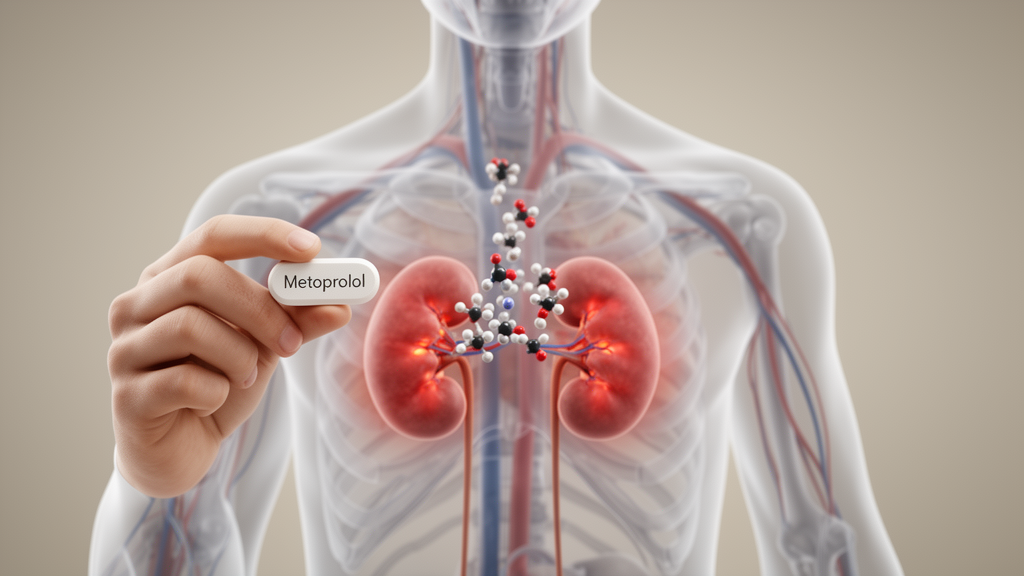
Recent metoprolol use linked to modestly elevated acute kidney injury risk

October 22, 2026
in Medicine, Science News
Ophelia Keating
By Ophelia Keating Scienmag Editorial Profile - Health Services Research
Reading Time: 2 mins read
0
Recent metoprolol use linked to modestly elevated acute kidney injury risk

Recent metoprolol use linked to modestly elevated acute kidney injury risk

65
SHARES
587
VIEWS
Share on FacebookShare on Twitter
ADVERTISEMENT

A multicenter retrospective cohort study found that recent exposure to metoprolol was associated with a modestly higher hazard of acute kidney injury among hospitalized adults, but the results do not establish that metoprolol directly damages the kidneys or caused the outcomes. The analysis included 20,333 patients treated at three Chinese hospitals between January 2020 and December 2024. Of these patients, 1,050 developed incident acute kidney injury, or AKI.

To account for medication exposure and kidney function that could change during hospitalization, investigators modeled metoprolol use as a time-varying exposure. Use on a hospital day was related to the risk of AKI on the following day. Eligible patients had an estimated glomerular filtration rate of at least 60 mL/min/1.73 m² at cohort entry and sufficient serial serum creatinine and medication-execution records. The study generated 284,470 risk intervals for the 20,333 participants, with incident AKI identified using rolling KDIGO serum-creatinine criteria.

In the unadjusted time-varying Cox model, lag-one metoprolol exposure was associated with a substantially higher AKI hazard, with a hazard ratio of 2.53 and a 95% confidence interval of 2.13 to 3.00. The association was substantially attenuated after adjustment for demographic characteristics, baseline renal function, major comorbidities, baseline severity-related factors and lagged concomitant medication exposures. It nevertheless remained statistically significant in the primary adjusted model: the hazard ratio was 1.37, the 95% confidence interval was 1.05 to 1.79, and P = 0.022. The change after adjustment indicates that measured differences in patient characteristics, clinical condition and concurrent treatments accounted for part of the unadjusted association, although the analysis could not eliminate residual confounding.

The pattern varied across follow-up-time and sensitivity analyses. Prespecified analyses suggested that the association was concentrated during the first 72 hours after cohort entry rather than remaining constant throughout follow-up. Most analytical specifications produced estimates in the same direction, but their magnitude and statistical significance varied. The association was attenuated to non-significance in the two-day lag analysis, with a hazard ratio of 1.27 and a 95% confidence interval of 0.96 to 1.68, and after additional adjustment for vasopressor use, with a hazard ratio of 1.29 and a 95% confidence interval of 0.98 to 1.70. No consistent monotonic dose-response relationship was observed. These findings leave uncertainty about the role of exposure timing and the clinical circumstances in which metoprolol was prescribed.

Because the study was retrospective and observational, the results cannot determine whether metoprolol contributed to AKI or whether residual differences between treatment groups explain the adjusted association. The concentration of the signal during early follow-up, its sensitivity to the lag definition and further confounding control, and the absence of a consistent dose-response pattern limit causal interpretation. The evidence therefore supports interpreting the results as a hypothesis-generating short-term AKI safety signal rather than evidence of direct metoprolol nephrotoxicity or causality.

Subject of Research: Association of recent metoprolol exposure with incident acute kidney injury in hospitalized adults

Article Title: Time-varying metoprolol exposure and the risk of acute kidney injury: a multicenter retrospective cohort study

Article References: Li, Z., Zha, H., Gong, Q., Wu, M., She, Y., & Xu, F. (2026). Time-varying metoprolol exposure and the risk of acute kidney injury: a multicenter retrospective cohort study. Frontiers in Pharmacology, 17, Article 1899992. https://doi.org/10.3389/fphar.2026.1899992

Image Credits: AI Generated

DOI: 10.3389/fphar.2026.1899992

Keywords: metoprolol, acute kidney injury, time-varying exposure, hospitalized adults, retrospective cohort, serum creatinine, renal function, residual confounding, medication safety, Time-varying, exposure, risk

Cite Scienmag News

Ophelia Keating. (October 22, 2026). Recent metoprolol use linked to modestly elevated acute kidney injury risk. Scienmag. https://scienmag.com/recent-metoprolol-use-linked-to-modestly-elevated-acute-kidney-injury-risk/

Ophelia Keating. "Recent metoprolol use linked to modestly elevated acute kidney injury risk." Scienmag, 22 October 2026, https://scienmag.com/recent-metoprolol-use-linked-to-modestly-elevated-acute-kidney-injury-risk/. Accessed 22 October 2026.

Ophelia Keating. "Recent metoprolol use linked to modestly elevated acute kidney injury risk." Scienmag. October 22, 2026. https://scienmag.com/recent-metoprolol-use-linked-to-modestly-elevated-acute-kidney-injury-risk/


Tags: acute kidney injuryepidemiology of kidney injury in hospitalized patientsExposurehospital-based kidney function researchhospitalized adultsimpact of beta-blockers on renal healthimplications of beta-blocker use on renalinfluence of comorbidities on AKI developmentKDIGO criteria for AKI diagnosismedication safetymetoprololmetoprolol and acute kidney injury riskpharmacovigilance of cardiovascular drugsrenal functionresidual confoundingretrospective cohortretrospective cohort study on medication effectsRiskrisk factors for hospital acquired kidney injuryserum creatininestatistical modeling of drug-related adverse eventsTime-varyingtime-varying exposuretime-varying medication exposure analysis
Share26Tweet16
Previous Post

R tutorial maps divergent adolescent identity trajectories

Next Post

Research report: Pregnancy-associated alterations in circulating vitamin D metabolites: higher total 25-hydroxyvitamin D and 1,25-dihydroxyvitamin D without increased free 25-hydroxyvitamin D

Related Posts

Research report: Pregnancy-associated alterations in circulating vitamin D metabolites: higher total 25-hydroxyvitamin D and 1,25-dihydroxyvitamin D without increased free 25-hydroxyvitamin D
Science News

Research report: Pregnancy-associated alterations in circulating vitamin D metabolites: higher total 25-hydroxyvitamin D and 1,25-dihydroxyvitamin D without increased free 25-hydroxyvitamin D

October 22, 2026
R tutorial maps divergent adolescent identity trajectories
Science News

R tutorial maps divergent adolescent identity trajectories

October 22, 2026
Qualitative study examines seven adolescent girls’ abuse disclosure and school support
Medicine

Qualitative study examines seven adolescent girls’ abuse disclosure and school support

October 22, 2026
eDNA study maps microbial networks on Kraków urban stone
Biology

eDNA study maps microbial networks on Kraków urban stone

October 22, 2026
Legal mismatch hampers green corridors in China’s Gan River Basin
Social Science

Legal mismatch hampers green corridors in China’s Gan River Basin

October 22, 2026
Review positions crosslinking as a multidimensional regulator of regenerative biomaterials
Science News

Review positions crosslinking as a multidimensional regulator of regenerative biomaterials

October 22, 2026
Next Post
Research report: Pregnancy-associated alterations in circulating vitamin D metabolites: higher total 25-hydroxyvitamin D and 1,25-dihydroxyvitamin D without increased free 25-hydroxyvitamin D

Research report: Pregnancy-associated alterations in circulating vitamin D metabolites: higher total 25-hydroxyvitamin D and 1,25-dihydroxyvitamin D without increased free 25-hydroxyvitamin D

  • Mothers who receive childcare support from maternal grandparents show more optimized

    Mothers who receive childcare support from maternal grandparents show more parental warmth, finds NTU Singapore study

    27656 shares
    Share 11059 Tweet 6912
  • University of Seville Breaks 120-Year-Old Mystery, Revises a Key Einstein Concept

    1061 shares
    Share 424 Tweet 265
  • Bee body mass, pathogens and local climate influence heat tolerance

    682 shares
    Share 273 Tweet 171
  • Researchers record first-ever images and data of a shark experiencing a boat strike

    546 shares
    Share 218 Tweet 137
  • Groundbreaking Clinical Trial Reveals Lubiprostone Enhances Kidney Function

    531 shares
    Share 212 Tweet 133
Science

Embark on a thrilling journey of discovery with Scienmag.com—your ultimate source for cutting-edge breakthroughs. Immerse yourself in a world where curiosity knows no limits and tomorrow’s possibilities become today’s reality!

RECENT NEWS

  • Research report: Pregnancy-associated alterations in circulating vitamin D metabolites: higher total 25-hydroxyvitamin D and 1,25-dihydroxyvitamin D without increased free 25-hydroxyvitamin D
  • Recent metoprolol use linked to modestly elevated acute kidney injury risk
  • R tutorial maps divergent adolescent identity trajectories
  • Qualitative study examines seven adolescent girls’ abuse disclosure and school support

Categories

  • Agriculture
  • Anthropology
  • Archaeology
  • Athmospheric
  • Biology
  • Biotechnology
  • Blog
  • Bussines
  • Cancer
  • Chemistry
  • Climate
  • Earth Science
  • Editorial Policy
  • Marine
  • Mathematics
  • Medicine
  • Pediatry
  • Policy
  • Psychology & Psychiatry
  • Science Education
  • Science News
  • Social Science
  • Space
  • Technology and Engineering

Subscribe to Blog via Email

Enter your email address to subscribe to this blog and receive notifications of new posts by email.

Join 5,151 other subscribers

© 2025 Scienmag - Science Magazine

Welcome Back!

Login to your account below

Forgotten Password?

Retrieve your password

Please enter your username or email address to reset your password.

Log In
No Result
View All Result
  • HOME
  • SCIENCE NEWS
  • CONTACT US

© 2025 Scienmag - Science Magazine

Discover more from Science

Subscribe now to keep reading and get access to the full archive.

Continue reading