

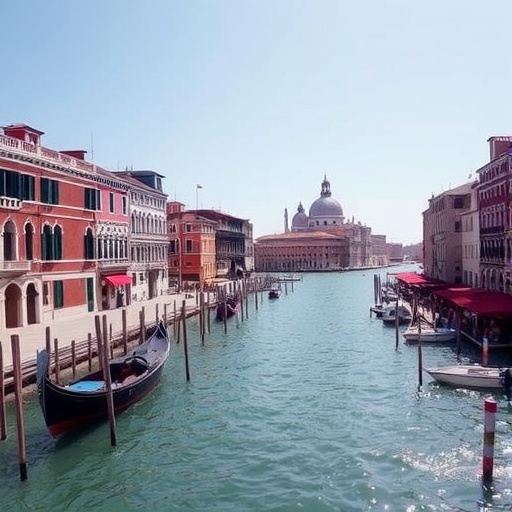
In a groundbreaking study, researchers have begun to explore the presence and implications of rare earth elements (REEs) within the transitional ecosystems of the LTER Lagoon of Venice site in Italy. REEs, which include a group of 17 chemical elements in the periodic table, are increasingly recognized for their environmental significance and industrial applications. Their importance extends beyond electronics and renewable energy technologies; understanding their interactions within delicate ecosystems is vital, especially in ecologically sensitive areas such as lagoons.
The LTER Lagoon of Venice site provides a unique opportunity to study these elements in a transitional ecosystem where freshwater and saltwater converge. This unique environment showcases a variety of habitats that are home to rich biodiversity. These ecosystems are particularly vulnerable to environmental changes and anthropogenic pressures, making the study of REEs critical in uncovering potential threats to habitat health and species survival.
During preliminary investigations, the researchers employed state-of-the-art analytical techniques to quantify the concentration of REEs in sediment and water samples collected from various sites around the lagoon. This innovative methodology enabled them to achieve more accurate and reliable results. Understanding these concentrations is essential, as they can indicate not only the natural background levels but also any anthropogenic influence on the ecosystem.
The study revealed that there are indeed measurable levels of rare earth elements present in the lagoon. Interestingly, the data suggest that these elements do not uniformly distribute throughout the environment but exhibit spatial variability. Factors such as water currents, sediment composition, and human activity may significantly influence the distribution patterns. The findings raise critical questions about how these elements interact with local flora and fauna and what potential consequences they may pose for ecological health.
Furthermore, REEs have well-documented uses in various industrial applications, including electronics, batteries, and catalysts, among others. The growing demand for these resources amplifies the risk of environmental contamination and the subsequent impact on ecosystems. Therefore, monitoring REE levels in environmental matrices is crucial for establishing baseline conditions and for assessing long-term ecological health.
Wastewater discharge and urban runoff are potential pathways for introducing REEs into the lagoon ecosystem. As cities grow and industrial activities increase, the runoff often carries pollutants, including REEs, into surrounding ecosystems. Understanding the sources and pathways of these elements becomes imperative for devising strategies to mitigate their impact on sensitive environments, such as those found in the Lagoon of Venice.
One compelling aspect of this research is its potential implications for conservation practices. By understanding the concentrations and distributions of REEs in the lagoon, policymakers and conservationists can better assess risks to biodiversity and develop informed management strategies. The collaboration between scientists and local authorities becomes essential in addressing these concerns proactively.
As this research progressed, the team also recognized the need for community engagement. Local stakeholders, including residents and business owners, must be informed about the significance of their lagoon’s health. By fostering a connection between scientific findings and public awareness, the team aims to inspire collective action toward protecting this unique ecosystem.
This endeavor is part of a broader effort to investigate the ecological impact of REEs not just in Italy, but worldwide. Given that REEs are integral to many modern technologies, their environmental prevalence is an aspect that deserves heightened scrutiny. The findings from Venice’s lagoon may serve as a representative case study for other transitional ecosystems globally facing similar issues due to industrialization and urban expansion.
The preliminary data presented shed light on an often-overlooked aspect of environmental science: the intricate relationships between human activities and natural systems. Emerging from the research are foundational questions about what constitutes a sustainable relationship with our ecosystems. How can society balance the demand for technological advancement with the need to preserve our planet’s ecological integrity?
As scientists continue to gather data and analyze these critical intersections between rare earth elements and transitional ecosystems, it becomes increasingly clear that collaboration across disciplines is not merely beneficial, but essential. The researchers, alongside ecologists, environmental policymakers, and industrial leaders, can foster a holistic approach to understanding and managing the impacts of these essential elements on fragile ecosystems.
This research illuminates the urgent need for further investigations in diverse ecological contexts to better understand the implications of REE presence and enhance environmental management strategies. The Lagoon of Venice may serve as an illustrative starting point in a much larger narrative regarding our planet’s ecological future.
In summary, while the preliminary findings spark considerable interest and concern, they mark only the beginning of a larger, necessary conversation about rare earth elements in our environment. The integration of scientific research with public discourse may ultimately pave the way for more sustainable practices and policies, ensuring the protection of ecosystems that are vital for the health of our planet.
Subject of Research: Rare Earth Elements in Transitional Ecosystems
Article Title: Rare Earth Elements in Transitional Ecosystems: Preliminary Data from the LTER Lagoon of Venice Site (Italy)
Article References:
Nurra, N., Squadrone, S., Bergamasco, A. et al. Rare earth elements in transitional ecosystems: preliminary data from the LTER Lagoon of Venice site (Italy).
Environ Sci Pollut Res (2026). https://doi.org/10.1007/s11356-026-37403-w
Image Credits: AI Generated
DOI: https://doi.org/10.1007/s11356-026-37403-w
Keywords: Rare Earth Elements, Transitional Ecosystems, Lagoon of Venice, Environmental Impact, Ecological Health, Conservation Strategies, Biodiversity.


