

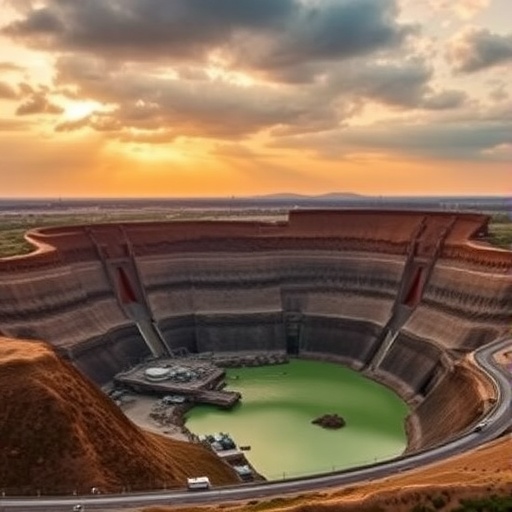
In the heart of Southwest Nigeria, artisanal mining activities have dramatically transformed the landscape, bringing both economic opportunities and environmental concerns. A recent study conducted by Fasanmi and Isinkaye highlights a critical issue surrounding these mining practices: the distribution of natural radionuclides in soil and tailings, and their associated health risks. As communities grapple with the dual-edged sword of mining, understanding the environmental impacts becomes indispensable.
Artisanal mining, characterized by small-scale operations, often lacks regulation and oversight. It is widely considered an informal sector that is ecologically destructive, causing significant alterations to the terrestrial ecosystem. The artisanal miners, often uninformed of the potential risks, extract not only valuable minerals but also disturb geological structures, inadvertently exposing themselves to harmful byproducts such as radionuclides. These naturally occurring radioactive materials can accumulate in soils and mining waste, posing unseen threats to public health and the environment.
The study deploys rigorous methods to assess the levels of natural radionuclides, focusing on key isotopes like uranium-238, thorium-232, and potassium-40. These radionuclides are of paramount concern due to their radioactive decay and the subsequent radiation exposure they can cause. The researchers collected soil samples from various locations around mining areas, systematically analyzing their composition and measuring radiation levels with sophisticated detection instruments. The findings underscore the disproportionate distribution of these radionuclides in areas heavily influenced by mining activity.
Beyond mere detection, the health risk assessment component of the study is particularly alarming. The potential exposure pathways for local populations, primarily through ingestion, inhalation, and dermal contact, were meticulously evaluated. With many residents depending on these lands for agriculture and water sources, the implications of radionuclide contamination stretch far beyond mining.
Moreover, the radionuclide levels in tailings were found to significantly surpass natural background levels. This raises concerns about long-term exposure risks for communities that live in close proximity to these tailings. Children, in particular, are vulnerable to the effects of radiation, which can lead to developmental disabilities and other serious health issues. The research casts a spotlight on the urgent need for health education and intervention strategies to mitigate these risks.
Public awareness of the dangers associated with radionuclides is troublingly low in many of these mining communities. With little access to scientific literature or health education resources, many residents remain oblivious to the potential hazards posed by their environment. The study calls for increased outreach efforts to educate miners and their families about the impacts of their activities on both their health and the surrounding ecosystem.
Additionally, regulatory frameworks governing artisanal mining in Nigeria need to be upgraded and enforced more stringently. Without a robust system in place to monitor and manage mining operations, the cycle of environmental degradation and health risks continues unchecked. Fasanmi and Isinkaye advocate for governmental and non-governmental organizations to undertake proactive roles in establishing policies that protect communities and their environments from the adverse effects of mining.
The consequences of inaction could be dire. While artisanal mining can provide significant economic benefits, reckless practices that neglect environmental health can lead to disastrous public health crises. The balance between economic development and environmental sustainability must be consistently evaluated, and stakeholders in the mining industry bear a responsibility to adhere to safe practices.
Ultimately, the research suggested that further studies are required to monitor and assess the evolving landscape of artisanal mining in Nigeria. Continuous research and data collection will allow for the identification of troubling trends over time, promoting informed decision-making among policymakers and community leaders. It is imperative that scientists, policymakers, and local communities work together to devise practical solutions that prioritize health and environmental stewardship.
As valuable minerals continue to attract artisanal miners to Southwest Nigeria, the ramifications of their extraction practices are becoming increasingly apparent. The distribution and health risks associated with natural radionuclides exemplify the urgent need for a concerted effort to address the often-overlooked consequences of informal mining. The findings presented by Fasanmi and Isinkaye serve as a compelling call to action for all stakeholders involved, emphasizing the need for a sustainable approach to mining in Nigeria.
In closing, addressing the environmental and health challenges posed by artisanal mining in Southwest Nigeria is essential for safeguarding the community’s future. This study illuminates the pressing need for a holistic approach to mining practices, one that accounts for the lasting impacts on human health and environmental integrity. Central to this mission is the dissemination of knowledge, the enforcement of effective policies, and the promotion of community engagement—a collective effort essential to creating a safer, healthier environment for all.
Subject of Research: Natural radionuclides in soil and tailings around artisanal mining areas of Southwest Nigeria.
Article Title: Distribution and health risk assessment of natural radionuclides in the soil and tailings around artisanal mining areas of Southwest Nigeria.
Article References:
Fasanmi, P.O., Isinkaye, M.O. Distribution and health risk assessment of natural radionuclides in the soil and tailings around artisanal mining areas of Southwest Nigeria.
Environ Sci Pollut Res (2026). https://doi.org/10.1007/s11356-025-37359-3
Image Credits: AI Generated
DOI: https://doi.org/10.1007/s11356-025-37359-3
Keywords: natural radionuclides, artisanal mining, health risk assessment, Southwest Nigeria, environmental sustainability.


