


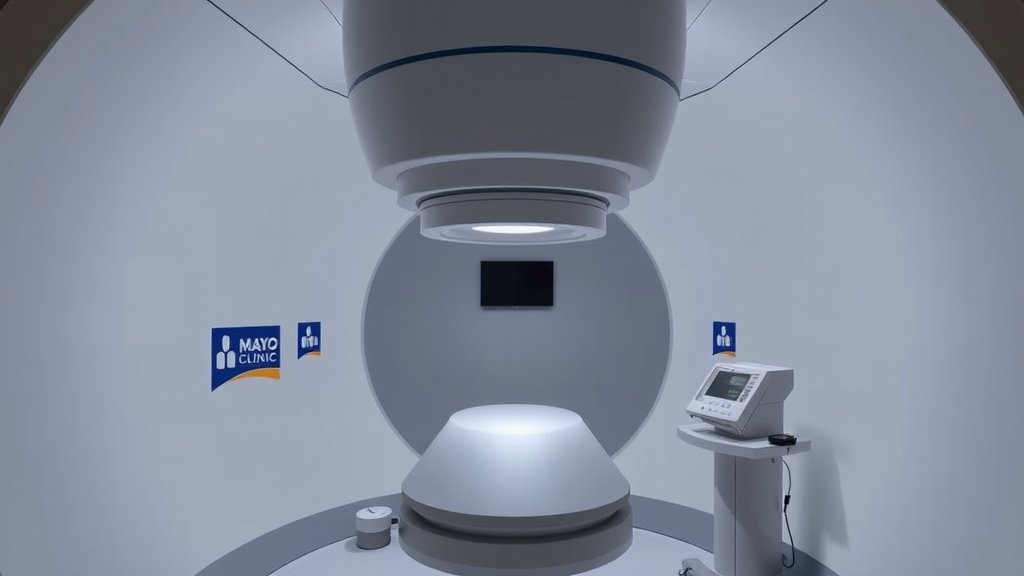
Boston is about to become the epicenter of radiation medicine. From September 26 through 30, the 2026 American Society for Radiation Oncology Annual Meeting will convene clinicians, physicists, and scientists from around the world, and Mayo Clinic researchers are arriving with one of the most ambitious presentation slates of the conference. The Rochester, Minnesota-based institution announced that its experts will participate in nearly 65 poster, education, quick-pitch, scientific, oral, plenary, and presidential sessions, and will deliver 45 abstracts spanning the full breadth of modern radiation oncology. The scope is striking: artificial intelligence and advanced delivery technologies, precision treatment outcomes, novel radiotherapy techniques, and clinical trials that could reshape standards of care for some of the most challenging cancers in both adults and children.
The meeting opens with a high-profile moment on Sunday, September 27, when John D. Halamka, the Dwight and Dian Diercks president of Mayo Clinic Platform, joins the Presidential Symposium in a session titled Data to Dialogue: Communicating Radiotherapy’s Value to Advance Care. His brief panel appearance, scheduled from 9:49 to 9:53 a.m. EDT, addresses a question that has moved from the margins to the mainstream of scientific discourse: how will science and healthcare information be disseminated tomorrow? The session examines the evolving roles of journals, websites, online platforms, and AI-powered content in shaping what both physicians and patients come to know about radiotherapy. It is a fitting opening note for a meeting in which machine intelligence threads through nearly every major Mayo Clinic presentation, from automated contouring to recurrence prediction.
Perhaps the most clinically consequential Mayo Clinic contribution comes in a Sunday afternoon clinical trials session, when Nadia Laack, a radiation oncologist at Mayo Clinic Comprehensive Cancer Center in Rochester, presents results from the Children’s Oncology Group trial AEWS1221. The study investigated stereotactic body radiation therapy, known as SBRT, combined with comprehensive metastasis-directed therapy in patients with metastatic Ewing sarcoma, an aggressive bone and soft-tissue cancer that has long defied conventional treatment when it spreads. The headline finding is remarkable: the researchers report the highest event-free survival recorded to date in cooperative-group trials of metastatic Ewing sarcoma. Equally important, the study establishes the feasibility and safety of delivering precisely targeted, ablative radiation doses to metastatic sites in this young patient population, a strategy that treats each site of spread as a targetable lesion rather than relying solely on systemic chemotherapy.
Artificial intelligence takes a starring role later that afternoon, when Andres Portocarrero Bonifaz, a radiation oncology medical physicist at Mayo Clinic in Florida, presents on AI-driven automation in pelvic radiation therapy during an education session on artificial intelligence, robotics, and emerging technologies in gynecologic radiation oncology. His talk traces the full pipeline of automation, from automated contouring of organs at risk to treatment plan optimization, and then extends into prediction-guided care. The central idea is that artificial intelligence can identify each patient’s individual risk of side effects before treatment begins, giving physicians a quantitative foundation for more personalized decisions about how aggressively to treat and how to protect healthy tissue. In gynecologic cancers, where pelvic targets sit close to bowel, bladder, and reproductive structures, that kind of predictive personalization could translate directly into fewer long-term toxicities.
Monday morning brings a rapid-fire quick pitch from Diego Santos Toesca, a radiation oncologist at Mayo Clinic in Arizona, on one of the most lethal malignancies in medicine: glioblastoma in older adults. His presentation describes patterns of radiographic failure at first progression among older patients treated with hypofractionated proton therapy guided by both MRI and 18F-DOPA PET imaging. The technical significance lies in the fusion of two imaging modalities: standard MRI delineates anatomical abnormality, while 18F-DOPA PET reveals metabolic activity that can expose tumor infiltration invisible to conventional scans. By targeting the combined imaging signature with a shortened course of proton therapy, which spares surrounding brain tissue from excess radiation dose, the team is mapping exactly where and how these tumors recur. Those failure patterns will inform the next generation of target volumes for a disease where every additional week of survival is hard-won.
Also on Monday, Michael Grams, a radiation oncology medical physicist at Mayo Clinic Comprehensive Cancer Center in Rochester, will describe Mayo Clinic’s first-in-human clinical translation of minibeam radiotherapy as part of an education session on spatially fractionated radiation therapy. Minibeam radiotherapy is one of the most conceptually radical ideas in the field: instead of delivering a broad, uniform radiation field, the beam is divided into many narrow, parallel microbeams separated by untouched tissue. The alternating pattern of dose appears to exploit a differential biological response, damaging tumor tissue while allowing normal tissue between the beams to recover and repair. Presenting the clinical workflow and translational insights from the first patients ever treated with this technique is a milestone moment, marking the journey of a physics concept from laboratory benches and animal models into the clinic for difficult-to-treat cancers.
Patient voice enters the scientific program through Minji Lee, a scientist in radiation oncology at Mayo Clinic in Rochester, who presents an oral session comparing the prognostic value of disease-specific patient-reported outcome measures in prostate cancer. Patient-reported outcomes, or PROs, capture symptoms and quality-of-life data directly from patients rather than from clinician assessments, and they have become increasingly influential in oncology. But not all PRO instruments are created equal, and the study systematically compares how well different measures predict overall survival in prostate cancer. The goal is evidence-based selection: identifying which validated instruments genuinely carry prognostic information so that clinicians and trialists can choose the tools that matter most, rather than defaulting to tradition or convenience.
Pediatric hematology-oncology is the focus of Brad Hoppe, a radiation oncologist at Mayo Clinic Comprehensive Cancer Center in Florida, who presents a post hoc safety analysis of the KEYNOTE-667 study during a scientific session on radiation and systemic therapy in hematologic malignancies. The analysis evaluates maintenance pembrolizumab, an immune checkpoint inhibitor, given concurrently with radiotherapy in pediatric patients with classic Hodgkin lymphoma who showed a slow early response to front-line chemotherapy. Combining immunotherapy with radiation raises a critical safety question, because both modalities can inflame the same normal tissues, and checkpoint inhibitors can trigger immune-related adverse events. Establishing that concurrent immunoradiotherapy is tolerable in children could expand the therapeutic arsenal for the subset of Hodgkin lymphoma patients whose disease does not respond quickly to chemotherapy alone.
The afternoon plenary on Monday features one of the most anticipated randomized trials in neuro-oncology. Paul D. Brown, a radiation oncologist at Mayo Clinic Comprehensive Cancer Center in Rochester and principal investigator of the Alliance A071801 phase III trial, will report results comparing postoperative single-fraction stereotactic radiosurgery with fractionated stereotactic radiosurgery for resected brain metastases. When a brain metastasis is surgically removed, radiation to the surgical cavity reduces the risk of local recurrence, but the optimal dosing schedule has remained contested. Single-fraction radiosurgery offers convenience and a single anesthesia session, while fractionated delivery spreads the dose across multiple sessions, potentially improving tumor control at the cavity margin and reducing radionecrosis. A definitive phase III answer will directly guide treatment for the hundreds of thousands of patients who develop brain metastases each year.
The Mayo Clinic program closes with two further presentations on Tuesday, September 29. Scott Lester, a radiation oncologist at Mayo Clinic Comprehensive Cancer Center in Rochester, delivers the first report from the Headlight trials, evaluating postoperative hypofractionated proton therapy for head and neck cancers unrelated to HPV. Shortening the course of proton therapy could reduce treatment burden while proton physics, which deposits dose with no exit radiation, offers a distinct sparing advantage for the salivary glands, swallowing structures, and spinal cord that surround head and neck tumors. Shortly afterward, in a session on the automated clinic, Mariana Borras-Osorio, a research fellow in radiation oncology at Mayo Clinic in Rochester, presents a machine-learning model designed to personalize PSA follow-up after prostate radiation therapy. The model integrates patient-specific clinical data with the kinetics of prostate-specific antigen, the standard blood-based biomarker monitored after treatment, to predict clinically meaningful recurrence. Together, the presentations sketch the field’s trajectory: imaging-guided precision, AI-augmented decision-making, radically novel beam geometries, and rigorously tested treatment schedules, all converging to make radiation therapy simultaneously more powerful and more personal.
Subject of Research: Mayo Clinic radiation oncology research presentations at the ASTRO 2026 Annual Meeting
Article Title: Mayo Clinic experts present radiation oncology research at ASTRO 2026
Article References: Mayo Clinic experts present radiation oncology research at ASTRO 2026. (n.d.). Original publication
Image Credits: AI Generated
DOI: Not provided
Keywords: radiation oncology, ASTRO 2026, Mayo Clinic, artificial intelligence, SBRT, Ewing sarcoma, glioblastoma, minibeam radiotherapy, proton therapy, brain metastases, Hodgkin lymphoma, prostate cancer
Cite Scienmag News
Nathaniel Bowman. (September 26, 2026). Radiation Oncology Takes Center Stage as Mayo Clinic Unveils Research at ASTRO 2026. Scienmag. https://scienmag.com/radiation-oncology-takes-center-stage-as-mayo-clinic-unveils-research-at-astro-2026/
Nathaniel Bowman. "Radiation Oncology Takes Center Stage as Mayo Clinic Unveils Research at ASTRO 2026." Scienmag, 26 September 2026, https://scienmag.com/radiation-oncology-takes-center-stage-as-mayo-clinic-unveils-research-at-astro-2026/. Accessed 4 October 2026.
Nathaniel Bowman. "Radiation Oncology Takes Center Stage as Mayo Clinic Unveils Research at ASTRO 2026." Scienmag. September 26, 2026. https://scienmag.com/radiation-oncology-takes-center-stage-as-mayo-clinic-unveils-research-at-astro-2026/


