


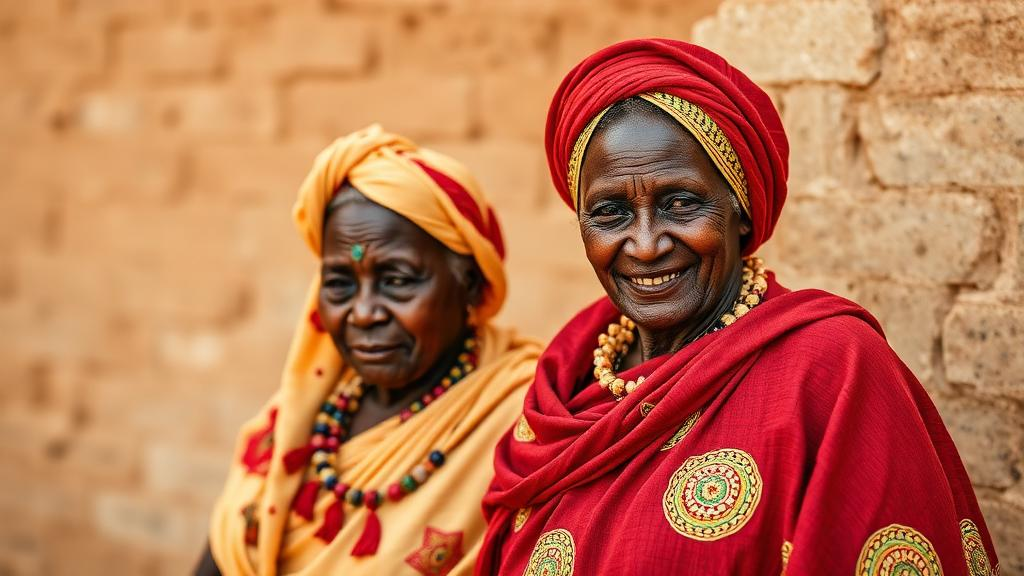
In the sprawling rural landscapes of sub-Saharan Africa, where formal state institutions often reach only thinly into villages and smallholder communities, an unexpected engine of development has been operating largely out of sight of policymakers. A new systematic review published in SN Social Sciences argues that women traditional leaders—queen mothers, women chiefs, and other female custodians of customary authority—are playing a critical and underappreciated role in advancing rural development, even as they navigate a political system built by and for men. The study, conducted by Adams Sabogu, Frederick Der Bebelleh, and Francis Nangbeviel Sanyare of the University for Business and Integrated Development Studies in Wa, Ghana, synthesizes a decade of research and finds that these women are not marginal figures but active agents of decision-making, peacebuilding, and economic transformation.
The research team grounded their analysis in decolonial African feminism, a theoretical framework that insists women’s situations must be understood from African perspectives rather than through imported Western gender categories. Scholars such as Oyèrónkẹ́ Oyěwùmí́, whose 1997 work questioned whether Western gender discourses make any African sense at all, and Sylvia Tamale, a leading voice on decolonization and African feminism, have long argued that African societies historically organized power along lines that colonialism deliberately restructured. The review draws on this intellectual tradition to examine how the interplay of power and gender shapes women’s economic empowerment within traditional governance structures that survived colonial indirect rule and, in many countries, have experienced a striking resurgence since the 1990s.
Methodologically, the study followed the rigorous protocols of a systematic review. The authors searched five electronic databases—SAGE Journals, Academic Search Complete, Wiley InterScience, Taylor & Francis, and Google Scholar—for studies published on English-speaking sub-Saharan African countries between 1 January 2012 and 26 November 2022. They then performed a qualitative thematic synthesis, a technique rooted in the thematic analysis approach developed by Virginia Braun and Victoria Clarke, in which findings from multiple qualitative studies are examined, translated, and consolidated into common themes that cut across different national and cultural contexts. Because the review relied entirely on previously published research, no new primary data was generated and no ethical approval for live human participants was required.
What emerged from the synthesis is a portrait of women traditional leaders as multifunctional development actors. The reviewed studies show that these women participate in community decision-making, engage in conflict management and peacebuilding, initiate and control community-driven development projects, and manage community resources. In Ghana, for example, research on Akan queen mothers has documented their involvement in local governance and community planning, while studies of the Wuriche institution among the Gonja people and of female chiefs in the Dagbon traditional area reveal women exercising real authority within patriarchal social organizations. Similar findings appear in work on the Valoyi tribe in South Africa and on women’s roles in endogenous governance systems in rural Malawi.
Conflict resolution emerges as one of the most distinctive contributions these leaders make. A study of queen mothers in Ghana’s Ga traditional areas documented their role in engendering peacebuilding through traditional conflict resolution mechanisms, and research from South Sudan has highlighted Honyomiji, a local women’s peacebuilding institution. Post-conflict settings add further weight to this evidence: scholarship on women chiefs in post-war Sierra Leone shows how female traditional authority contributed to reconstruction after civil war. These findings align with international guidance from the United Nations Development Programme on what gender-responsive peacebuilding looks like in practice, suggesting that customary women’s institutions may offer locally legitimate channels for the kind of inclusive peace work that external interventions often struggle to achieve.
The review also found that women traditional leaders are central to promoting gender equality, culture, education, health, social welfare, and rural economic growth. In Ghana’s Manya Klo area, queen mothers have been documented as key caregivers for orphaned children, transforming traditional women’s political organization in response to the HIV epidemic and widespread orphanhood, and partnering with non-governmental organizations to sustain foster care under customary obligations. In Malawi, research on chiefs and child marriage reform has shown how traditional leaders can be pivotal in reciting and enforcing bylaws that protect girls, while comparative political science work has demonstrated why the gender of traditional authorities matters for women’s rights advocacy, applying intersectional analysis to cases in Malawi and beyond.
Yet the picture is not one of unimpeded progress. The authors emphasize that inherent inequities in power relations constrain women’s agency throughout the traditional political system. Women traditional leaders appear to have limited organizational space within male-dominated structures, and the reviewed literature documents persistent obstacles: gendered taboos that impede African women’s leadership, customary land ownership regimes that disadvantage women, property rights violations experienced by widows, and cultural norms that shape disputes over women’s property relations. Studies from north-western Ghana describing land as a kind of deity in Dagaaba wealth creation, and evidence of gender disparity in customary land ownership in the Wa Municipality, illustrate how control over resources remains deeply gendered even where women hold formal customary titles.
The theoretical stakes of the review lie in how it reframes women’s agency. Rather than measuring African women against liberal feminist benchmarks of individual autonomy, the authors adopt an intersectional lens, building on Kimberlé Crenshaw’s foundational critique of antidiscrimination doctrine and Patricia Hill Collins’s work on intersectionality as critical social theory. This allows the review to capture how women traditional leaders exercise power through relational networks, kinship obligations, and spiritual legitimacy—forms of agency that Western frameworks often fail to register. Work on performing power in mystical contexts in rural northern Ghana, and on gender performativity in the same region, underscores that women’s authority in these settings is enacted through culturally specific idioms that demand African-grounded theorization.
The broader context makes these findings timely. Political science research on the constitutional integration and resurgence of traditional political institutions in sub-Saharan Africa shows that chieftaincy and related structures have not withered under modernization but have instead been formally incorporated into post-colonial states, as in Ghana’s Chieftaincy Act of 2008. If traditional authority is a durable and legitimate layer of governance for millions of rural Africans, then the systematic exclusion or marginalization of women within it carries real development costs. Conversely, the review suggests a significant opportunity: the networks of social relations that women traditional leaders command could be deliberately leveraged to create opportunities for women, channeling development resources through institutions that communities already trust.
The authors’ conclusions are measured but pointed. Women’s traditional leadership, they find, remains a viable vehicle for rural development despite immutable systemic constraints, and its potential can best be harnessed by viewing women’s situation from an African perspective while advocating for gender inclusion, collaboration, and accommodation—ensuring that both women and men contribute according to their capacities toward women’s empowerment. For development practitioners, the message is that queen mothers and women chiefs should be treated not as relics of a pre-colonial past or as symbolic figureheads, but as operational partners in health, education, peacebuilding, and economic growth. For scholars, the study demonstrates that a decolonial African feminist framework can generate concrete, policy-relevant insights from a body of literature that has long been scattered across disciplines. As rural Africa confronts the demands of the twenty-first century, the review suggests that some of the most effective agents of change may already be in place—wearing traditional dress, holding customary titles, and quietly rebuilding their communities from within.
Subject of Research: The roles and agency of women traditional leaders in rural development in sub-Saharan Africa
Article Title: Women and the advancement of rural development: a systematic review of women traditional leaders’ roles and agency in sub-Saharan Africa
Article References: Women and the advancement of rural development: a systematic review of women traditional leaders’ roles and agency in sub-Saharan Africa. (n.d.). https://doi.org/10.1007/s43545-026-01850-6
Image Credits: AI Generated
DOI: 10.1007/s43545-026-01850-6
Keywords: women traditional leaders, queen mothers, women chiefs, rural development, sub-Saharan Africa, decolonial African feminism, traditional governance, gender equality, peacebuilding, community development, systematic review, women's agency
Cite Scienmag News
Courtney Benton. (October 15, 2026). Queen Mothers and Women Chiefs Are Quietly Powering Rural Development Across Sub-Saharan Africa. Scienmag. https://scienmag.com/queen-mothers-and-women-chiefs-are-quietly-powering-rural-development-across-sub-saharan-africa/
Courtney Benton. "Queen Mothers and Women Chiefs Are Quietly Powering Rural Development Across Sub-Saharan Africa." Scienmag, 15 October 2026, https://scienmag.com/queen-mothers-and-women-chiefs-are-quietly-powering-rural-development-across-sub-saharan-africa/. Accessed 15 October 2026.
Courtney Benton. "Queen Mothers and Women Chiefs Are Quietly Powering Rural Development Across Sub-Saharan Africa." Scienmag. October 15, 2026. https://scienmag.com/queen-mothers-and-women-chiefs-are-quietly-powering-rural-development-across-sub-saharan-africa/


