


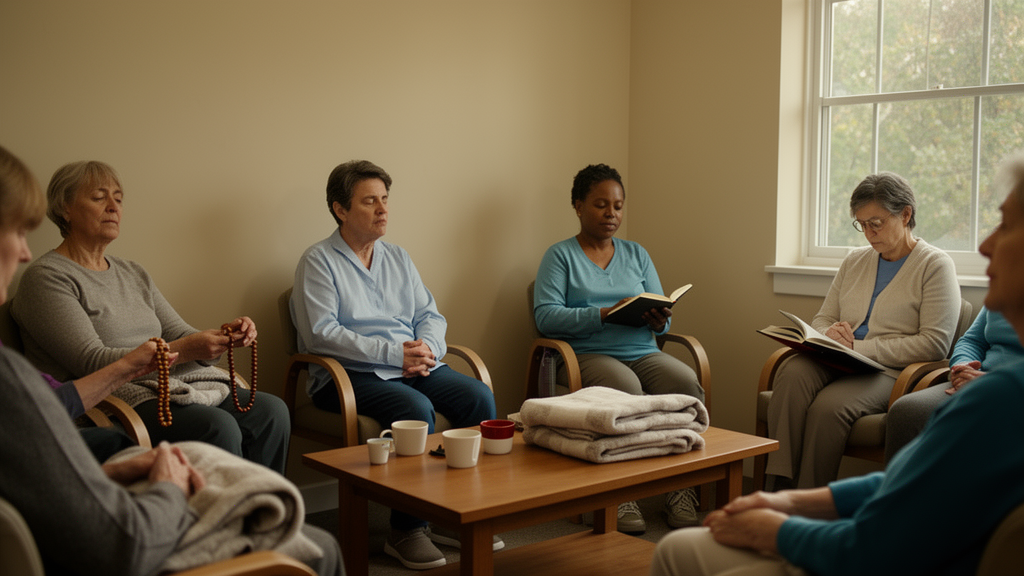
A qualitative study of 13 people living with cancer found that the illness was experienced as a multidimensional process shaped by changing perceptions and interconnected physical, psychological and social difficulties. Spirituality served as a personal coping resource for some participants, who used it to give meaning to the cancer experience, maintain hope and find strength to endure. The findings also showed an important qualification: drawing on spiritual resources did not always produce a strong sense of being able to cope.
Researchers conducted the study with a phenomenological design to examine how individuals living with cancer understood the biopsychosocial dimensions of their experience and the meanings they attributed to spirituality and spiritual coping. The participants were recruited from a public hospital through criterion sampling, described in the study as a purposive sampling strategy. Data were gathered through individual, face-to-face, semi-structured in-depth interviews.
The researchers used Colaizzi’s seven-step phenomenological analysis method, and the sample size was determined through data saturation. Analysis produced three main themes: perceptions of cancer and reactions to the illness process, biopsychosocial effects of the disease, and coping with cancer and spiritual resilience. Nine subthemes further organized participants’ accounts: initial perception of cancer, changing perception over time, starting treatment, recurrence experience, physical effects, psychological effects, social effects, spiritual coping methods, and perception of coping.
Within this account, spiritual coping emerged as one way some participants responded to living with cancer. Their accounts associated spirituality with meaning-making, hope and endurance, but the study did not present it as a uniform experience shared by all 13 participants. Because the investigation was qualitative and centered on interviews with 13 patients, it describes the experiences reported within this sample rather than measuring how common spiritual coping is or establishing effects on clinical outcomes.
The authors concluded that the changing biopsychosocial needs and personal coping resources of people living with cancer point toward an individualized and holistic approach to supporting them.
Subject of Research: Qualitative study of biopsychosocial cancer experiences and spiritual coping among 13 patients
Article Title: Biopsychosocial dimensions of cancer and spiritual coping strategies: a phenomenological study of patient experiences
Article References: Aydın, E., Uzun, S., Karakaş, S., Günay, D., & Büyükçerçi, N. N. (2026). Biopsychosocial dimensions of cancer and spiritual coping strategies: a phenomenological study of patient experiences. Supportive Care in Cancer, 34(11), Article 1126. https://doi.org/10.1007/s00520-026-11391-6
Image Credits: AI Generated
DOI: 10.1007/s00520-026-11391-6
Keywords: cancer, spiritual coping, patient experience, phenomenology, qualitative research, biopsychosocial effects, hope, meaning-making, supportive care, Biopsychosocial, dimensions, spiritual
Cite Scienmag News
Nathaniel Bowman. (October 20, 2026). Qualitative study maps uneven spiritual coping among cancer patients. Scienmag. https://scienmag.com/qualitative-study-maps-uneven-spiritual-coping-among-cancer-patients/
Nathaniel Bowman. "Qualitative study maps uneven spiritual coping among cancer patients." Scienmag, 20 October 2026, https://scienmag.com/qualitative-study-maps-uneven-spiritual-coping-among-cancer-patients/. Accessed 20 October 2026.
Nathaniel Bowman. "Qualitative study maps uneven spiritual coping among cancer patients." Scienmag. October 20, 2026. https://scienmag.com/qualitative-study-maps-uneven-spiritual-coping-among-cancer-patients/


