


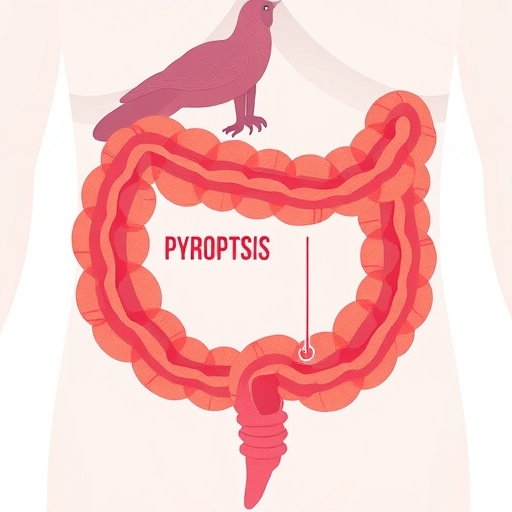
Ulcerative colitis (UC) is a chronic inflammatory bowel disease (IBD) marked by inflammation of the colonic mucosa and is a major concern for millions globally. Recent studies have unveiled the role of pyroptosis — a form of programmed cell death characterized by inflammation — as a pivotal player in the pathogenesis of ulcerative colitis. Researchers, including Cruz, Shah, and Wohlgemuth in their groundbreaking study published in the Journal of Biomedical Science, have meticulously navigated the intricate biochemical pathways of pyroptosis, identifying promising biomarkers and therapeutic targets for future interventions.
One of the significant findings of this pioneering research is the relationship between pyroptosis and the immune response in ulcerative colitis. The researchers discovered that pyroptosis contributes to the progression of the disease by releasing inflammatory cytokines, which exacerbate the intestinal inflammation. This phenomenon highlights a feedback loop where inflammation leads to further pyroptosis, aggravating the condition and increasing tissue damage. By understanding this relationship, clinicians may be able to modulate pyroptosis to better manage UC symptoms and improve patient outcomes.
In their investigation, the researchers employed advanced techniques to observe the activation of gasdermin proteins, key mediators of pyroptosis. Gasdermin D, in particular, was found to be significantly upregulated in ulcerative colitis tissues. This finding is critical, as gasdermin D facilitates the formation of pores in the cell membrane, ultimately leading to cell lysis and the release of pro-inflammatory factors. The identification of gasdermin D as a central player opens avenues for targeting this pathway in therapeutic applications.
Moreover, the research identifies specific biomarkers associated with pyroptosis that can aid in the diagnosis and monitoring of ulcerative colitis. Elevated levels of interleukin-18 (IL-18) were noted in patients suffering from active UC, suggesting its potential as a serological marker for disease severity. Such biomarkers could lead to timely interventions and personalized treatment strategies, significantly enhancing the management of ulcerative colitis.
The study also emphasized the therapeutic potential of inhibiting pyroptosis as a novel approach in the treatment of ulcerative colitis. By employing inhibitors targeting the caspase-1 pathway — a crucial mediator in the pyroptotic process — the researchers noted a reduction in inflammation and tissue damage in preclinical models. This finding underscores the potential for new drug development focused on modulating pyroptosis, possibly revolutionizing standard treatment protocols.
In addition, the researchers explored the potential of dietary interventions in modulating the pyroptotic response in patients with ulcerative colitis. Certain nutrients and bioactive compounds have been shown to influence inflammation and may impact the pyroptotic pathways. This aspect of their research opens the door for the development of dietary guidelines aimed at minimizing the inflammatory responses in UC.
The implications of the findings are vast, not only for current UC management but also for future therapeutic strategies aimed at other inflammatory diseases sharing similar pathophysiological mechanisms. It raises fundamental questions about how targeting programmed cell death could serve as a universal strategy in treating chronic inflammatory conditions more effectively.
Encouragingly, this research paves the way for clinical trials assessing the efficacy of pyroptosis inhibitors in ulcerative colitis patients. There is a pragmatic need for innovative approaches that transcend conventional anti-inflammatory therapies, which often come with significant side effects. Targeting specific pathways linked to pyroptosis may allow for treatments that are not only more effective but also less burdensome for patients.
As we continue to decipher the complexities of ulcerative colitis and inflammatory diseases at large, it is evident that understanding the mechanisms governing programmed cell death is critical. Pyroptosis emerges as a double-edged sword — serving both as a catalyst for inflammation and a potential therapeutic target. Further research is necessary to delineate the intricate molecular mechanisms involved and their implications for clinical practice.
The study conducted by Cruz and colleagues represents a significant leap forward in the field of biomedical science, integrating molecular biology with clinical application. It showcases the importance of interdisciplinary research in the quest for solutions to longstanding medical challenges. Uncovering the involvement of pyroptosis in ulcerative colitis holds great promise for patients suffering from this debilitating condition.
As findings continue to unfold, the hope is that we can harness the knowledge gained from pyroptosis research to develop more targeted, effective treatments for ulcerative colitis, ultimately improving the quality of life for those affected. The journey from research to application in this regard is both promising and exhilarating.
In conclusion, the remarkable work of Cruz et al. not only illuminates the pathophysiology of ulcerative colitis but also provides a framework for future research aimed at therapeutic innovation. Pyroptosis stands at the intersection of inflammation and cellular signaling, and its exploration may lead to significant breakthroughs in patient care and disease management.
In light of these discoveries, the scientific community eagerly anticipates further explorations into the mechanisms and therapeutic potential of pyroptosis, aiming to transform how we approach and treat ulcerative colitis and related inflammatory diseases.
Cruz, H., Shah, P., Wohlgemuth, N. et al. Pyroptosis in ulcerative colitis: biomarkers and therapeutic targets. J Biomed Sci 32, 106 (2025). https://doi.org/10.1186/s12929-025-01206-x
Cite Scienmag News
Ophelia Keating. (December 10, 2025). Pyroptosis in Ulcerative Colitis: Key Biomarkers and Therapies. Scienmag. https://scienmag.com/pyroptosis-in-ulcerative-colitis-key-biomarkers-and-therapies/
Ophelia Keating. "Pyroptosis in Ulcerative Colitis: Key Biomarkers and Therapies." Scienmag, 10 December 2025, https://scienmag.com/pyroptosis-in-ulcerative-colitis-key-biomarkers-and-therapies/. Accessed 5 September 2026.
Ophelia Keating. "Pyroptosis in Ulcerative Colitis: Key Biomarkers and Therapies." Scienmag. December 10, 2025. https://scienmag.com/pyroptosis-in-ulcerative-colitis-key-biomarkers-and-therapies/


