

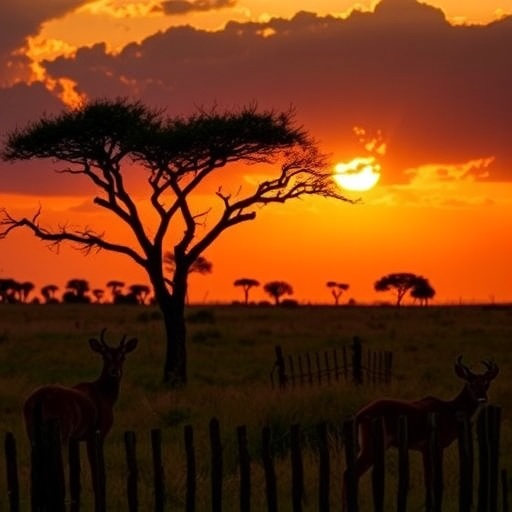
Researchers have recently unveiled groundbreaking insights into the intricate relationship between ecosystem diversity and the natural phenomenon of pyrodiversity in southern African savannas. A study conducted by an international team of scientists, including experts Fernández-García, Strydom, and Thompson, among others, emphasizes the crucial role that fire plays not only in shaping these ecosystems but also in catalyzing their diversity. This research sheds light on how fire, often feared for its destructive capabilities, can also act as a powerful force for ecological balance and richness.
Southern African savannas, characterized by their mixed landscapes of grasses, trees, and shrubs, have evolved in the presence of fire over millennia. The researchers argue that this coexistence has led to a unique tapestry of biodiversity rarely seen in other ecosystems worldwide. The study highlights that fire is not merely a catastrophic event; instead, it is a vital ecological process that contributes significantly to vegetation dynamics, nutrient cycling, and species interactions within these landscapes.
The research team meticulously investigated various savanna regions, collecting extensive field data on vegetation composition, fire patterns, and ecological interactions. Their findings reveal that areas experiencing frequent, low-intensity fires support a greater variety of plant and animal species compared to regions where fire is suppressed or absent. This critical observation draws attention to the necessity of integrating fire management into conservation strategies to preserve biodiversity in these vulnerable habitats.
Pyrodiversity, the diversity of fire regimes in a given landscape, emerged as a central concept in the study. The authors argue that varying fire frequencies, intensities, and seasons create a mosaic of habitats that allow different species to thrive. For instance, some plants are adapted to benefit from the nutrient-rich ash left after a fire, while certain animals rely on the regrowth of grasses and foliage to feed and reproduce. This interconnectedness underscores the importance of recognizing fire as an ecological asset rather than a threat.
Moreover, the researchers emphasize that anthropogenic influences, such as land-use changes and the suppression of natural fire regimes, pose significant risks to these savannas. The study warns that without proper fire management practices, the delicate balance that sustains ecosystem diversity could be severely disrupted. The team advocates for the incorporation of traditional fire management practices, which have been used by indigenous communities for centuries, into contemporary ecological conservation efforts.
One of the striking findings of the research is the recognition that increased pyrodiversity can enhance resilience against climate change. As global temperatures rise and weather patterns fluctuate, ecosystems that experience a variety of fire regimes are better equipped to adapt to environmental stressors. This adaptability is crucial for ensuring the survival of various species, particularly those that may struggle in a rapidly changing climate.
In addition to biodiversity benefits, the study discusses the potential socioeconomic advantages of embracing pyrodiversity. Healthy savanna ecosystems provide invaluable services, including carbon sequestration, water regulation, and soil fertility. By fostering diverse habitats through managed fire regimes, communities can enhance their local economies and support sustainable livelihoods. This multifaceted approach to ecosystem management can create a win-win scenario for both biodiversity and human well-being.
The research team’s comprehensive analysis extends beyond ecological perspectives to engage with larger conversations regarding land management and conservation policy. Their findings underscore the urgency of shifting the narrative around fire, from one of fear and repression to one of understanding and integration. Policymakers and conservationists are encouraged to recognize fire’s role in sustaining ecosystem health and to develop strategies that leverage this natural process for conservation aims.
Despite its vital contributions, the concept of integrating fire management into conservation efforts is met with challenges, particularly in regions where fire is still viewed solely as a risk. Education and awareness-raising initiatives aimed at local communities, stakeholders, and decision-makers can foster a deeper understanding of fire’s ecological role and the importance of maintaining pyrodiversity. Such initiatives can pave the way for collaborative approaches to land management and ecosystem restoration.
As the study gains attention, it illuminates a critical pathway toward enhancing ecosystem resilience and fostering a sustainable coexistence with nature. The researchers encourage further investigations into the characteristics and implications of pyrodiversity across different ecosystems globally. By expanding this research agenda, scientists can contribute to a more nuanced understanding of fire’s role in supporting biodiversity, particularly in the face of widespread environmental change.
In conclusion, the groundbreaking findings of Fernández-García and colleagues challenge conventional perceptions of fire as purely destructive. Their research illuminates the vital role of pyrodiversity in promoting and sustaining ecosystem diversity within southern African savannas. As conversations around climate wisdom and sustainable land practices evolve, recognizing fire as a friend rather than a foe could hold the key to vibrant, resilient ecosystems that thrive in the face of adversity.
This innovative research represents a pivotal moment for ecology, conservation, and climate discussions. It is a clarion call for scientists, policymakers, and communities to re-evaluate their approaches to fire management, ensuring that this powerful natural process is embraced and utilized as a cornerstone of biodiversity preservation and ecological integrity in savannah ecosystems and beyond.
With the global spotlight shining brightly on climate-related challenges, this research could inspire practical, nature-based solutions that benefit not only wildlife and their habitats but also humanity, ultimately creating a more sustainable future for all.
Subject of Research: The relationship between ecosystem diversity and pyrodiversity in southern African savannas.
Article Title: Ecosystem diversity in southern African savannas is fueled by pyrodiversity.
Article References:
Fernández-García, V., Strydom, T., Thompson, D.I. et al. Ecosystem diversity in southern African savannas is fueled by pyrodiversity.
Commun Earth Environ (2026). https://doi.org/10.1038/s43247-026-03260-1
Image Credits: AI Generated
DOI:
Keywords: Biodiversity, Pyrodiversity, Southern African Savannas, Ecosystem Management, Fire Regimes


