Thursday, October 29, 2026
Science
No Result
View All Result
  • Login
  • HOME
  • SCIENCE NEWS
  • CONTACT US
  • HOME
  • SCIENCE NEWS
  • CONTACT US
No Result
View All Result
Scienmag
No Result
View All Result
Home Science News Biology

Pygmy blue whales sing less by day while feeding, study finds

October 29, 2026
in Biology
Margaret Porter
By Margaret Porter Scienmag Editorial Profile - Biodiversity Science
Reading Time: 2 mins read
0
Pygmy blue whales sing less by day while feeding, study finds

Pygmy blue whales sing less by day while feeding, study finds

65
SHARES
587
VIEWS
Share on FacebookShare on Twitter
ADVERTISEMENT

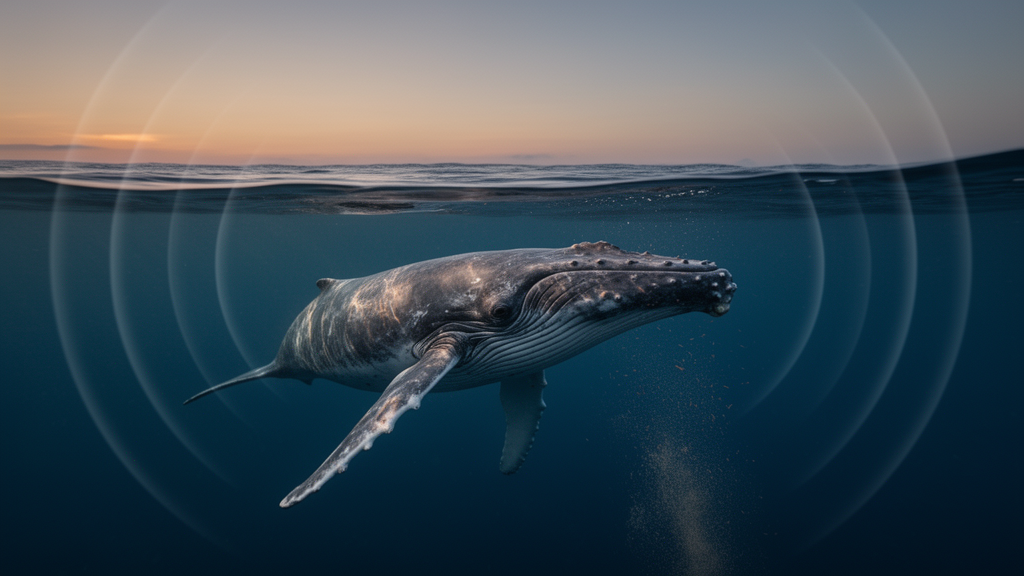
Endangered pygmy blue whales off Western Australia appear to sing less when they are feeding, and the pattern is now being put to work. A new Curtin University-led study, published in Royal Society Open Science, found that the whales generally fed during daylight hours, leaving more time available for singing at night. During the animals’ feeding season in Perth Canyon, more song was recorded at night than during the day for periods of up to three months.

The research examined pygmy blue whale singing and feeding behaviour in offshore waters from the Perth Canyon, along Western Australia’s Midwest coast and further north towards Ningaloo and the Northwest Shelf. The observation that song production rose after dark across these areas suggests that listening for differences in whale song between day and night could provide a way to monitor feeding activity across large stretches of ocean without needing to observe the whales directly.

Lead author Andrew Davenport, a PhD candidate at Curtin’s Centre for Marine Science and Technology, drew a simple comparison to explain the pattern. “Just as we can’t talk while we’re eating, pygmy blue whales appear to have less time available to sing while they’re feeding,” he said. “By listening to when they sing more at night than during the day, we can infer when whales in an area are likely to be feeding.”

For an endangered population that ranges over vast and often remote waters, that inference carries practical weight. Listening to the songs of pygmy blue whales could help researchers identify when the animals are feeding off Western Australia’s coast, improving scientists’ ability to monitor their behaviour and inform conservation efforts. Acoustic monitoring of this kind relies on the trade-off the study documented: hours spent feeding on krill are hours not spent singing, so the daily balance between the two activities leaves a detectable signature in passive acoustic records.

The study was an observational one, and its findings are specific to the pygmy blue whales studied in the waters off Western Australia during their feeding season. The researchers note that the relationship between feeding and singing offers a valuable new way to understand the behaviour of this endangered population. The published paper, titled “Pygmy blue whale feeding drives greater nocturnal than diurnal song production”, appears in Royal Society Open Science, with the article dated 28 October 2026.

Subject of Research: The relationship between feeding timing and song production in pygmy blue whales off Western Australia

Article Title: Don't sing with your mouth full – whale song could reveal when whales are feeding

Article References: Don't sing with your mouth full – whale song could reveal when whales are feeding. Original publication (Bibliographic details unavailable.)

Image Credits: AI Generated

DOI: Not provided

Keywords: pygmy blue whale, whale song, feeding behaviour, Perth Canyon, Western Australia, acoustic monitoring, Royal Society Open Science, Curtin University, conservation, endangered species, nocturnal song, marine science

Cite Scienmag News

Margaret Porter. (October 29, 2026). Pygmy blue whales sing less by day while feeding, study finds. Scienmag. https://scienmag.com/pygmy-blue-whales-sing-less-by-day-while-feeding-study-finds/

Margaret Porter. "Pygmy blue whales sing less by day while feeding, study finds." Scienmag, 29 October 2026, https://scienmag.com/pygmy-blue-whales-sing-less-by-day-while-feeding-study-finds/. Accessed 29 October 2026.

Margaret Porter. "Pygmy blue whales sing less by day while feeding, study finds." Scienmag. October 29, 2026. https://scienmag.com/pygmy-blue-whales-sing-less-by-day-while-feeding-study-finds/


Tags: acoustic monitoringconservationconservation strategies for endangered whalesCurtin Universityendangered speciesfeeding behaviourimpact of feeding on whale communicationmarine sciencenocturnal feeding habits of blue whalesnocturnal songnocturnal whale singing patternsnon-invasive whale population assessmentoffshore whale monitoring techniquesPerth CanyonPerth Canyon whale activitypygmy blue whalePygmy blue whale feeding behaviorRoyal Society Open Scienceuse of acoustic monitoring for whale behaviorWestern AustraliaWestern Australia marine life studywhale songwhale song analysis in marine researchwhale song variation between day and night
Share26Tweet16
Previous Post

South Indian Ocean Warmth Helped Drive the Record-Low Arctic Sea Ice of 2025

Next Post

Japan bans heritable genome editing with criminal penalties

Related Posts

Gharial genomes reveal ancient and recent population decline
Biotechnology

Gharial genomes reveal ancient and recent population decline

October 29, 2026
Body Fat May Set the Stage for Lymphedema, Researchers Propose
Biology

Body Fat May Set the Stage for Lymphedema, Researchers Propose

October 29, 2026
Lab-made octaploid rock cress shows promise for locking heavy metals in soil
Biology

Lab-made octaploid rock cress shows promise for locking heavy metals in soil

October 29, 2026
Whole milk replacer boosts calf growth, but pea starter falls short
Biology

Whole milk replacer boosts calf growth, but pea starter falls short

October 29, 2026
From Jawbones to Lung Bullae: Biomechanics Studies Map How Tissues Respond to Force
Biotechnology

From Jawbones to Lung Bullae: Biomechanics Studies Map How Tissues Respond to Force

October 29, 2026
Thailand’s freshwater copepods are far more diverse than records show
Biology

Thailand’s freshwater copepods are far more diverse than records show

October 29, 2026
Next Post
Japan bans heritable genome editing with criminal penalties

Japan bans heritable genome editing with criminal penalties

  • Mothers who receive childcare support from maternal grandparents show more optimized

    Mothers who receive childcare support from maternal grandparents show more parental warmth, finds NTU Singapore study

    27656 shares
    Share 11059 Tweet 6912
  • University of Seville Breaks 120-Year-Old Mystery, Revises a Key Einstein Concept

    1061 shares
    Share 424 Tweet 265
  • Bee body mass, pathogens and local climate influence heat tolerance

    682 shares
    Share 273 Tweet 171
  • Researchers record first-ever images and data of a shark experiencing a boat strike

    546 shares
    Share 218 Tweet 137
  • Groundbreaking Clinical Trial Reveals Lubiprostone Enhances Kidney Function

    531 shares
    Share 212 Tweet 133
Science

Embark on a thrilling journey of discovery with Scienmag.com—your ultimate source for cutting-edge breakthroughs. Immerse yourself in a world where curiosity knows no limits and tomorrow’s possibilities become today’s reality!

RECENT NEWS

  • Nutritional Self-Care and Income Linked to Better Diets in Iranian Chronic Disease Patients
  • Model Study Finds Combined Vascular Screening Most Cost-Effective for Cardiovascular Risk in Chinese Adults
  • Spanish version of emergency teamwork scale validated across four rater perspectives
  • Shared Decision-Making Program Shows Promise for Psoriasis Patients in Taiwan Survey

Categories

  • Agriculture
  • Anthropology
  • Archaeology
  • Athmospheric
  • Biology
  • Biotechnology
  • Blog
  • Bussines
  • Cancer
  • Chemistry
  • Climate
  • Earth Science
  • Editorial Policy
  • Marine
  • Mathematics
  • Medicine
  • Pediatry
  • Policy
  • Psychology & Psychiatry
  • Science Education
  • Science News
  • Social Science
  • Space
  • Technology and Engineering

Subscribe to Blog via Email

Enter your email address to subscribe to this blog and receive notifications of new posts by email.

Join 5,150 other subscribers

© 2025 Scienmag - Science Magazine

Welcome Back!

Login to your account below

Forgotten Password?

Retrieve your password

Please enter your username or email address to reset your password.

Log In
No Result
View All Result
  • HOME
  • SCIENCE NEWS
  • CONTACT US

© 2025 Scienmag - Science Magazine

Discover more from Science

Subscribe now to keep reading and get access to the full archive.

Continue reading