

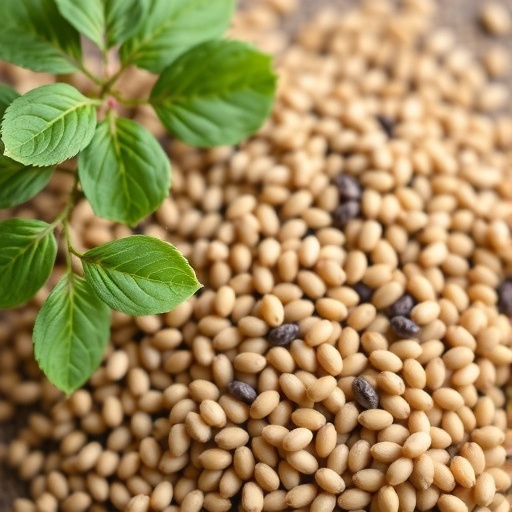
In a groundbreaking study recently published in Food Science and Biotechnology, researchers have unveiled an innovative method for extracting and purifying flavonoids from buckwheat husks using a deep eutectic solvent (DES). This advancement not only unlocks the potential of agricultural by-products but also paves the way for more sustainable and efficient extraction techniques of bioactive compounds with potent antioxidant properties. The implications of this research resonate beyond the food industry, touching realms of nutrition, pharmaceuticals, and environmental science.
Buckwheat, a crop praised for its nutritional benefits, produces husks often discarded as waste despite their rich composition of flavonoids—plant metabolites celebrated for their antioxidant, anti-inflammatory, and cardioprotective effects. Previous attempts to harness these flavonoids were frequently hampered by conventional solvents, which are often toxic, volatile, and environmentally unfriendly, thus limiting the extensive application of these compounds. The introduction of deep eutectic solvents offers a cleaner, greener alternative, emblematic of the ongoing shift toward more sustainable scientific practices.
Deep eutectic solvents, a class of solvents formed by mixing two or more components that exhibit a melting point significantly lower than any of the individual components, have emerged in recent years as a versatile tool for extracting sensitive bioactive compounds. The distinctive characteristics of DES—such as low volatility, biodegradability, and tunable physicochemical properties—make them ideal candidates for replacing traditional solvents in the extraction process. Meanwhile, the researchers meticulously designed the DES tailored specifically to the matrix of buckwheat husk, tailoring the polarity and hydrogen-bonding capacity to maximize flavonoid solubility.
The extraction process began by immersing the buckwheat husk material into the DES system under controlled temperature and agitation parameters. Through optimizing factors like solvent composition, extraction time, and temperature, the team achieved extraction efficiency that surpassed conventional solvent-based methods. Subsequent purification protocols involved chromatographic techniques to isolate individual flavonoid compounds with high purity, further enhancing their bioactivity profiles. Notably, the method’s scalability suggests promising industrial applications, providing a sustainable route to valorize agricultural residues.
Central to the study was evaluating the antioxidant activities of the purified flavonoids. Using a battery of assays—including DPPH radical scavenging and ABTS assays—the researchers substantiated the potent free radical neutralizing capacity of the extracts. Comparative analyses revealed superior antioxidant performance compared to flavonoids extracted by traditional solvents, highlighting the advantages conferred by the DES extraction and purification system. This discovery is particularly compelling in the context of combating oxidative stress–related diseases.
The antioxidant potency of the flavonoids derived from buckwheat husks extends their potential applicability in functional foods and nutraceuticals. Oxidative stress plays a critical role in the progression of chronic illnesses such as cardiovascular disease, cancer, and neurodegenerative disorders. Thus, natural antioxidants serve as a pivotal defense mechanism. This study’s purified flavonoids, with elevated activity, present an exciting opportunity to develop new formulations that can provide therapeutic and preventive health benefits, leveraging an otherwise underutilized bioresource.
Another noteworthy aspect of this research involves the environmental benefits attributed to the use of deep eutectic solvents. Unlike organic solvents which are often hazardous and generate significant waste, DES are recognized for their eco-friendly profile. Moreover, the valorization of buckwheat husk—a by-product largely considered agricultural waste—into high-value antioxidants reduces environmental burden and promotes circular economy principles. This aligns coherently with global trends pushing toward sustainability and waste reduction in food production and processing sectors.
From a commercial perspective, the economic implications of this breakthrough are substantial. By enabling cost-effective extraction of flavonoids from a low-cost raw material using sustainable solvents, industries can lower production costs while enhancing product purity and safety. The simultaneous achievement of high yield and bioactivity opens new avenues for commercialization of buckwheat husk extracts in diverse fields, including food additives, cosmetics, and pharmaceuticals. This could catalyze the development of innovative products that meet consumer demand for natural and efficacious ingredients.
The methodology’s adaptability further enhances its significance. Given that deep eutectic solvents can be engineered for different chemical environments, this extraction technique holds promise for a wide variety of biomass substrates beyond buckwheat husks. Potential future applications could include extracting flavonoids from other plant-based wastes, thus facilitating broader improvements in bioactive compound recovery and waste valorization. Researchers may explore customizing DES formulations to target specific compounds, an approach that could revolutionize natural product extraction.
Moreover, in the quest for precision and efficiency, the researchers employed advanced analytical instrumentation such as high-performance liquid chromatography (HPLC) coupled with mass spectrometry to characterize the flavonoid content. These tools not only confirmed the identity and purity of the extracted flavonoids but also allowed detailed profiling of their chemical structures. Such thorough characterization is essential for correlating structural attributes with bioactivity, enabling targeted development of flavonoid-based functional materials or supplements.
Furthermore, the study contributes to a growing body of literature advancing our understanding of how solvent systems influence the bioavailability and efficacy of natural compounds. The use of DES may alter the physicochemical environment surrounding flavonoids, potentially affecting their interaction with biological membranes and antioxidant mechanisms. Future investigations into these dynamics could unveil additional benefits or mechanisms of action, augmenting the therapeutic value of flavonoid extracts and guiding the design of optimized delivery systems.
This research also dovetails with increasing consumer awareness regarding clean-label products and sustainability. As lifestyle shifts prioritize natural, minimally processed ingredients free of harmful chemicals, such extraction methods resonate with market trends. The flip side is that regulatory frameworks will need to evolve in tandem, incorporating safety assessments specific to deep eutectic solvents and their residual presence in final products. Industry stakeholders must balance innovation with compliance to fully harness the potential of these novel extraction technologies.
Acknowledging limitations, the researchers also highlight areas for further optimization and study. Though laboratory-scale results are promising, scaling up to industrial volumes requires addressing challenges related to solvent recovery, processing time, and cost-efficiency. Additionally, comprehensive toxicological evaluation of DES-extracted flavonoids must be conducted to confirm long-term safety. Collaborative multidisciplinary efforts integrating chemistry, engineering, toxicology, and regulatory science will be key to overcoming these hurdles.
In conclusion, the innovative technique of utilizing deep eutectic solvents to extract and purify flavonoids from buckwheat husks marks a significant stride in natural product chemistry and green extraction technologies. Not only does it enhance the availability of potent antioxidant compounds, but it also exemplifies sustainable resource use and environmental stewardship. As industries increasingly prioritize eco-conscious innovation, such breakthroughs may herald a new era where agricultural by-products are reinvented as valuable bioactive ingredient reservoirs, promoting health and sustainability in tandem.
The scientific community eagerly anticipates further developments building on this research, including large-scale feasibility studies, expanded bioactivity assays, and integration into commercial supply chains. Given the global relevance of plant-derived antioxidants and the universal challenge of agricultural waste management, this work offers a visionary roadmap. It underscores how strategic application of novel solvent systems can redefine extraction paradigms, resulting in high-value, environmentally sound products designed for the future of functional foods and beyond.
Ultimately, the bridge between tradition and innovation is constructed here—harvesting centuries-old knowledge of buckwheat’s beneficial properties through cutting-edge chemistry that respects both human health and the planet. The intersection of deep eutectic solvent technology and agricultural waste valorization represents a fertile ground for discovery, one that promises to reshape how we approach natural resources, health supplements, and green chemistry in the years to come.
Subject of Research: Extraction and purification of flavonoids from buckwheat husk using deep eutectic solvents and evaluation of their antioxidant activities.
Article Title: Purification of flavonoids from buckwheat husk extracted by deep eutectic solvent, and their antioxidant activities.
Article References:
An, YX., Lei, YW., Su, JY. et al. Purification of flavonoids from buckwheat husk extracted by deep eutectic solvent, and their antioxidant activities. Food Sci Biotechnol (2025). https://doi.org/10.1007/s10068-025-02054-z
Image Credits: AI Generated
DOI: 10.1007/s10068-025-02054-z (Published 05 December 2025)


