


A new life cycle assessment published in Carbon Neutrality demonstrates that retrofitting carbon capture and storage systems into virgin kraft pulp and paper mills can convert these facilities from net emitters into net carbon sinks. The study, led by Edgar Carrejo and colleagues, presents the first comprehensive evaluation of atmospheric carbon dioxide removal in this sector, quantifying how the definition of system boundaries significantly influences the reported efficiency of carbon removal. By modeling a representative mill in the southeastern United States, the researchers found that while narrow accounting methods suggest removal efficiencies as high as 92%, broader cradle-to-grave assessments reduce this figure to as low as 17% under static assumptions.
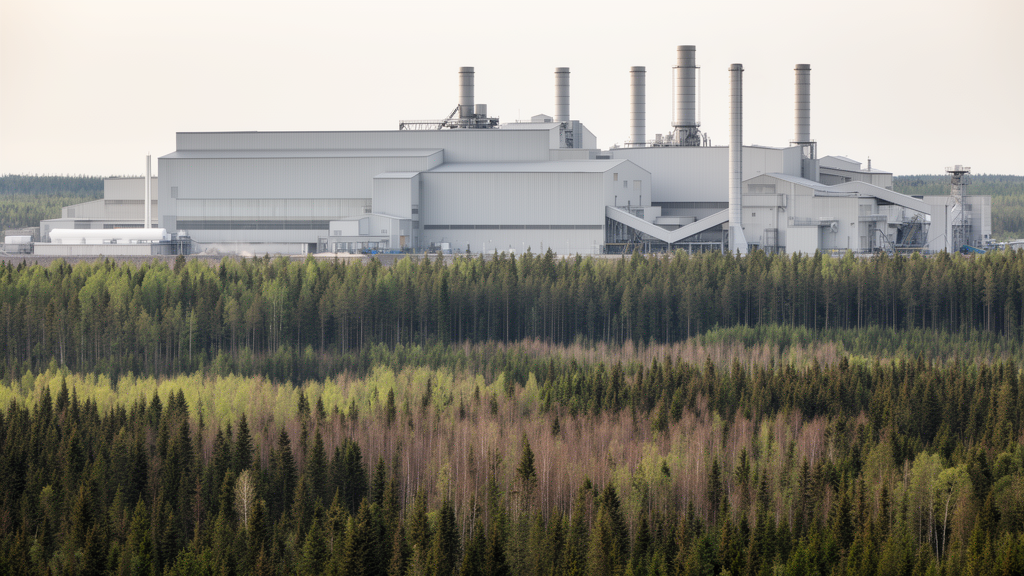
The pulp and paper industry is a major source of concentrated biogenic carbon dioxide emissions, releasing approximately 110 million metric tonnes annually in the United States alone. These emissions originate primarily from recovery boilers, where lignin from wood is combusted to generate steam and power. Because this carbon was originally removed from the atmosphere via photosynthesis, capturing and permanently storing it through geological sequestration constitutes a form of carbon dioxide removal, known as bioenergy with carbon capture and storage. The study focuses on a 462,000 metric tonne per year unbleached softwood kraft pulp mill, which is 100% energy self-sufficient and produces packaging linerboard.
The researchers evaluated five distinct system configurations to isolate the impact of boundary assumptions on carbon accounting. The baseline system, which excludes carbon capture, operates as a net source of greenhouse gas emissions, contributing an additional 0.129 metric tonnes of fossil-derived CO2 per tonne of biogenic CO2 fixed by biomass. When an amine-based carbon capture and storage unit is integrated, the facility’s carbon balance reverses. Under a narrow gate-to-gate boundary that treats biogenic CO2 as a waste stream and excludes upstream forestry and downstream product decomposition, the net carbon removal efficiency reaches 92%. This high efficiency is achieved because the accounting method only considers the emissions directly associated with the capture and storage process.
However, when the system boundary is expanded to a narrow cradle-to-gate framework, which includes onsite fossil fuel emissions from mill operations and upstream biomass sourcing, the removal efficiency declines to between 55% and 72%, depending on the number of point sources captured. The most comprehensive assessment, a broad cradle-to-grave boundary, accounts for all lifecycle emissions, including the eventual decomposition of paper products at end-of-life. Under this static assumption, where all biogenic carbon in the paper is released back into the atmosphere, the net carbon removal efficiency ranges from 17% to 46%. This discrepancy highlights how the inclusion of upstream forest operations and downstream product fate materially alters the perceived climate benefit of the technology.
To further refine the analysis, the study incorporates a dynamic life cycle assessment that accounts for the timing of carbon fluxes. Conventional static methods assume that biogenic carbon is neutral, but dynamic methods recognize that the delay between emission and resequestration contributes to atmospheric warming. Using a GWPbio metric, the researchers modeled a 25-year rotation period for loblolly pine plantations and a three-year service life for the paper product. This dynamic perspective penalizes the interim warming caused by biogenic CO2 released during harvesting and processing. Consequently, the net carbon removal efficiency drops to 12% for the recovery boiler-only scenario and 42% for the full capture scenario, reflecting the radiative forcing impact of the carbon cycle’s temporal dynamics.
The technical implementation of the carbon capture system relies on monoethanolamine as a solvent to chemically bind CO2 from the flue gas. The captured carbon dioxide is compressed to supercritical conditions and transported via pipeline for injection into deep geological formations. The study assumes a 90% capture rate and a 30-year design lifetime for the facility. Sensitivity analyses indicate that the carbon intensity of the grid electricity used for compression and injection is a primary driver of performance under narrow boundaries. In contrast, under broad boundaries, the efficiency is more sensitive to the capture rate itself, as uncaptured biogenic emissions are fully penalized in the net removal calculation.
The findings underscore a critical tension in carbon market protocols. Current registry standards often allow for narrow gate-to-gate boundaries for retrofit projects, which can make biorefineries appear disproportionately effective compared to dedicated carbon removal facilities that must account for their entire supply chain. The authors argue that while narrow boundaries align with traditional life cycle assessment conventions for process benchmarking, broader boundaries are necessary for accurately assessing the net atmospheric benefit. This distinction is not merely academic; it directly affects the number of carbon credits that can be issued and the cost per tonne of CO2 removed, thereby influencing investment decisions and policy frameworks.
Limitations of the study include the exclusion of soil organic carbon contributions, which represent a significant additional carbon sink in forest systems. The dynamic model also simplifies forest regrowth using a cumulative normal distribution and assumes immediate revegetation after clear-cutting. Furthermore, the analysis assumes that all paper products are eventually incinerated or decomposed, releasing their stored carbon, although some carbon may be retained in long-term storage or burial. Future work should incorporate site-specific emission factors and dynamic soil carbon models to provide a more holistic view of the technology’s mitigation potential.
Despite these limitations, the study confirms that carbon capture from the recovery boiler alone is sufficient to shift a kraft mill from a net emitter to a net carbon sink under a cradle-to-grave boundary. The results suggest that the pulp and paper sector is uniquely positioned to support national and global climate goals due to its high-volume, high-purity biogenic CO2 streams. Achieving high overall removal efficiency will require strategic deployment across multiple point sources and the development of durable product carbon storage strategies. The research provides a rigorous framework for evaluating industrial biomass carbon removal, emphasizing the need for transparent and consistent system boundary definitions in emerging carbon markets.
The implications for climate policy are significant, as the sector’s potential to remove up to 110 million metric tonnes of CO2 annually could contribute to achieving net-zero or net-negative emissions targets. However, the success of such initiatives depends on overcoming challenges related to technological readiness, capital costs, and the establishment of robust monitoring, reporting, and verification systems. The study highlights that the value of capturing and sequestering biogenic CO2 may eventually reshape the economic dynamics of biorefineries, positioning them as carbon removal platforms rather than solely producers of materials. As carbon removal markets mature, the methodological rigor applied in this assessment will be essential for ensuring that claimed removals are real, additional, and durable.
Subject of Research: Life cycle assessment of carbon capture and storage in pulp and paper mills
Article Title: Quantifying atmospheric carbon removal at pulp and paper mills: a life cycle assessment across system boundaries
Article References: Carrejo, E., Ortega, R., Lan, K., Sanchez, D. L., Park, S., & Sagues, W. J. (2026). Quantifying atmospheric carbon removal at pulp and paper mills: a life cycle assessment across system boundaries. Carbon Neutrality, 5(1), Article 3. https://doi.org/10.1007/s43979-025-00156-5
Image Credits: AI Generated
DOI: 10.1007/s43979-025-00156-5
Keywords: carbon capture, pulp and paper, life cycle assessment, carbon removal, biogenic CO2, system boundaries, climate mitigation, bioenergy, geological storage, sustainability, Quantifying, atmospheric
Cite Scienmag News
Sloane Callahan. (November 8, 2026). Pulp Mill Carbon Removal Efficiency Drops With Broader Boundaries. Scienmag. https://scienmag.com/pulp-mill-carbon-removal-efficiency-drops-with-broader-boundaries/
Sloane Callahan. "Pulp Mill Carbon Removal Efficiency Drops With Broader Boundaries." Scienmag, 8 November 2026, https://scienmag.com/pulp-mill-carbon-removal-efficiency-drops-with-broader-boundaries/. Accessed 19 November 2026.
Sloane Callahan. "Pulp Mill Carbon Removal Efficiency Drops With Broader Boundaries." Scienmag. November 8, 2026. https://scienmag.com/pulp-mill-carbon-removal-efficiency-drops-with-broader-boundaries/




